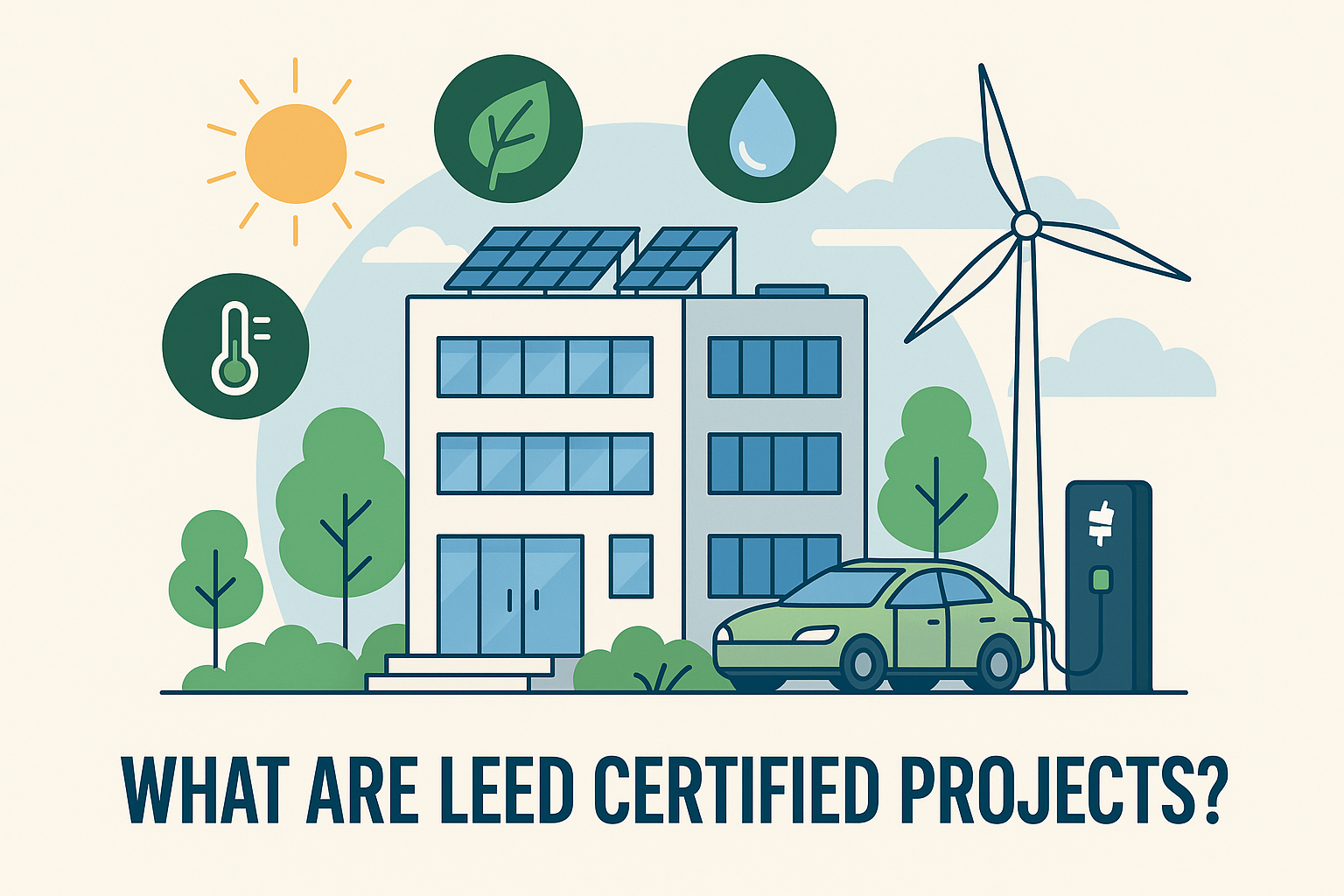
Sustainable construction has become a strategic priority in Türkiye as both government institutions and private investors increasingly focus on reducing environmental impact and improving building performance. In this context, the question “what are LEED certified projects?” has become one of the most frequently searched and discussed topics among developers, architects, engineers, and building owners.
LEED (Leadership in Energy and Environmental Design) is the world’s most widely used green building rating system, offering a measurable, globally recognized framework for high-performance and environmentally responsible building practices. As ERKE Sustainability Consultancy, we guide organizations across Türkiye in planning, developing, and certifying LEED projects aligned with international sustainability standards.
Understanding LEED: What Makes a Project LEED Certified?
A LEED certified project is any building or construction project that successfully meets the sustainability criteria established by the U.S. Green Building Council (USGBC). These criteria ensure that the project:
-
Uses less energy and water
-
Reduces CO₂ and other emissions
-
Utilizes environmentally responsible materials
-
Improves indoor environmental quality
-
Encourages efficient operations and maintenance
-
Minimizes waste throughout the lifecycle
To obtain certification, a project must meet prerequisites and earn points across categories such as Sustainable Sites, Water Efficiency, Energy & Atmosphere, Materials & Resources, Indoor Environmental Quality, Innovation, and Regional Priority.
Types of LEED Certified Projects in Türkiye
When exploring what are LEED certified projects, it’s important to understand that LEED is not limited to commercial buildings. Türkiye has seen rapid growth in multiple LEED project categories, including:
1. New Construction (LEED BD+C)
Ideal for:
-
Offices
-
Retail buildings
-
Mixed-use developments
-
Industrial facilities
2. Existing Buildings (LEED O+M)
Used to improve and certify:
-
Operational performance
-
Water and energy consumption
-
Maintenance practices
3. Commercial Interiors (LEED ID+C)
Preferred by:
-
Large corporate tenants
-
Multinational companies
-
Co-working spaces
4. Residential Projects (LEED Homes / LEED Residential)
Growing interest due to rising demand for:
-
Sustainable housing
-
Low-emission materials
-
Energy-efficient home systems
5. Neighborhood Development (LEED ND)
Ideal for large-scale urban developments:
-
Smart cities
-
Sustainable districts
-
Urban planning initiatives
These project types enable investors, architects, and contractors in Türkiye to align with international environmental standards while increasing real estate market value.
Why LEED Certified Projects Matter in Türkiye’s Construction Sector
The demand for green buildings in Türkiye is rapidly increasing due to:
✔ Stricter Environmental Regulations
Türkiye’s climate commitments and decarbonization targets are accelerating the shift toward green building certification.
✔ Higher Real Estate Value
LEED-certified properties typically benefit from:
-
Higher occupancy rates
-
Increased tenant satisfaction
-
Stronger investment potential
✔ Corporate Sustainability Goals
Companies operating in Türkiye—especially global brands—seek LEED certification to fulfill ESG (Environmental, Social, Governance) commitments.
✔ Lower Operational Costs
LEED projects consume significantly less water and energy, leading to measurable long-term savings.
For organizations aiming to adopt sustainable building practices, ERKE Sustainability Consultancy provides full LEED certification support—from feasibility to commissioning and documentation.
How LEED Certification Works: Step-by-Step Overview
To help further clarify what LEED certified projects are, here is a simplified breakdown of the certification process:
1. Preliminary Assessment
ERKE evaluates:
-
Project type
-
Potential LEED rating system
-
Possible certification level
2. Goal Setting Workshop
We collaboratively define sustainability targets such as:
-
Water reduction
-
Renewable energy usage
-
Waste minimization strategies
3. Design Phase Documentation
Architects and engineers integrate LEED requirements into project drawings and specifications.
4. Construction Phase Implementation
On-site tracking includes:
-
Material documentation
-
Waste management plans
-
Commissioning preparations
5. Energy & Systems Commissioning
ERKE performs or coordinates commissioning to verify system performance.
6. Submission to USGBC
All evidence-based documentation is uploaded to LEED Online for review.
7. Certification Awarded
Projects receive one of four levels:
-
Certified
-
Silver
-
Gold
-
Platinum
Examples of LEED Certified Projects Worldwide
To better understand the global significance of LEED, here are reputable external resources showcasing successful LEED projects:
-
USGBC Project Directory – A searchable global list of certified buildings
https://www.usgbc.org/projects -
World Green Building Council – Case studies on sustainable buildings
https://worldgbc.org -
Architecture 2030 – Global initiatives for low-carbon buildings
https://architecture2030.org
These examples demonstrate how LEED certification supports healthier, more efficient, and more resilient buildings worldwide.
Why Choose ERKE Sustainability Consultancy for LEED Projects in Türkiye?
ERKE has been a leading sustainability consultancy in Türkiye, offering end-to-end LEED project management. Our expertise ensures your building not only meets LEED criteria but also performs optimally throughout its lifecycle.
If you want to explore our LEED solutions, you may visit:
-
LEED Consulting Services
https://erkeconsultancy.com/leed-consulting -
Sustainability and Green Building Services
https://erkeconsultancy.com/green-building-consultancy/
These internal links help guide clients to relevant services while strengthening the SEO authority of your website.
Future of LEED Certified Projects in Türkiye
The next decade will bring major transformation to Türkiye’s construction market due to:
-
Carbon neutrality targets
-
Expanding renewable energy infrastructure
-
Increased demand for ESG-compliant buildings
-
Stricter building performance standards
-
International investment requirements
As these trends expand, LEED will continue to play a foundational role in improving Turkey’s built environment.
Conclusion: The Growing Importance of LEED Certified Projects
Understanding what are LEED certified projects is essential for stakeholders aiming to future-proof their buildings, enhance efficiency, and align with global sustainability goals. For developers and investors in Türkiye, LEED certification represents:
-
Reduced carbon footprint
-
Better financial performance
-
Stronger global competitiveness
-
Healthier, more resilient buildings
ERKE Sustainability Consultancy stands ready to support projects at every stage—from strategic planning to certification submission.
https://erkeconsultancy.com/contact-us/