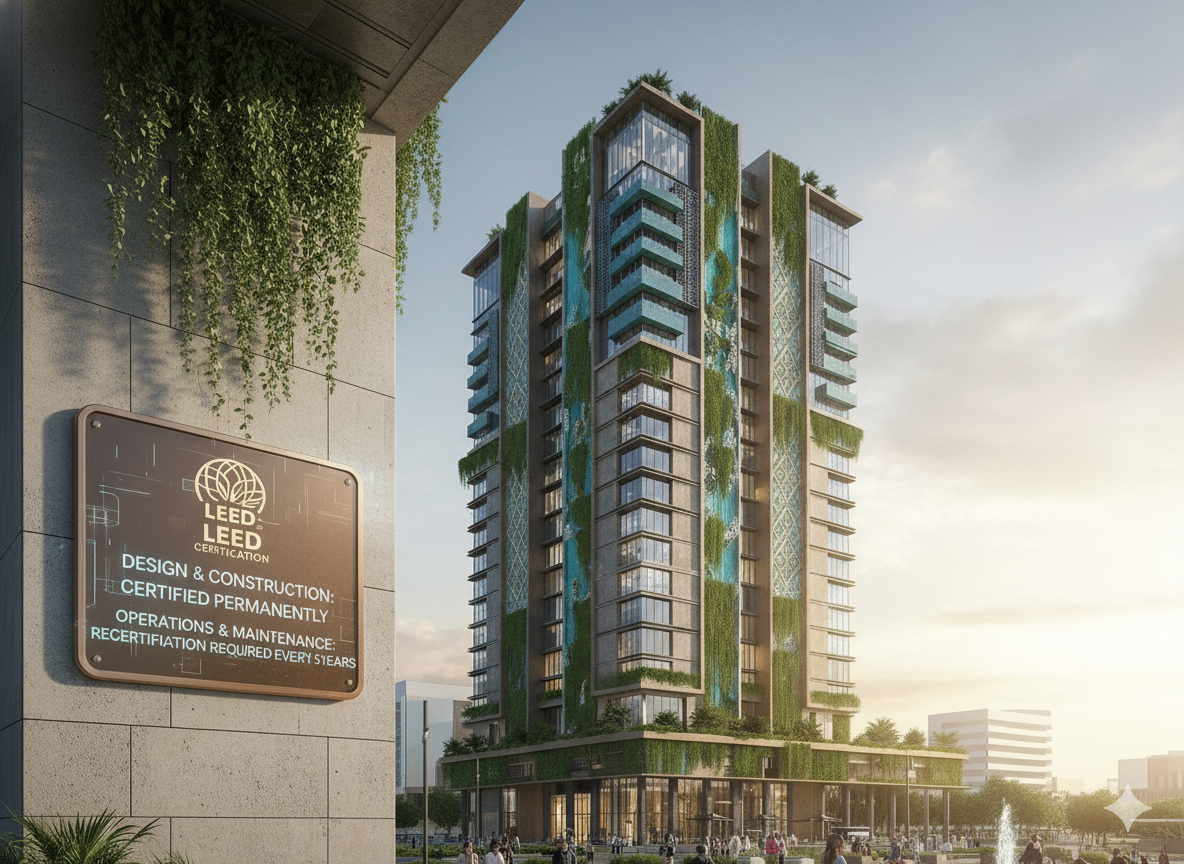
The crucial question for developers, investors, and sustainability managers planning projects, especially in emerging markets like Uzbekistan, is: how long do leed certifications last? The answer is nuanced, depending entirely on the specific LEED rating system applied to the building. Unlike some operational licenses, the core certification based on design and construction is generally deemed permanent, but its performance status requires ongoing verification.
1. The Initial Answer: How Long Do LEED Certifications Last for New Construction?
When a building achieves LEED certification under the Building Design and Construction (BD+C) rating system, this certification is awarded based on the structure’s permanent features. This includes site selection, water efficiency measures, material choices, and energy system design.
The certification awarded to the physical structure itself—Silver, Gold, or Platinum—does not expire. It is an enduring recognition of the sustainable design and construction efforts.
-
- Design Permanence: The BD+C status reflects the successful implementation of sustainable strategies during the build phase.
- Non-Expiring Status: The plaque and certificate confirming the initial rating are permanent fixtures.
- Focus: This answers the structural question of how long do leed certifications last for the initial capital investment in design.
The permanence of the initial certification speaks to the quality of the planning and construction phases. For expert guidance on achieving these high standards from the outset, consult Erke Consultancy’s services.
2. Operational Longevity: Tracking Performance Beyond Construction
While the design status is permanent, the goal of LEED is continuous performance. A building’s sustainability must be maintained, and this requires monitoring through the Operations and Maintenance (O+M) rating system.
This operational phase is where the timeline and the question of sustained status become relevant. Buildings certified under LEED O+M—or buildings that were initially BD+C certified but now seek performance validation—must participate in mandatory performance tracking.
The Role of LEED O+M Recertification
LEED O+M focuses on the real-world usage and efficiency of the building. This system evaluates performance metrics that include:
- Energy consumption
- Water usage
- Waste management
- Tenant comfort and indoor environmental quality
3. Revalidation: Why You Must Track Exactly How Long Do LEED Certifications Last Under the O+M System
Developers frequently ask us, how long do leed certifications last under the new performance metrics? The operational certification (O+M) is not permanent; it requires periodic recertification to ensure the building is still operating efficiently as intended.
The standard cycle for O+M recertification is currently five (5) years. This mandatory revalidation process ensures accountability and continued sustainability.
The Recertification Process
The performance data required for O+M recertification is typically tracked using the Arc platform. Key points for revalidation include:
- 5-Year Cycle: The standard operational LEED certification needs re-evaluation every five years.
- Data Submission: Building operators must submit 12 months of performance data to the GBCI (Green Business Certification Inc.).
- Renewed Rating: Based on the submitted data, the building receives a new O+M rating (Certified, Silver, Gold, or Platinum).
Understanding the answer to how long do leed certifications last is critical for long-term operational budgeting and asset valuation. If the building’s operational performance declines significantly, the performance-based O+M certification status can be lost. Recertification is governed by the USGBC and GBCI standards, which evolve over time. You can view the current requirements and scoring metrics directly from the source by visiting the US Green Building Council website.
4. Global Consistency: How Long Do LEED Certifications Last in Uzbekistan?
While LEED is a global standard, its application must consider regional energy sources and climates. In growing green markets like Uzbekistan, the same guidelines apply. The crucial factor is distinguishing between the initial design rating and the operational performance rating.
Whether you are in Tashkent or Samarkand, the global guidelines for how long do leed certifications last remain consistent, focusing on initial design permanence and performance revalidation.
Key Factors Affecting LEED Longevity
To ensure the O+M status remains valid for its full five-year cycle and beyond, facility managers must focus on:
1. System Maintenance: Regular commissioning of HVAC and energy recovery systems. 2. Occupant Engagement: Educating tenants and employees on conservation practices. 3. Data Integrity: Accurate, continuous tracking of utility data through platforms like Arc.
For projects aiming for sustained excellence, knowing precisely how long do leed certifications last helps ensure compliance and protects the investment in high-performance building operation.