As sustainability becomes a strategic priority for investors and developers across Central Asia, many project owners ask the same question at the beginning of their green building journey: “Is LEED certification hard to get?” This question is especially common in Uzbekistan, where demand for internationally recognized sustainability standards is growing rapidly. LEED (Leadership in Energy and Environmental Design) certification is viewed not only as an environmental commitment but also as a business advantage, improving asset value, operational performance, and global competitiveness.
In this article, we explore the actual difficulty of achieving LEED certification, the factors that influence the process, and how professional consultancy—such as ERKE Sustainability Consultancy—helps streamline certification for Uzbekistan’s construction and real estate sector.
Understanding Whether LEED Certification Is Hard to Get
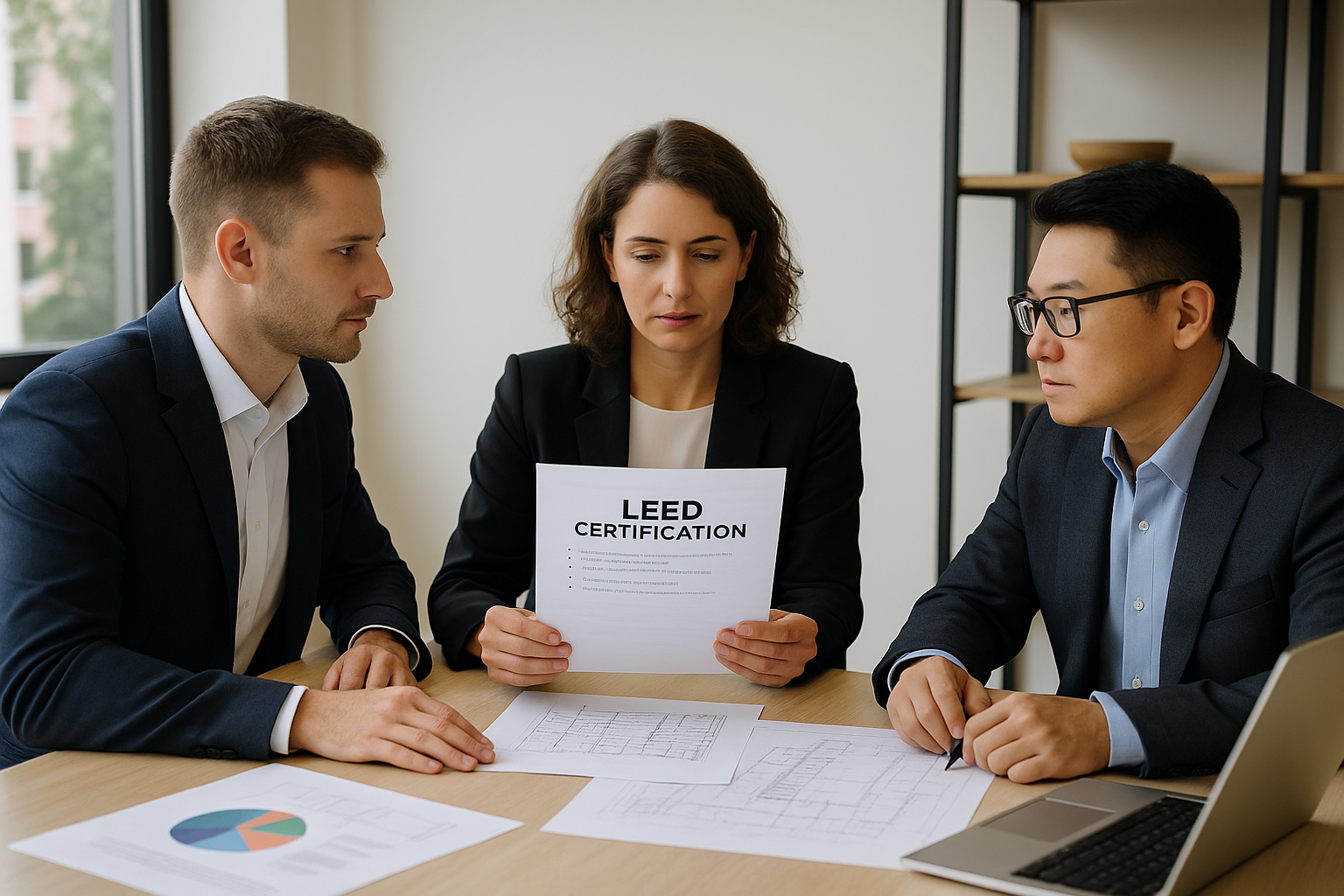
Many project owners assume that LEED is complicated, costly, or too demanding for emerging markets. In reality, LEED certification is not inherently hard to get, but it does require structured planning, documentation discipline, and technical expertise.
The challenge level depends on:
-
The project type and size
-
Selected LEED rating system
-
Sustainability goals (Certified, Silver, Gold, Platinum)
-
Experience of the project team
-
Local materials and technologies
-
Quality of energy modeling and commissioning
Projects in Uzbekistan increasingly meet these requirements thanks to improved building technologies, accessible simulation tools, and professional consultancy services.
Is LEED Certification Hard to Get for Different Project Types?
1. Commercial Developments
For office towers, mixed-use buildings, retail centers, and hotels, LEED can be straightforward when planned from early design stages. Commercial projects typically have:
-
Higher budgets
-
More flexible design capacity
-
Dedicated sustainability teams
This makes the certification path more manageable.
2. Industrial Facilities
Industrial buildings often ask if LEED certification is hard to get due to energy-intensive operations. While the energy prerequisites require careful design and documentation, many factories benefit from efficient operational systems that naturally support LEED credits.
3. Residential Projects
Residential developers sometimes consider LEED complex because of mechanical system variations and cost sensitivity. However, multi-family buildings can achieve LEED efficiently through standardized unit designs and repeatable performance strategies.
Why Some People Think LEED Certification Is Hard to Get
The perception comes from four primary factors:
A. Documentation Requirements
LEED requires transparent reporting—material declarations, energy models, water calculations, site plans.
But with proper planning and digital tools, documentation becomes systematic rather than difficult.
B. Energy Performance Modeling
Energy modeling is essential but highly technical. Developers without experienced consultants may struggle with it.
ERKE’s energy modeling team, trained in global standards, simplifies this stage and ensures compliance with ASHRAE requirements.
C. Construction Stage Coordination
If LEED is introduced late in the project, contractors may resist changes or lack awareness.
Early engagement eliminates this challenge.
D. Misunderstanding of Costs
LEED is often thought to be expensive. In reality, certification fees represent a small fraction of the total project budget, and many LEED measures reduce operational costs dramatically.
A detailed cost breakdown can be found on the U.S. Green Building Council (USGBC) website:
https://www.usgbc.org/leed/certification
How Uzbekistan Projects Can Make LEED Easier, Not Harder
Uzbekistan is experiencing a construction boom, including hotels, commercial centers, logistics hubs, and industrial investments. These conditions provide ideal opportunities for LEED.
1. Integrating LEED at Concept Design
The earlier LEED requirements are integrated, the easier the process becomes. It prevents design conflicts and reduces rework.
2. Using Regional Materials
Uzbekistan has strong potential for local material credits, including:
-
Steel manufacturing
-
Insulation products
-
Cement and aggregate suppliers
Manufacturers increasingly provide EPDs and HPDs, which helps secure building product credits.
3. Leveraging Technology
Modern tools such as energy simulation software, BIM integration, and commissioning platforms simplify LEED-related documentation and calculations.
Is LEED Certification Hard to Get Without Professional Consultancy?
Short answer: Yes, it can be.
LEED involves:
-
Technical submittals
-
Commissioning reports
-
Indoor air quality testing
-
Life cycle assessment (LCA) options
-
Complex scorecard management
-
Communication with GBCI reviewers
Many teams struggle with coordination between architects, engineers, contractors, and suppliers.
This is where ERKE Sustainability Consultancy creates measurable value.
How ERKE Makes LEED Certification Easier for Uzbekistan Projects
ERKE provides a complete turnkey LEED service, ensuring your project moves smoothly from registration to certification.
Our support includes:
1. Strategic LEED Roadmap
We identify the ideal certification level (Certified, Silver, Gold, Platinum) and design the credit strategy.
2. Energy Modeling & Simulation
Our experts perform ASHRAE-compliant modeling to secure vital energy credits.
3. Material Compliance Support
We work directly with suppliers to collect necessary declarations, saving your team time and reducing procurement risks.
4. On-Site Trainings
We train contractors and project teams in LEED best practices to prevent construction-phase errors.
5. Complete Documentation Management
We prepare all LEED forms, upload submittals, answer reviewer comments, and coordinate with GBCI.
To learn more about our LEED services, you may visit:
Is LEED Harder to Achieve in Emerging Markets Like Uzbekistan?
Surprisingly, no. Many LEED credits are universally accessible, regardless of geography. Some even become easier:
-
Access to renewable energy sources
-
Improved material certification infrastructure
-
Global supply chain transparency
-
Increasing government interest in sustainability
Moreover, LEED’s flexibility allows regional adaptation.
Credit interpretations and pilot credits help bridge documentation gaps for developing markets.
For deeper exploration, refer to USGBC resources:
https://www.usgbc.org/credits
Common Misconceptions About the Difficulty of LEED Certification
“LEED requires expensive technology.”
Not necessarily. Many points are related to operational efficiency, site planning, and responsible material selection.
“LEED is only for wealthy countries.”
LEED is a global standard used in more than 180 countries, including fast-growing markets similar to Uzbekistan.
“The process is bureaucratic and slow.”
With professional project management, LEED timelines align smoothly with project lifecycles.
“It’s difficult to maintain certification.”
LEED BD+C certification does not require renewal, and well-designed operational practices naturally maintain performance.
So, Is LEED Certification Hard to Get?
With the right planning and the right consultancy, LEED certification is absolutely achievable for any project in Uzbekistan.
Its perceived difficulty often comes from misunderstanding the process rather than the process itself.
By engaging an expert team like ERKE Sustainability Consultancy, your project benefits from:
-
Reduced certification risks
-
Optimized energy and water performance
-
Stronger market positioning
-
International recognition
-
Long-term operational savings
If sustainability, innovation, and future readiness are priorities for your development, LEED is a strategic pathway—and with ERKE, the pathway becomes clear, structured, and manageable.
If you’re considering LEED for your project in Uzbekistan and want to understand cost, timeline, or feasibility, contact ERKE today. Our consultants provide a free initial assessment tailored to your project type and goals.