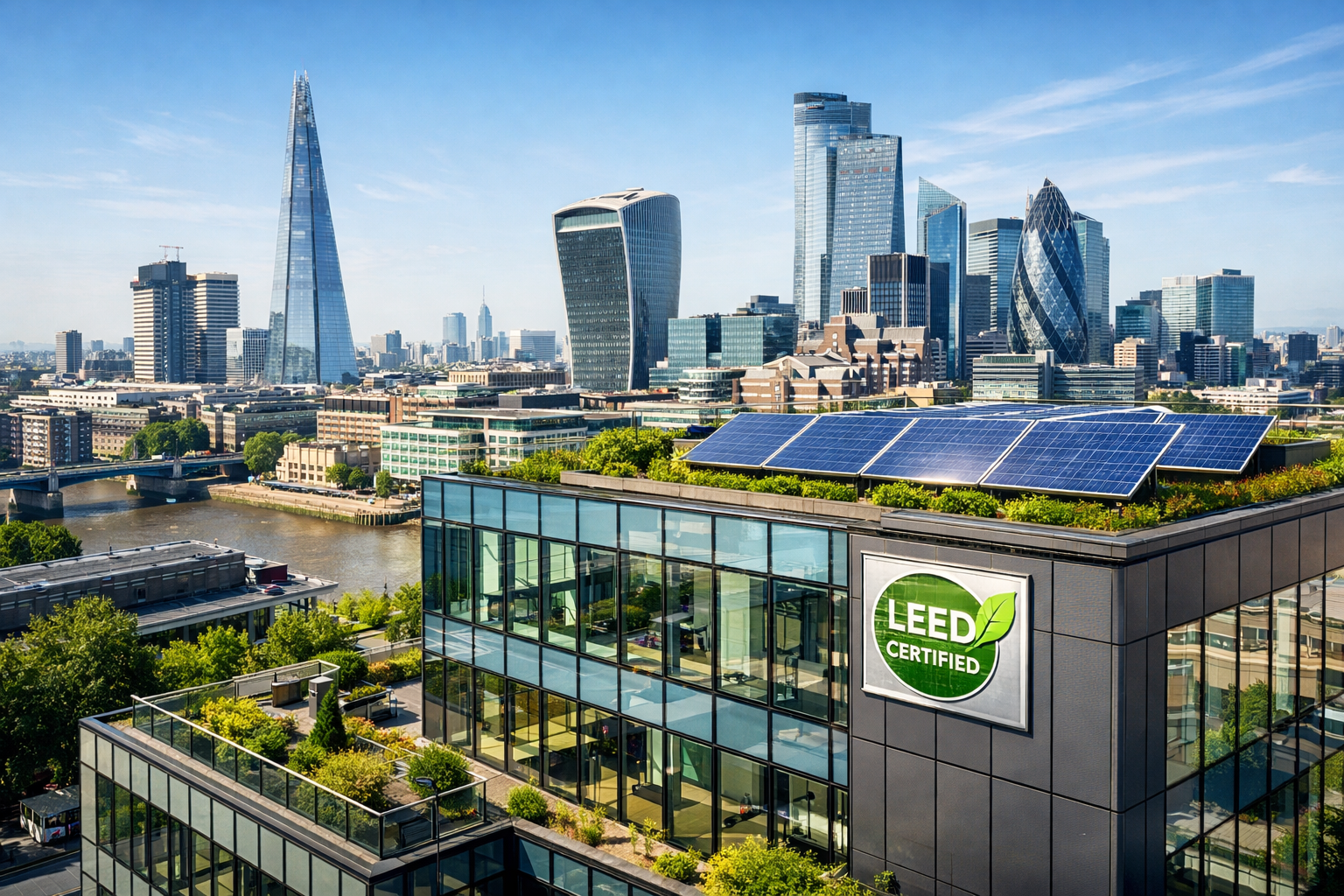
Green Building Certification Impact has become one of the most influential factors shaping real estate sales and rental values in the UK. As sustainability moves from a “nice-to-have” feature to a market expectation, investors, developers, and occupiers increasingly associate certified green buildings with higher financial performance, lower risk, and stronger long-term value.
In the UK real estate market—where ESG compliance, energy efficiency regulations, and tenant expectations are evolving rapidly—green building certifications such as LEED, BREEAM, and WELL are no longer limited to environmental benefits. They are now proven drivers of price premiums, faster sales cycles, and higher rental demand.
This article explores how green building certification directly affects real estate sales and rental values in the UK, supported by market data, investor behaviour, and occupier trends.
Why Green Building Certification Matters in the UK Market
The UK property sector is under growing pressure from both regulation and market forces. Minimum Energy Efficiency Standards (MEES), net-zero commitments, and ESG disclosure requirements are pushing sustainability to the forefront of real estate decision-making.
Green building certification provides:
-
Independent verification of sustainability performance
-
Reduced operational and energy costs
-
Lower carbon and environmental risk
-
Improved marketability and investor confidence
For buyers and tenants alike, certification has become a signal of quality, future-proofing, and compliance.
Green Building Certification Impact on Property Sales Prices
Numerous studies confirm that certified buildings command higher sales values compared to non-certified assets.
Higher Asset Valuation
Certified green buildings often achieve:
-
5–15% higher sale prices in prime UK markets
-
Increased interest from institutional investors
-
Reduced asset depreciation risk due to regulatory alignment
Investors increasingly factor sustainability performance into underwriting models. Buildings without certification are more likely to face “brown discounts”, particularly as energy regulations tighten.
Faster Transaction Cycles
Green-certified properties typically experience:
-
Shorter time on market
-
Stronger buyer competition
-
Higher perceived asset transparency
This is particularly evident in London, Manchester, and Birmingham, where sustainability-led demand is strongest.
Impact of Green Building Certification on Rental Values
The Green Building Certification Impact on rental performance is even more pronounced than on sales.
Rental Premiums and Occupier Demand
UK data shows that certified office and residential buildings achieve:
-
6–12% higher rental rates
-
Lower vacancy levels
-
Longer lease terms
Corporate occupiers—especially multinational firms—actively prioritise certified buildings to meet internal ESG targets and employee wellbeing expectations.
Tenant Retention and Satisfaction
Green-certified buildings deliver:
-
Better indoor air quality and comfort
-
Lower service charges through energy efficiency
-
Enhanced brand alignment for tenants
These factors contribute directly to tenant retention and reduced leasing risk.
Certification as a Risk Mitigation Tool for Investors
Green building certification is increasingly viewed as a risk management strategy, not just a sustainability feature.
Key risk reductions include:
-
Protection against future regulatory changes
-
Reduced retrofit costs
-
Improved liquidity and exit value
-
Alignment with green finance and lending criteria
According to the Royal Institution of Chartered Surveyors (RICS), sustainability performance is now a material factor in property valuation across the UK.
🔗 https://www.rics.org
Green Certifications Most Influential in the UK
While multiple certification systems exist, some carry stronger market recognition in the UK.
BREEAM
-
Most widely adopted in the UK
-
Strong alignment with planning and development frameworks
-
High credibility among investors and valuers
LEED
-
Preferred for international and commercial portfolios
-
Strong influence on global tenants and funds
-
Increasing adoption in UK mixed-use developments
ERKE provides expert support across these systems through its Green Building Consultancy services, helping clients maximise both sustainability and financial returns.
🔗 https://erkeconsultancy.com/green-building-consultancy/
The Role of Green Certification in Financing and Investment
Green-certified buildings benefit from:
-
Preferential green financing
-
Sustainability-linked loans
-
Higher attractiveness to ESG-driven funds
UK lenders and institutional investors increasingly require verified sustainability credentials as part of their due diligence processes.
The Building Research Establishment (BRE) confirms that certified buildings demonstrate improved lifecycle performance and resilience.
🔗 https://www.bregroup.com
Green Building Certification Impact on Future Market Trends
Looking ahead, the value gap between certified and non-certified buildings is expected to widen.
Key trends include:
-
Stricter energy and carbon regulations
-
Increased tenant sustainability reporting
-
Growth of green leases
-
Rising retrofit costs for non-compliant buildings
Properties without certification may face reduced liquidity, higher capital expenditure, and declining rental appeal.
Frequently Asked Questions (FAQ)
Does green building certification really increase property value?
Yes. Market data consistently shows that certified buildings achieve higher sales prices and rental premiums due to lower risk and higher demand.
Which certification is best for the UK market?
BREEAM remains the most recognised in the UK, while LEED is highly valued for international portfolios and commercial developments.
Is certification relevant for existing buildings?
Absolutely. Certification of existing assets can significantly improve marketability, compliance, and long-term value.
Do tenants really care about green certification?
Yes. Corporate tenants increasingly require certified buildings to meet ESG and employee wellbeing goals.
Conclusion: Turning Sustainability into Real Estate Value
The Green Building Certification Impact on real estate sales and rental values in the UK is clear, measurable, and growing. Certified buildings outperform conventional assets in pricing, demand, resilience, and future-proofing.
For developers, investors, and asset owners, green certification is no longer optional—it is a strategic investment decision that directly influences financial performance.
If you want to maximise the sales value, rental performance, and long-term resilience of your real estate assets, ERKE is here to help.
👉 Contact our experts today to learn how professional green building certification can enhance your property’s market performance in the UK.
🔗 https://erkeconsultancy.com/contact-us/