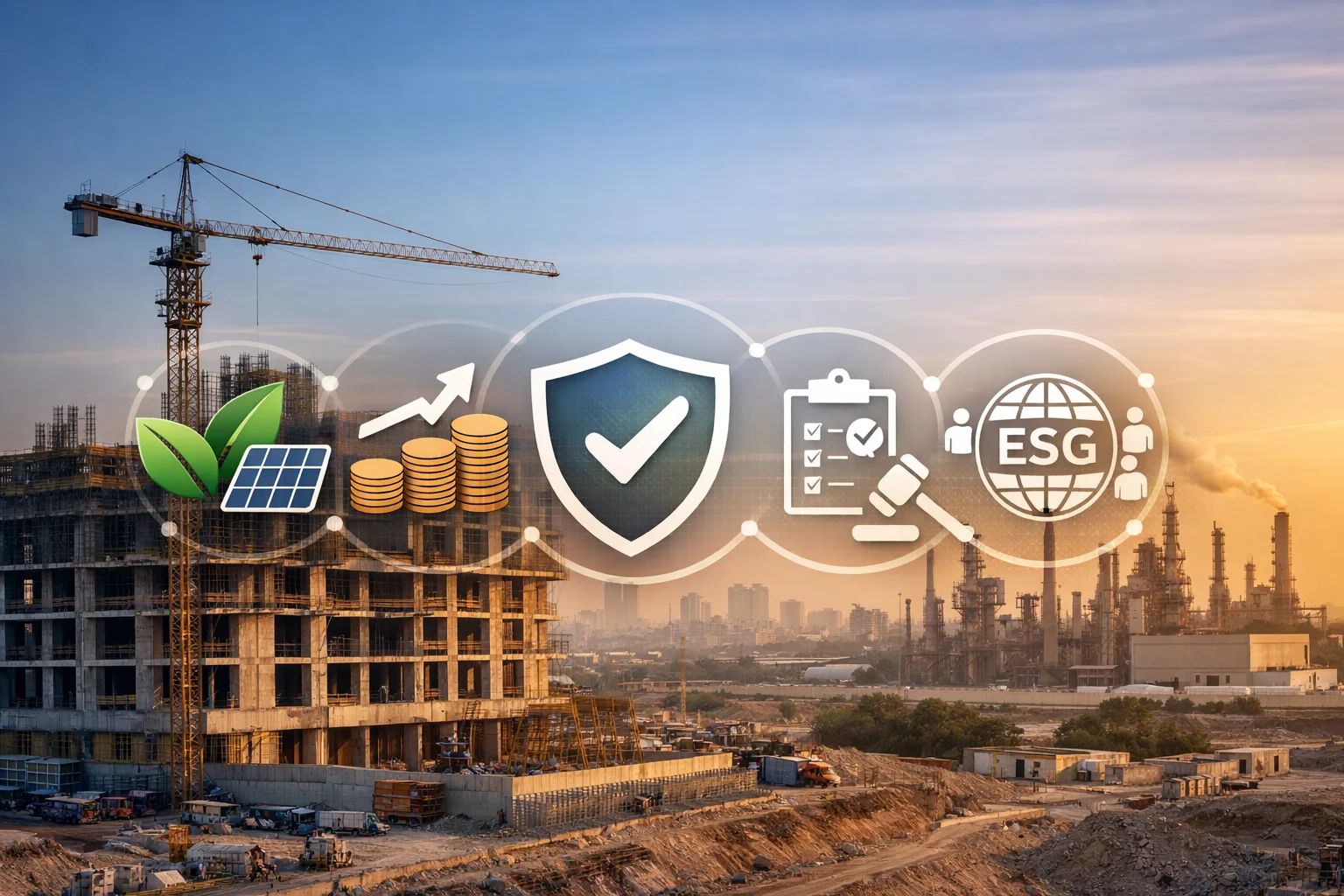
In a rapidly evolving construction and infrastructure market, sustainability consulting in Iraq has become a critical tool for reducing project risk and ensuring long-term success. Iraq’s development landscape is shaped by regulatory uncertainty, environmental challenges, financial constraints, and increasing expectations from international investors. Within this context, sustainability consulting provides structured methodologies that help project owners, developers, and public authorities proactively manage risk rather than react to it.
This article explores how sustainability consulting in Iraq directly contributes to reducing financial, regulatory, operational, and reputational risks—while also improving project resilience, bankability, and performance.
Understanding Project Risk in the Iraqi Market
Iraq offers significant development opportunities across commercial real estate, infrastructure, energy, and public projects. However, these opportunities are accompanied by complex risk factors, including:
-
Regulatory changes and evolving environmental standards
-
Resource scarcity, especially water and energy
-
Supply chain instability and material availability
-
Investor scrutiny regarding ESG (Environmental, Social, Governance) compliance
-
Operational inefficiencies leading to cost overruns
Without a structured sustainability framework, these risks often escalate during design, construction, or operational phases—leading to delays, increased costs, or even project failure.
Why Sustainability Consulting in Iraq Is a Risk Management Tool
Sustainability Consulting in Iraq as a Strategic Risk Framework
Sustainability consulting in Iraq goes beyond environmental considerations. It functions as a comprehensive risk management framework that integrates environmental performance, regulatory compliance, financial feasibility, and long-term operational efficiency.
By embedding sustainability principles early in the project lifecycle, risks are identified, quantified, and mitigated before they become costly problems.
Regulatory Risk Reduction Through Sustainability Consulting
Navigating Compliance and Environmental Regulations
One of the most significant benefits of sustainability consulting in Iraq is regulatory risk mitigation. Environmental and construction regulations are increasingly aligned with international standards, particularly for projects involving foreign investment or funding institutions.
Sustainability consultants help projects:
-
Align with international benchmarks (LEED, IFC Performance Standards, ESG criteria)
-
Prepare for future regulatory tightening
-
Reduce approval delays caused by environmental non-compliance
This proactive approach minimizes legal disputes and prevents costly redesigns late in the project cycle.
For an overview of integrated sustainability services, visit ERKE’s What We Do page.
Financial Risk Mitigation and Cost Control
Reducing Capital and Operational Expenditure
Financial uncertainty is a major concern for projects in Iraq. Sustainability consulting directly addresses this risk by focusing on life-cycle cost optimization rather than short-term savings.
Key financial risk reduction benefits include:
-
Optimized energy and water systems lowering operational costs
-
Reduced maintenance and replacement expenses
-
Improved access to green finance and international funding
Institutions such as the World Bank emphasize sustainable infrastructure as a key requirement for long-term investment stability in developing markets like Iraq .
Operational Risk Reduction Through Performance-Based Design
Resilience in Challenging Environmental Conditions
Iraq’s climate conditions—high temperatures, water scarcity, and energy demand—create operational risks if not addressed during design. Sustainability consulting in Iraq integrates climate-responsive strategies such as:
-
Passive design and energy efficiency modeling
-
Water efficiency and reuse systems
-
Material durability suited to local conditions
These strategies reduce system failures, downtime, and unexpected operational disruptions.
Supply Chain and Material Risk Management
Sustainable Material Selection in Iraq
Material sourcing poses another major risk, particularly with fluctuating supply chains. Sustainability consulting helps by:
-
Identifying locally available and low-risk materials
-
Evaluating material life-cycle performance
-
Reducing dependency on volatile imports
Organizations like the International Finance Corporation (IFC) highlight sustainable procurement as a key factor in reducing construction risk in emerging economies .
ESG and Reputational Risk Reduction
Meeting Investor and Stakeholder Expectations
Reputational risk is increasingly critical, especially for large-scale and publicly visible projects. Sustainability consulting in Iraq supports ESG alignment by:
-
Structuring transparent sustainability reporting
-
Improving social and environmental accountability
-
Strengthening stakeholder trust
Projects aligned with ESG principles are more attractive to international partners, lenders, and operators—reducing the risk of funding withdrawal or public opposition.
For project-specific advisory support, ERKE also provides specialized Green Building Consultancy services.
Sustainability Consulting and Long-Term Asset Value
From Risk Avoidance to Value Creation
Beyond risk reduction, sustainability consulting in Iraq enhances long-term asset value by improving:
-
Operational efficiency
-
Occupant comfort and productivity
-
Market competitiveness and resale value
Sustainable projects are better positioned to adapt to future regulatory, environmental, and market changes—ensuring resilience over decades rather than years.
Frequently Asked Questions (FAQ)
What types of projects benefit most from sustainability consulting in Iraq?
Large-scale commercial developments, infrastructure projects, energy facilities, and public-sector investments benefit most, especially those seeking international funding or long-term operation.
Is sustainability consulting in Iraq only relevant for green certifications?
No. While certifications like LEED are valuable, sustainability consulting primarily focuses on risk reduction, efficiency, and performance—even without pursuing formal certification.
Can sustainability consulting reduce project costs in Iraq?
Yes. While there may be initial consulting costs, sustainability strategies significantly reduce operational expenses, redesign costs, and long-term financial risks.
How early should sustainability consulting be integrated?
Ideally at the concept or pre-design stage. Early integration maximizes risk mitigation and cost optimization.
Conclusion: Reducing Risk in Iraq Through Sustainability Consulting
In Iraq’s complex and evolving development environment, sustainability consulting in Iraq is no longer optional—it is a strategic necessity. By addressing regulatory, financial, operational, and reputational risks in a structured and proactive way, sustainability consulting transforms uncertainty into opportunity.
Projects that integrate sustainability from the outset are more resilient, more attractive to investors, and better equipped to succeed in the long term.
If you are planning or managing a project in Iraq and want to reduce risk, improve resilience, and enhance long-term value, professional sustainability consulting is the key.
👉 Contact ERKE Sustainability Consultancy today to explore how our expert team can support your project in Iraq with tailored sustainability and risk-reduction strategies:
https://erkeconsultancy.com/contact-us/