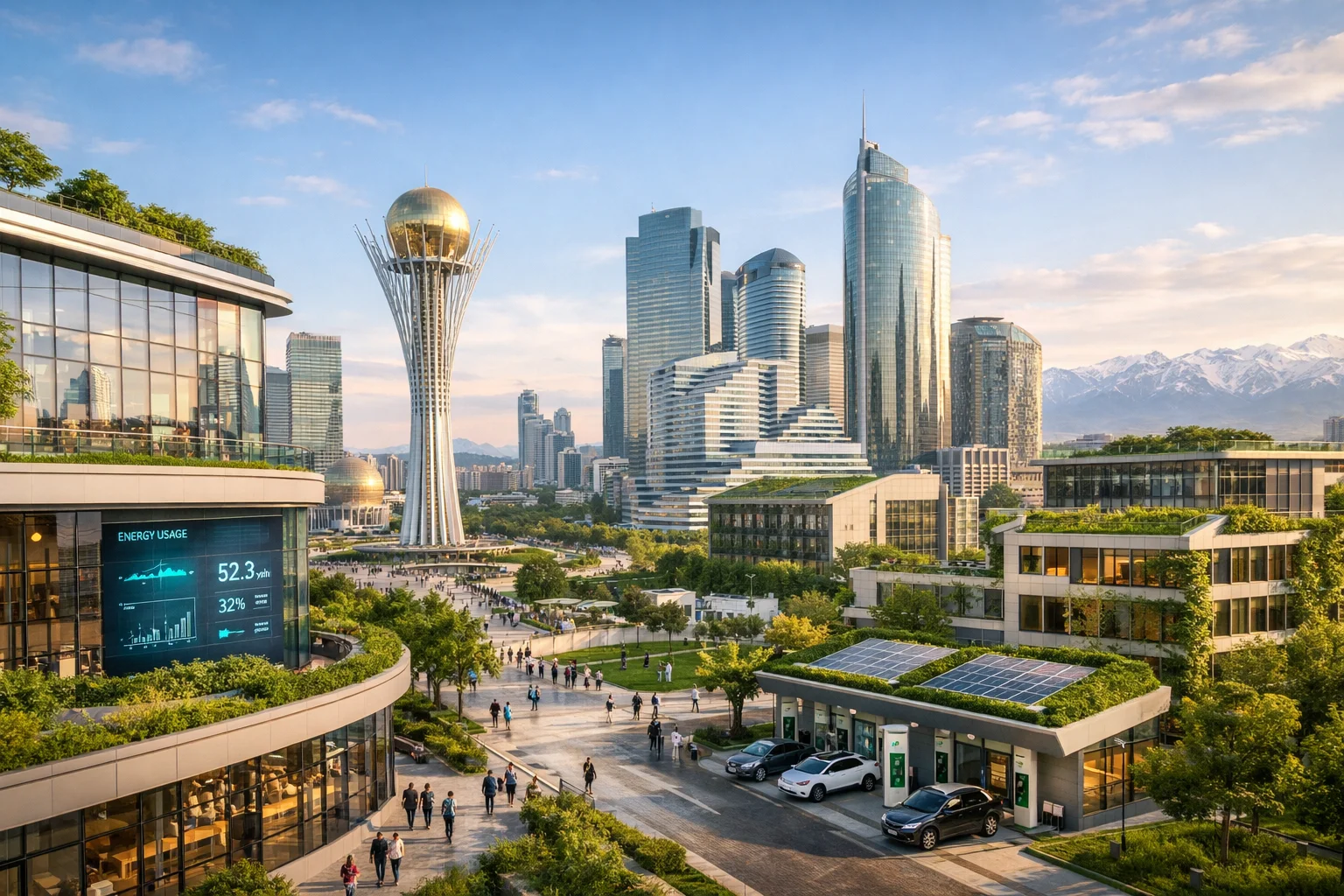
Smart and sustainable building trends in Kazakhstan cities are rapidly transforming the country’s urban development landscape. As Kazakhstan accelerates its economic growth and positions itself as a regional leader in Central Asia, cities such as Astana, Almaty, and Shymkent are increasingly embracing intelligent building technologies, energy-efficient design, and sustainability-driven urban planning.
This shift is not only driven by environmental concerns, but also by economic efficiency, regulatory evolution, and global alignment with international sustainability standards. For investors, developers, and public authorities, smart and sustainable buildings are no longer optional—they are becoming a strategic necessity.
Urban Transformation in Kazakhstan: A Sustainability-Driven Vision
Kazakhstan’s national development strategies place strong emphasis on energy efficiency, digitalization, and climate resilience. Urban areas are at the center of this transformation, as cities consume the majority of energy and generate the highest environmental impact.
Major metropolitan regions are now integrating:
-
Smart infrastructure systems
-
Low-carbon construction materials
-
Renewable energy solutions
-
Data-driven building management platforms
These initiatives aim to reduce operational costs, improve occupant well-being, and meet international sustainability benchmarks.
Smart Building Technologies Shaping Kazakhstan Cities
Smart technologies are one of the strongest pillars of smart and sustainable building trends in Kazakhstan cities. Developers increasingly deploy intelligent systems that optimize performance throughout the building lifecycle.
Key Smart Building Features
-
Building Management Systems (BMS): Centralized control of HVAC, lighting, and security systems
-
IoT Sensors: Real-time monitoring of energy, water, and indoor air quality
-
AI-Based Analytics: Predictive maintenance and performance optimization
-
Smart Metering: Transparent energy consumption tracking
These solutions significantly lower operational expenses while enhancing comfort and safety for occupants.
Sustainable Design and Energy Efficiency Practices
Sustainability in Kazakhstan’s urban buildings goes beyond technology. Architectural design and material selection are equally critical.
Common Sustainable Building Strategies
-
High-performance building envelopes
-
Passive solar design adapted to continental climate conditions
-
Energy-efficient glazing and insulation
-
Low-flow water fixtures and rainwater harvesting
-
On-site renewable energy systems such as solar PV
Cities like Astana, with extreme seasonal temperatures, benefit greatly from energy-efficient and climate-responsive design, making sustainability a practical investment rather than a cost burden.
Green Building Certifications and Global Standards
A growing number of projects in Kazakhstan are aligning with international green building certification systems, especially for commercial and mixed-use developments.
Popular frameworks include:
-
LEED (Leadership in Energy and Environmental Design)
-
International energy efficiency standards
-
Lifecycle-based sustainability assessments
Green certifications enhance asset value, attract international tenants, and support compliance with ESG-driven investment requirements. ERKE’s expertise in green building consultancy enables developers to navigate these processes efficiently and strategically.
For global reference, organizations such as the U.S. Green Building Council provide widely adopted sustainability frameworks that influence regional practices worldwide:
👉 https://www.usgbc.org
Smart Cities and Urban-Scale Sustainability
Smart and sustainable building trends in Kazakhstan cities are closely linked to broader smart city initiatives. Municipal authorities increasingly integrate buildings into city-wide digital ecosystems.
Urban-Level Integration Includes:
-
Smart grids and district energy systems
-
Digital mobility and EV infrastructure
-
Data-driven urban planning platforms
-
Carbon monitoring at district scale
Kazakhstan’s smart city vision aligns with international urban sustainability goals supported by institutions such as the United Nations Sustainable Development Programme (UNDP):
👉 https://www.undp.org
Economic and Investment Advantages
Sustainable and smart buildings are not only environmentally responsible—they are financially advantageous.
Key Benefits for Stakeholders
-
Lower operating and energy costs
-
Increased property value and marketability
-
Improved tenant satisfaction and retention
-
Enhanced eligibility for international funding and green finance
For foreign investors entering Kazakhstan’s real estate market, sustainability credentials are increasingly seen as a risk mitigation and value creation tool.
Regulatory Landscape and Future Outlook
Kazakhstan continues to refine its building regulations to encourage:
-
Energy-efficient construction
-
Sustainable materials
-
Digital infrastructure integration
While regulations are still evolving, early adopters gain competitive advantage by exceeding minimum requirements and aligning with international best practices.
Looking ahead, smart and sustainable building trends in Kazakhstan cities are expected to accelerate due to:
-
Climate commitments
-
Rising energy costs
-
Growing ESG expectations
-
Increasing demand for high-quality urban environments
Frequently Asked Questions (FAQ)
1. Why are smart buildings important for Kazakhstan cities?
Smart buildings help reduce energy consumption, optimize operations, and improve resilience in Kazakhstan’s extreme climate conditions, making cities more efficient and livable.
2. Are sustainable buildings more expensive to develop in Kazakhstan?
Initial costs may be slightly higher, but lifecycle savings, operational efficiency, and increased asset value typically outweigh upfront investments.
3. Which cities in Kazakhstan lead in sustainable building adoption?
Astana and Almaty currently lead due to large-scale urban projects, international investment, and advanced infrastructure development.
4. Can existing buildings in Kazakhstan be upgraded to smart and sustainable standards?
Yes. Retrofits using smart technologies, energy-efficient systems, and sustainability strategies are increasingly common and cost-effective.
Conclusion: Building the Future of Kazakhstan Cities
Smart and sustainable building trends in Kazakhstan cities are redefining how urban environments are designed, built, and operated. By integrating intelligent technologies with sustainability-driven design, Kazakhstan is laying the foundation for resilient, efficient, and future-ready cities.
For developers, investors, and public authorities, now is the ideal time to adopt smart and sustainable building strategies that align with global standards and local ambitions.
If you are planning or developing projects aligned with smart and sustainable building trends in Kazakhstan cities, ERKE is ready to support you with expert consultancy services.
👉 Contact our team today:
https://erkeconsultancy.com/contact-us/
Let us help you transform your project into a high-performance, future-proof, and sustainable asset.