
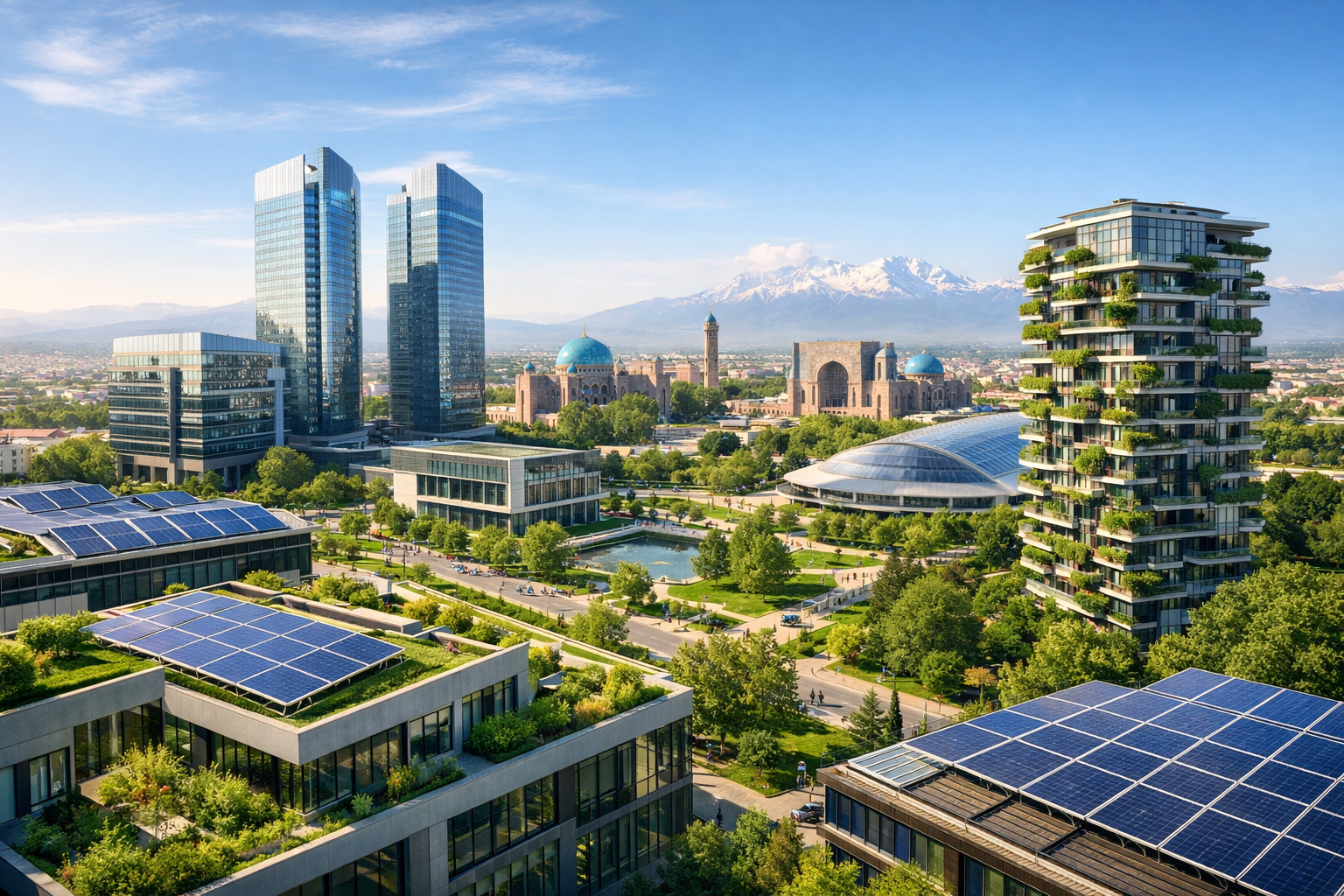
The future of sustainable construction regulations in Uzbekistan is becoming a defining issue for developers, investors, and public authorities shaping the country’s built environment. As Uzbekistan accelerates urban development and aligns its policies with international markets, sustainability is no longer a niche topic—it is quickly becoming a regulatory expectation.
In parallel with economic reforms and foreign investment growth, the construction sector is undergoing structural change. Therefore, understanding how sustainable construction regulations in Uzbekistan are likely to evolve is essential for any organization planning long-term projects in the region.
Uzbekistan’s Construction Sector Is Entering a New Phase
Uzbekistan currently ranks among the fastest-growing construction markets in Central Asia. Large-scale housing programs, industrial facilities, infrastructure projects, and mixed-use developments continue to reshape major cities.
However, traditional construction methods—often energy-intensive and resource-heavy—no longer align with national efficiency goals. As a result, policymakers are actively preparing the ground for the future of sustainable construction regulations in Uzbekistan, focusing on:
-
Energy-efficient building envelopes
-
Reduced operational energy consumption
-
Improved indoor environmental quality
-
Responsible water and material use
Consequently, sustainability is shifting from a voluntary design choice to a strategic regulatory requirement.
Key Drivers Behind the Future of Sustainable Construction Regulations in Uzbekistan
Government Policies and Energy Efficiency Targets
First and foremost, Uzbekistan’s national development strategies emphasize energy security and environmental responsibility. Buildings play a central role in this agenda because they account for a significant share of national energy consumption.
For this reason, future sustainable construction regulations in Uzbekistan are expected to introduce clearer requirements related to:
-
Building energy performance
-
Thermal insulation and façade efficiency
-
Efficient lighting and HVAC systems
-
Reduced operational carbon emissions
Rather than prescriptive rules, authorities are likely to favor performance-based regulations, which measure actual outcomes instead of design intent.
International Finance and Global Alignment
At the same time, international lenders increasingly influence regulatory direction. Institutions such as the World Bank promote climate-resilient and low-carbon development across emerging markets.
As a result, projects seeking international financing must already comply with sustainability benchmarks. These expectations strongly shape the future of sustainable construction regulations in Uzbekistan, encouraging alignment with global best practices.
👉 https://www.worldbank.org/en/topic/climatechange
Growing Influence of Green Building Frameworks
International Standards as Reference Models
Although Uzbekistan has not yet introduced a national green building certification system, international frameworks already influence market behavior. Developers frequently adopt global standards to reduce risk and improve asset value.
In practice, these frameworks help define the future of sustainable construction regulations in Uzbekistan by addressing:
-
Energy and water efficiency
-
Indoor environmental quality
-
Sustainable material selection
-
Performance verification during operation
For this reason, many projects already seek expert guidance to meet international sustainability expectations. ERKE supports this transition through its green building consultancy services, helping project teams integrate sustainability from early design stages.
👉 https://erkeconsultancy.com/green-building-consultancy/
Materials, Carbon, and Lifecycle Thinking
From Initial Cost to Lifecycle Performance
Traditionally, construction decisions focused heavily on upfront costs. However, future regulations increasingly evaluate buildings based on long-term environmental impact.
Therefore, the future of sustainable construction regulations in Uzbekistan is expected to emphasize:
-
Lifecycle assessment (LCA) methodologies
-
Embodied carbon calculations
-
Durable and low-impact construction materials
-
Transparency through environmental documentation
International organizations such as the United Nations Development Programme actively promote this lifecycle-based approach, particularly in developing economies.
👉 https://www.undp.org/climate-change
Digital Tools and Regulatory Enforcement
Why Digital Compliance Will Matter
In addition to technical criteria, regulators worldwide are adopting digital tools to monitor compliance. Uzbekistan is likely to follow this trend.
Specifically, future sustainable construction regulations in Uzbekistan may require:
-
Digital energy simulations
-
BIM-based sustainability reporting
-
Measurable performance indicators
-
Post-occupancy verification
As a result, sustainability compliance will increasingly depend on early coordination between architects, engineers, and consultants.
Why Developers and Investors Must Act Early
Waiting for regulations to become mandatory creates unnecessary risk. Instead, companies that prepare early gain a competitive advantage.
By anticipating the future of sustainable construction regulations in Uzbekistan, developers can:
-
Reduce approval and compliance risks
-
Attract international investors and tenants
-
Improve long-term asset performance
-
Lower operational and energy costs
In contrast, projects that ignore sustainability trends may face redesign costs, delays, or reduced market appeal.
Frequently Asked Questions (FAQ)
1. Are sustainable construction regulations already mandatory in Uzbekistan?
Currently, many sustainability measures remain advisory. However, authorities are actively preparing more structured and enforceable regulations.
2. Will future regulations affect all project types?
Yes. Over time, residential, commercial, industrial, and public buildings are all expected to fall under future sustainable construction regulations in Uzbekistan.
3. Do international standards influence local regulations?
Absolutely. International frameworks strongly influence how Uzbekistan shapes its regulatory roadmap, especially for energy efficiency and environmental performance.
4. How can project owners prepare today?
Early sustainability planning, performance modeling, and expert consultancy support are the most effective ways to prepare for upcoming regulations.
Conclusion: Preparing for a Regulated and Sustainable Future
In conclusion, the future of sustainable construction regulations in Uzbekistan reflects a broader transformation of the construction sector. Sustainability is no longer optional—it is becoming an integral part of regulatory compliance, investment strategy, and long-term asset value.
Organizations that act today will not only meet future requirements but also lead Uzbekistan’s transition toward resilient, efficient, and sustainable urban development.
If you want to prepare your projects for the future of sustainable construction regulations in Uzbekistan, ERKE is ready to support you with strategic, technical, and regulatory expertise.
👉 Contact our team today to align your developments with upcoming sustainability requirements and international standards:
https://erkeconsultancy.com/contact-us/