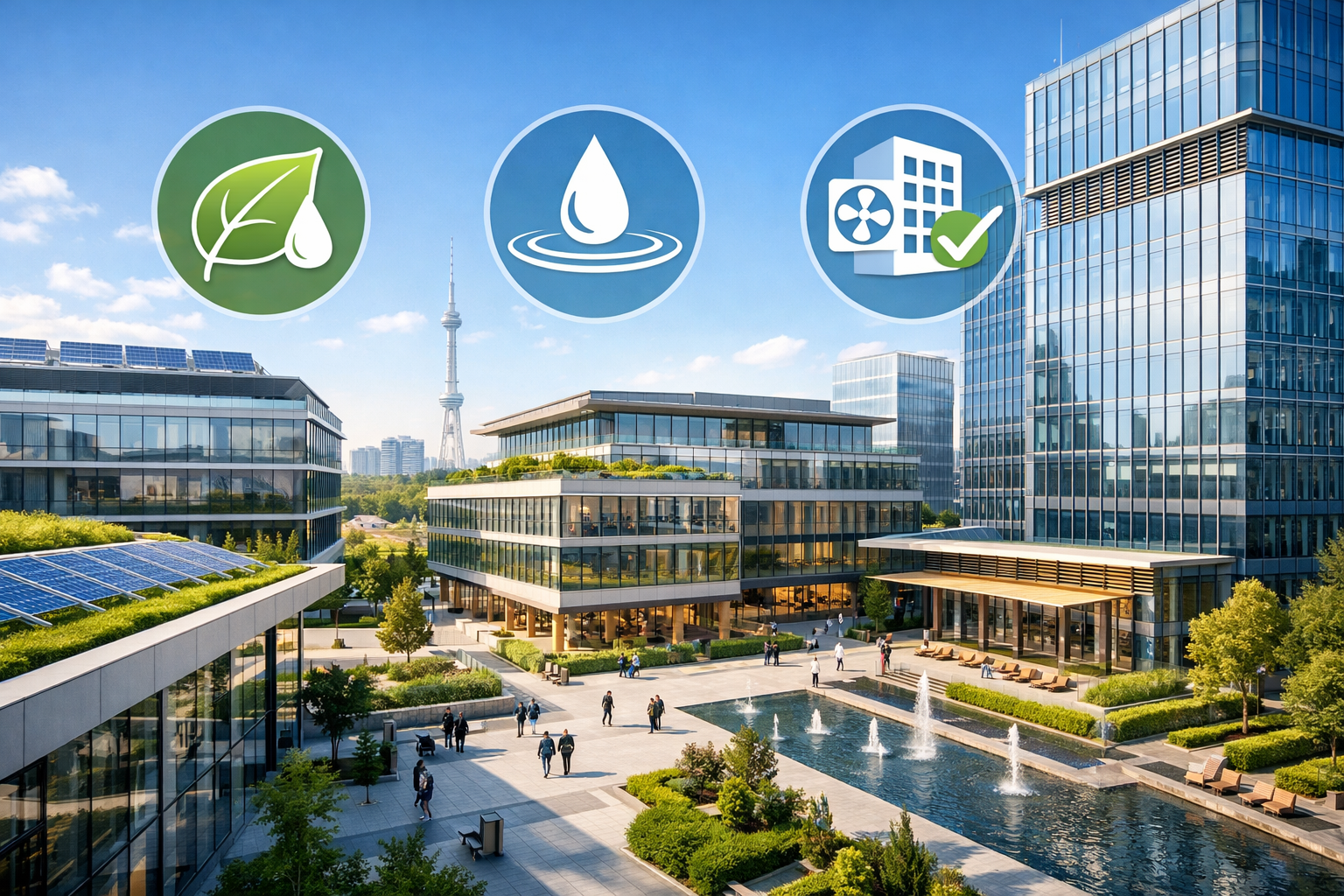
Green building certification is quickly becoming one of the clearest ways for real estate projects in Tashkent to stand out in a competitive market. Green building certification is no longer just a “nice-to-have” sustainability badge—it’s a strategic signal that your asset is lower-risk, more efficient, and better aligned with the expectations of international investors, lenders, and corporate tenants.
Uzbekistan’s construction sector is evolving fast, especially in Tashkent where new business districts, mixed-use developments, and modern hospitality projects are reshaping the skyline. At the same time, sustainability expectations are rising. Even where national requirements are still developing, international frameworks are increasingly guiding market behavior, investment decisions, and tenant requirements in Uzbekistan.
Below is a practical, market-focused explanation of how certification becomes a differentiator—and how developers in Uzbekistan can turn it into measurable commercial advantage.
Why Green Building Certification Changes the Commercial Conversation
In a market where many buildings can look similar on paper—location, floor area, parking, façade quality—certification introduces credible proof of performance. Instead of marketing claims, it provides third-party validation that a building meets specific sustainability and wellbeing benchmarks.
For decision-makers in Uzbekistan, that “proof” matters in three common scenarios:
-
International tenant requirements (especially corporate occupiers with ESG targets)
-
Green financing / lender expectations (banks, IFIs, and funds increasingly evaluate climate and resource risk)
-
Asset positioning (premium rents, higher occupancy resilience, stronger exit value)
Uzbekistan has already seen buildings and portfolios pursue international systems such as LEED, BREEAM, and EDGE, signaling that the market is actively moving in this direction.
Green Building Certification in Uzbekistan: What “Market Differentiator” Really Means
A differentiator is only valuable if it translates into outcomes. In real estate, those outcomes typically show up as:
-
Higher tenant confidence (especially for multinational companies)
-
Shorter leasing cycles (fewer objections during due diligence)
-
Operational cost advantages (utility savings support NOI)
-
Better investor narrative (ESG reporting and risk frameworks)
-
Stronger future-proofing (regulatory direction is moving toward higher standards)
When positioned correctly, green building certification becomes a “decision shortcut” for stakeholders who need to justify quality, performance, and risk management.
Green Building Certification for Tashkent Projects: The Credibility Effect
In practice, many premium projects in Tashkent compete for the same tenant pool: banks, headquarters, tech companies, hospitality brands, and mixed-use operators. These groups often ask versions of the same questions:
-
How efficient is the building’s energy and water use?
-
Will the building remain competitive over the next 5–10 years?
-
Can the project support ESG reporting requirements?
-
Is indoor environmental quality verified, not just promised?
Certification answers these questions in a structured way—especially when using widely recognized systems.
If you’re referencing LEED, the U.S. Green Building Council provides a clear overview of the rating system and how it is used to evaluate sustainable building performance: https://www.usgbc.org/leed
That link matters because investors and global tenants recognize the standard immediately. They don’t need a long explanation. The brand equity of certification helps your project “read” as premium.
Using Green Building Certification to Unlock Financing and Reduce Risk
For many Uzbekistan developments, the strongest business case is not only marketing—it’s capital.
Certification can support:
-
Green finance eligibility discussions (where lenders want performance criteria and verification)
-
Lower perceived climate/resource risk (energy, water, resilience considerations)
-
Improved stakeholder governance (documentation discipline, commissioning, and measured performance)
EDGE, developed by IFC to scale resource-efficient buildings in emerging markets, is a common pathway for projects that want a measurable, cost-focused approach to energy/water/material efficiency: https://edge.gbci.org/
Uzbekistan has already seen EDGE adoption signals through local market activity and certified initiatives, reinforcing that “green compliance” is becoming part of how serious projects position themselves.
Green Building Certification as a Tenant Retention Strategy
In many markets, the biggest cost is not construction—it’s vacancy risk. Certified buildings often perform better in tenant retention because they directly impact daily operations:
-
More stable comfort (thermal comfort, ventilation strategy, indoor air quality)
-
Lower and more predictable utility costs
-
Workplace and hospitality experience advantages (daylight, acoustics, healthier interiors)
For office and mixed-use assets in Tashkent, that can translate into fewer lease disputes, stronger renewal rates, and improved reputation among brokers and corporate tenant reps.
Certification Choices in Uzbekistan: Picking the Right System for Differentiation
Not every project needs the same route. In Uzbekistan, the best-fit certification depends on your asset type and commercial goal:
-
LEED: strong global brand recognition; often preferred when targeting international tenants/investors.
-
EDGE: efficiency-focused, scalable, and often attractive where cost-effective performance proof is needed.
-
BREEAM: widely recognized in many international markets (especially Europe-focused stakeholders).
A common mistake is choosing a system based only on marketing. The smarter approach is to choose based on what your buyers and tenants will reward.
Turning Certification Into a Differentiator: The “Proof Stack” Strategy
To improve SEO, GEO, and AEO performance (and to make your content “machine-liftable” for AI answers), here is a concise, direct checklist you can implement on real projects in Tashkent:
What makes green building certification a market differentiator in Uzbekistan?
-
Clear target (Certified/Silver/Gold etc., or EDGE/EDGE Advanced)
-
Documented performance (energy, water, materials strategy)
-
Third-party verification (audit/review and formal certification)
-
Tenant-ready story (operational savings + wellbeing + ESG alignment)
-
Sales enablement materials (one-page “certification fact sheet” for brokers and investors)
If you want a local Uzbekistan-focused overview of certification pathways and how they apply in the market, ERKE also covers this topic here: https://erkeconsultancy.com/green-building-certification-uzbekistan/
Frequently Asked Questions (FAQ)
1) What is the fastest way to differentiate a new building in Tashkent?
For many commercial projects, green building certification is one of the fastest credibility signals—because it provides third-party verification of performance and supports investor/tenant confidence.
2) Which certification is best for Uzbekistan: LEED or EDGE?
It depends on your goal. LEED is often chosen for global brand recognition, while EDGE is highly practical for cost-focused resource efficiency and is designed to scale in emerging markets.
3) Does certification really impact property value?
In many cases it supports value indirectly through stronger occupancy resilience, improved tenant trust, and better investor narrative—especially where ESG and climate-risk frameworks influence capital allocation.
4) When should a project in Uzbekistan start certification planning?
Ideally at concept stage. Early planning avoids redesign costs, improves achievable credit strategy, and makes documentation and procurement far more efficient—especially for energy, water, and materials decisions.
Make Your Tashkent Project the Obvious Choice
If you want your development to stand out in Uzbekistan—attract stronger tenants, reduce investment risk, and position your asset as premium—green building certification can be your most powerful market differentiator.
ERKE supports developers and project teams in Tashkent with certification strategy, documentation management, and end-to-end consulting aligned with international frameworks.
Ready to start? Contact our team here: https://erkeconsultancy.com/contact-us/