
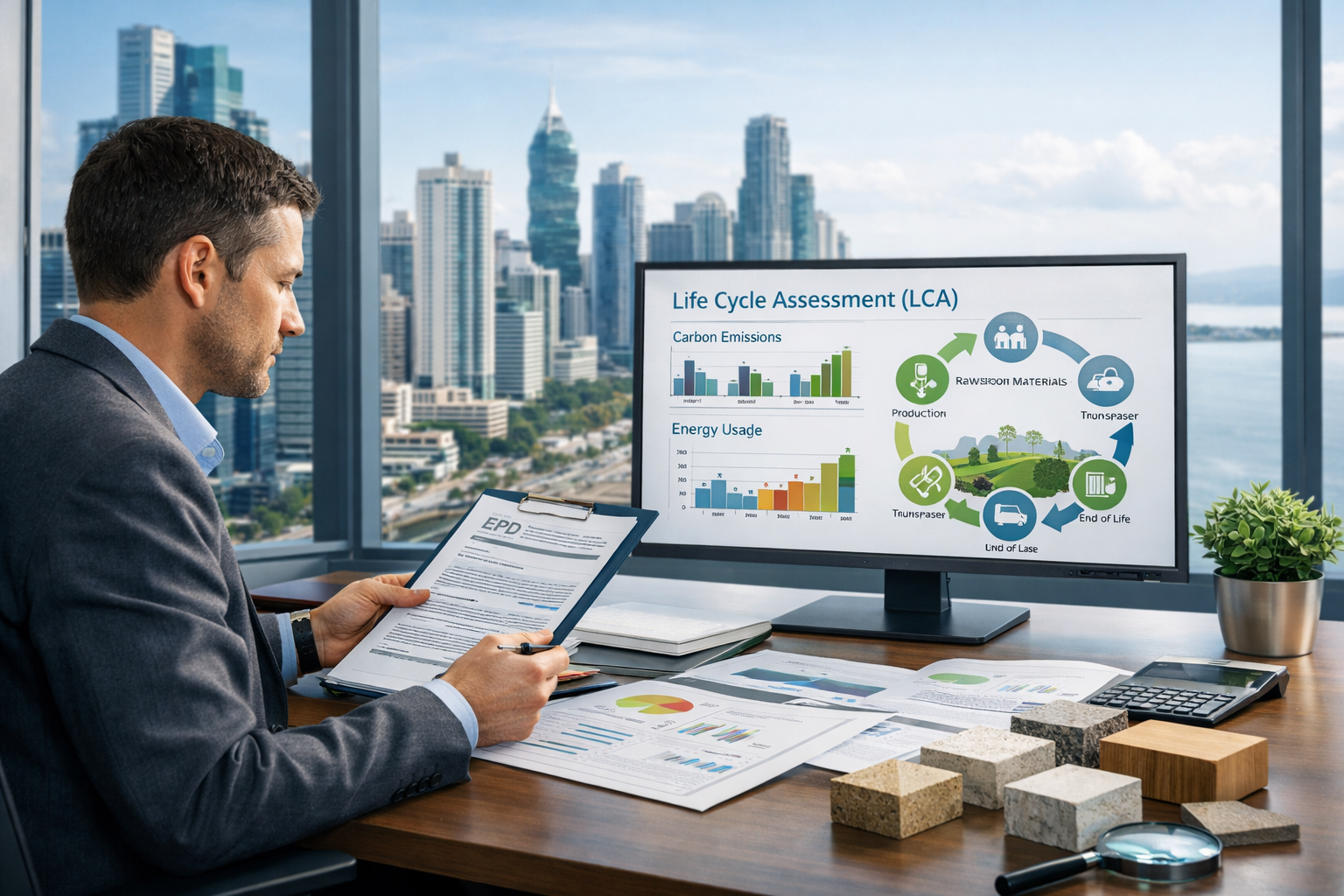
An EPD Consultant in Panama helps manufacturers turn environmental data into a verified market asset. For many suppliers, an EPD Consultant in Panama is the fastest way to move from scattered plant data to a clear Environmental Product Declaration that buyers, specifiers, and project teams can trust. An EPD is built on life cycle assessment principles and follows recognized programme rules and verification steps rather than broad marketing claims. ERKE’s service focus on EPD and LCA support aligns well with that process.
If your company sells construction materials, interior products, or technical systems in Panama, transparency matters. Architects, consultants, contractors, and procurement teams want comparable data. They look for verified information on embodied impacts, resource use, and product scope. That need becomes stronger in markets where sustainable construction keeps gaining attention, and the Panama Green Building Council exists to promote that direction.
Why an EPD Consultant in Panama matters
In simple terms, an Environmental Product Declaration is a standardized document that reports environmental impacts based on a life cycle assessment. The governing framework starts with ISO 14025, while many internationally used programmes also rely on related standards such as ISO 14040/44, ISO 21930, and EN 15804 depending on the product type and market. That means EPD work is technical from day one. It needs the right scope, the right data model, and the right programme pathway.
A strong consultant does more than fill out templates. First, they define the product and declared unit correctly. Next, they identify the relevant product category rules. Then, they collect plant and supply chain data, build the life cycle model, draft the declaration, and coordinate the third-party review. If you want to see how ERKE structures that support, review our EPD consulting services and LCA consulting services. The process is structured because publication requires consistency, traceability, and verification. The International EPD System also makes clear that EPDs are tied to programme rules and independent verification.
How an EPD Consultant in Panama reduces risk
The biggest mistakes usually happen early. Teams often start with incomplete bills of materials, weak transport assumptions, or inconsistent energy data. Some choose the wrong product category rules. Others overlook end-of-life scenarios or data quality checks. Those errors slow verification and weaken the final declaration.
An experienced consultant keeps the project disciplined. A clear boundary must be set at the start. Data responsibilities should also be assigned early. In addition, the consultant translates technical findings into language that commercial teams can use in tenders, technical submittals, and client conversations. As a result, your EPD becomes more than a report. It becomes a sales and specification tool.
Where EPDs create value for companies in Panama
For manufacturers in Panama, an EPD can support several business goals at once. It strengthens product transparency for building projects. Technical teams can also answer sustainability questions faster with verified data. Another advantage is stronger communication with multinational clients, designers, and investors who expect environmental evidence instead of generic green claims. In markets connected to sustainable design, that clarity helps products stay in the conversation longer. Panama’s green building ecosystem gives that conversation a relevant local context.
The commercial value is practical. An EPD helps procurement teams compare products on a more credible basis. It also gives architects and engineers clearer information for material selection. Developers gain a stronger documentation package when they pursue sustainability goals. Manufacturers also benefit because the process organizes internal data around raw materials, energy use, transport, and end-of-life assumptions. That internal discipline often improves future reporting and product strategy as well.
Just as important, an EPD does not stand alone. The best results come when the declaration connects to a broader product sustainability roadmap. That may include plant data improvement, carbon hotspot analysis, better supplier information, and clearer technical marketing language. When those parts work together, your declaration becomes easier to update and more useful to the market.
What to look for in an EPD consultant
Choose a consultant who understands both methodology and market use. Technical modeling matters, but communication matters too. Your team needs someone who can speak to plant managers, procurement staff, specifiers, and third-party verifiers without creating confusion.
Look for five qualities. First, standards knowledge. Your consultant should understand ISO 14025 and the programme structure behind publication. Second, LCA capability. The model must reflect real production data, not guesswork. Third, sector awareness. Construction materials, finishes, furniture, and industrial systems do not follow the same path. Fourth, verification readiness. The project should reach review with a clean audit trail. Fifth, business alignment. The final EPD should support market access, not just compliance. Those are the same building blocks that shape serious EPD programmes and consulting offers.
At ERKE, we approach EPD development as a structured consulting process. We connect life cycle assessment, technical documentation, and publication planning so clients can move with clarity. That approach works especially well for manufacturers that want a partner who understands both sustainable materials and project-facing requirements.
Frequently Asked Questions
What does an EPD consultant do?
An EPD consultant manages the full path from raw data to published declaration. That includes scope definition, data collection, LCA modeling, draft preparation, verifier coordination, and programme submission. The role matters because EPDs follow formal standards and third-party review steps, not informal sustainability claims.
Which standards matter for an EPD in Panama?
The core reference is ISO 14025 for Type III environmental declarations. Depending on the product and target market, the process may also use related LCA and construction-product standards through the selected programme operator. A consultant helps you choose the right framework before modeling begins.
How long does an EPD project usually take?
The timeline depends on product complexity and data quality. If your production data, bills of materials, and supplier inputs are organized, the process moves much faster. Delays usually come from missing primary data, unclear product scope, or corrections during verification.
Can a company selling in Panama publish an EPD through an international programme?
Yes. Many companies use international programme operators when they need recognized publication and verification pathways. The key is to match the right programme, product rules, and market objective from the start. The International EPD System is one example of a global programme used for this purpose.
Conclusion
If your product team wants stronger market credibility, clearer environmental data, and a smoother path to verified disclosure, working with an EPD Consultant in Panama is a smart next step. The right guidance reduces technical errors, improves documentation quality, and helps your declaration support real commercial goals.
For tailored support on EPD development, life cycle assessment, and third-party ready documentation, contact ERKE through our contact page.