An EPD Consultant in Slovenia helps manufacturers turn environmental data into a verified product declaration that buyers, designers, and certification teams can trust. When you work with an EPD Consultant in Slovenia, you create a clearer route to specification, export readiness, and stronger sustainability communication. An Environmental Product Declaration is a document that provides comparable, objective, and third-party verified information about environmental performance, while the EU construction products framework gives the market a common language for comparing product performance across countries. Slovenia applies that wider framework through its own rules for construction products as well.
Why an EPD Consultant in Slovenia Matters
Manufacturers in Slovenia face a practical challenge. They need to present environmental data in a format that specifiers can understand, verifiers can approve, and project teams can compare. That is why expert guidance matters. A consultant connects life cycle assessment, product category rules, declared units, factory data, and verification into one controlled process. This structure reduces confusion and improves the credibility of the final declaration.
For construction products, the value is commercial as well as technical. Buyers no longer look only at cost and performance. They also want transparent information about life cycle impacts, resource use, and carbon-related indicators. A well-prepared EPD supports those discussions with a standardized document instead of a general sustainability claim. In Slovenia, that need becomes even more important for brands that serve both local projects and wider EU markets through Slovenia’s construction products framework.
What an EPD Consultant in Slovenia Actually Delivers
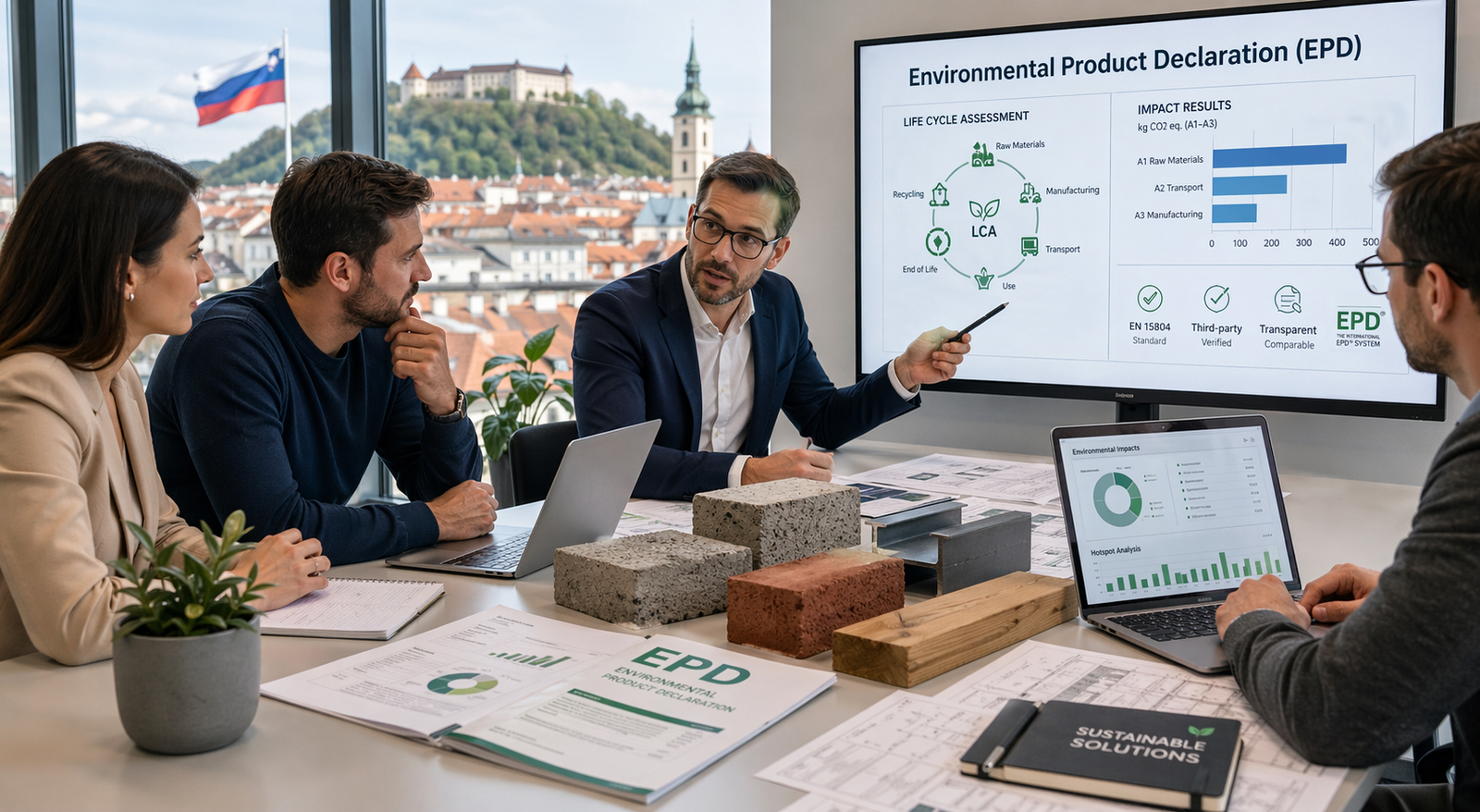
A strong consultant does more than complete templates. First, they define the product scope, declared unit, and target market. Next, they collect primary data from manufacturing, transport, packaging, and waste streams. Then they model the product with life cycle assessment methodology, align the work with the correct product category rules, prepare the declaration, and guide the independent verification stage. If you need technical support behind the process, ERKE’s LCA consulting and EPD services cover the core technical work required for reliable environmental product data.
This sequence matters because weak inputs create weak outputs. Missing energy data, unclear supplier information, or the wrong assumptions can slow verification and weaken trust in the final result. A good consultant spots those issues early. That keeps the project moving and protects the product launch or tender timeline.
Choosing an EPD Consultant in Slovenia for Different Product Types
The right approach depends on the product. Concrete, steel, insulation, façade systems, ceramics, wood products, furniture, and MEP components all require accurate data and correct rule selection. Some companies need a single-product declaration. Others need a product family strategy or a phased roadmap for several EPDs across one portfolio. The consultant should match the method to the product, not force every manufacturer into the same process.
Product knowledge matters as much as software. Your consultant should understand production logic, bill of materials quality, supplier gaps, and the questions architects or procurement teams will ask after publication. They should also help your team convert technical findings into a sales tool that distributors and specification teams can use with confidence.
How EPD Consultant in Slovenia Services Support Market Growth
The clearest benefit is trust. An EPD gives designers and buyers a consistent way to review environmental information. It helps your team answer tender questions faster. It also supports more serious conversations about sustainable materials, product transparency, and project documentation. Instead of rebuilding your environmental story for every new opportunity, you can rely on verified life cycle data.
There is also a regional advantage. ECO Platform states that audited ECO EPD programmes follow EN 15804 and are recognized across Europe. For Slovenian manufacturers, that wider recognition can support specification work beyond one domestic market and make environmental data more useful across cross-border projects.
Timing matters too. The revised Energy Performance of Buildings Directive entered into force on 28 May 2024 and must be transposed into national laws by 29 May 2026, keeping the focus on renovation and building decarbonisation across the EU. As project teams pay closer attention to product transparency and environmental impacts, manufacturers with verified data are better placed to join serious conversations early.
A Practical Process for Manufacturers
Most successful EPD projects follow five clear steps. First, define the product scope, declared unit, and target use. Second, gather primary production data, energy inputs, transport data, packaging flows, and waste figures. Third, model the life cycle impacts and review environmental hotspots. Fourth, prepare the declaration and coordinate third-party verification. Fifth, publish the EPD and integrate it into bids, technical submittals, and product communication. This kind of structured workflow reflects the standard development logic used by established EPD programmes.
Each step affects the next one. Early planning saves time because it aligns the plant team, sustainability lead, and consultant from the start. When everyone works from one roadmap, the project becomes easier to manage and the final declaration becomes easier to use in real commercial situations.
Why ERKE Is a Strong Fit for Slovenia-Focused EPD Work
For manufacturers that want practical delivery, the right consultant should combine technical depth with market awareness. ERKE’s published service pages show dedicated capability in EPD development, life cycle assessment, and sustainable material analysis. That mix matters because an EPD project often succeeds on coordination. You need accurate modeling, disciplined data collection, and clear communication throughout the verification process.
Just as important, the work should remain useful after publication. Your EPD should support architects, consultants, contractors, and procurement teams when they compare products. It should also help your internal sales team explain verified environmental performance in a precise and credible way. That is where a consultant adds long-term value, not just project delivery.
Conclusion
If you want to strengthen product credibility, support better material decisions, and prepare your products for wider European visibility, an EPD is a practical next step. The key is to treat it as both a technical and commercial project. With the right consultant, you can build reliable data, pass verification with fewer delays, and turn environmental transparency into a stronger market position.
Ready to move forward? Visit ERKE’s contact page to discuss services for EPD Consultant in Slovenia and build a clear roadmap for your next declaration.
Frequently Asked Questions
What does an EPD consultant in Slovenia do?
An EPD consultant in Slovenia manages scope definition, data collection, life cycle assessment, rule alignment, verifier coordination, and final publication. The goal is to produce a comparable, objective, and third-party verified declaration that the market can trust.
Is an EPD mandatory in Slovenia?
Not for every product in every situation. However, Slovenia applies construction product rules within the wider EU framework, and many manufacturers use EPDs to support tenders, improve transparency, and meet market expectations around verified environmental information.
Can one EPD support exports beyond Slovenia?
Often, yes. ECO Platform states that audited ECO EPD programmes are recognized across Europe, which helps manufacturers present consistent environmental information in more than one market.
Why is life cycle assessment important in an EPD project?
Life cycle assessment provides the calculation base behind the declaration. Without strong LCA work, the EPD cannot deliver credible product-level environmental information or stand up well during verification.