Uzbekistan Lighting Design Company selection can shape how a building looks, works, and feels early. An experienced Uzbekistan Lighting Design Company also helps project teams balance energy targets, comfort, safety, and brand identity.
Lighting affects far more than visibility. It guides movement, supports productivity, improves atmosphere, and reduces operational waste.
ERKE approaches lighting as part of a wider building performance strategy. The goal is simple: create refined spaces that operate efficiently and support people. This requires daylight analysis, photometric calculations, control scenarios, and close coordination with architecture.
Why Choose an Uzbekistan Lighting Design Company?
A strong lighting partner understands local project needs and international design expectations. Uzbekistan has demand for modern workplaces, hospitality destinations, retail environments, cultural venues, and industrial assets. Each project type needs a different lighting language.
Office projects need visual comfort, low glare, and balanced brightness. Hotels need layered scenes for lobbies, rooms, restaurants, and outdoor areas. Retail spaces need light that supports merchandising and movement. Industrial buildings need reliable illumination, safety, and efficient maintenance.
A specialist team connects these needs with architectural intent. That connection prevents common mistakes. Overlit areas waste energy. Poorly planned fixtures create glare. Weak controls limit flexibility. Uncoordinated lighting can also damage ceiling layouts and interior concepts.
A professional design process solves these issues early. It turns lighting into a planned system, not a late-stage product list.
What a Professional Lighting Strategy Includes
Effective lighting design starts with discovery. The team studies the building function, users, schedule, ceiling heights, façade direction, interior finishes, and operational goals. This stage defines the design intent before technical work begins.
Next, designers create a lighting concept. This concept sets mood, hierarchy, brightness levels, accent areas, and visual rhythm. It also guides interior lighting, exterior lighting, landscape lighting, façade lighting, and control zoning.
Photometric calculations test the concept. These calculations help the team review illuminance, uniformity, glare risk, contrast, and fixture spacing. As a result, the project can avoid guesswork.
Controls play a major role. Dimming, occupancy sensors, daylight sensors, scene settings, and smart lighting management can reduce waste. They also improve user experience and support flexible operation across events, seasons, and daily routines.
Clear documentation then moves the strategy into construction. Drawings, luminaire schedules, specifications, control narratives, and coordination notes help contractors build the design correctly.
Lighting Design and Sustainable Building Performance
Lighting has a direct link with energy performance. Efficient LED luminaires reduce power demand. Smart controls reduce unnecessary use. Daylight integration can lower electric lighting loads during daytime hours. Good design also reduces over-specification, which can cut both capital cost and operating cost.
Sustainable lighting also protects the night environment. Exterior lighting should guide people safely without creating light trespass, sky glow, or unnecessary glare. This matters for campuses, hotels, residential developments, logistics hubs, and public landscapes.
Project teams often connect lighting decisions with green building goals. ERKE supports this wider context through green building consultancy, where energy, materials, indoor quality, and operational performance work together.
International references also help teams define quality. The International Commission on Illumination provides a global scientific framework for light and lighting. The WELL Light concept also highlights visual comfort, circadian support, sleep quality, and productivity as important indoor environment goals.
Human-Centered and Architectural Lighting
People notice light even when they do not describe it in technical terms. A bright office can still feel uncomfortable if glare hits screens. Luxury lobbies can lose impact when accents lack contrast. Restaurants can feel cold when color temperature does not match the concept.
Human-centered lighting focuses on users first. It considers visual tasks, eye comfort, age groups, space use, time of day, and emotional tone. In workplaces, this can support concentration and reduce visual fatigue. In hotels, it can create a welcoming arrival and calm guest rooms.
Color quality also matters. A poor color rendering choice can make materials, food, artwork, and skin tones look unnatural. Therefore, luminaire selection should include color rendering, color temperature, beam angle, glare control, lifetime, maintenance needs, and compatibility with control systems.
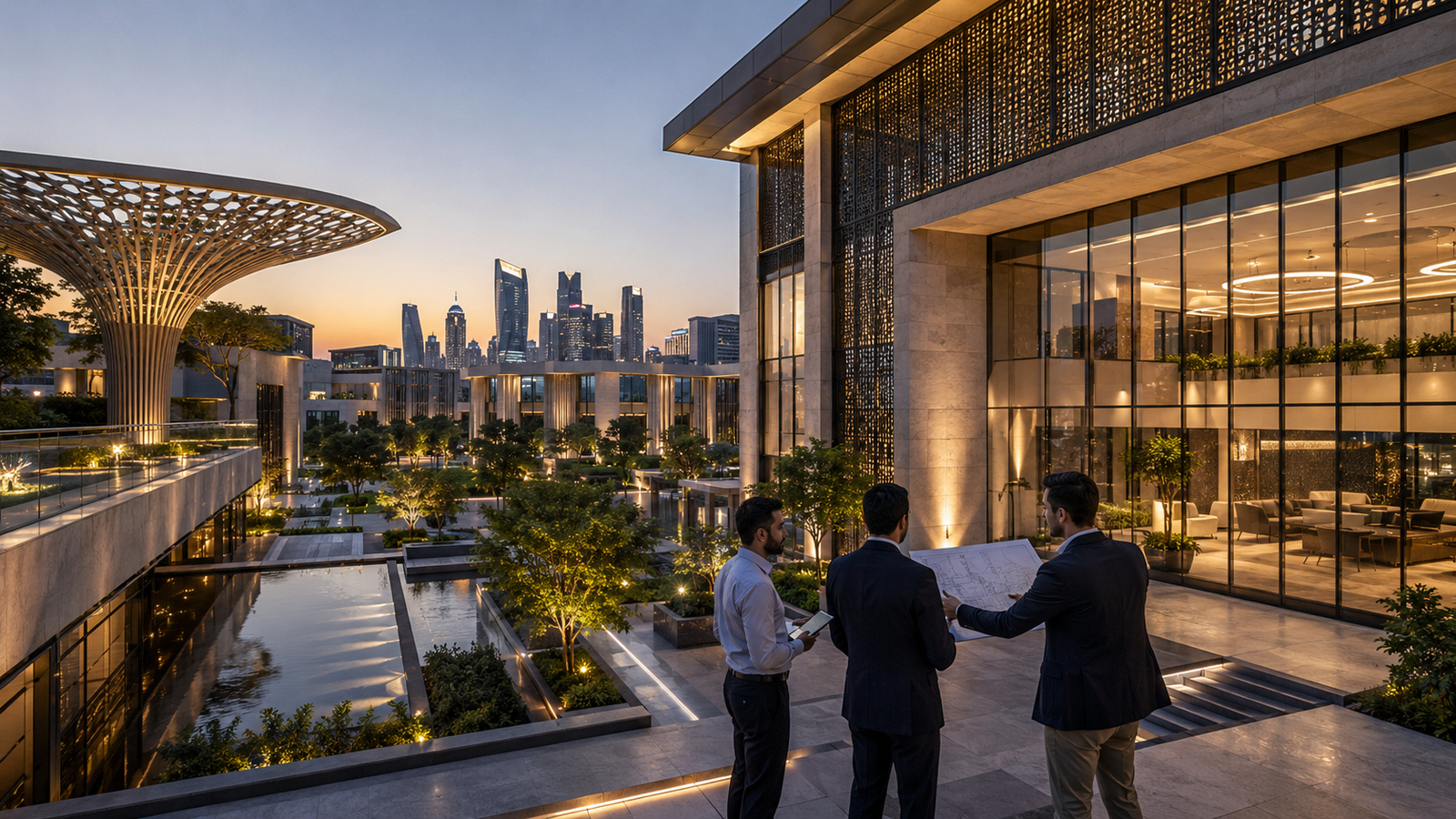
Lighting also helps a building communicate. Façade lighting should highlight form, texture, and depth. Landscape lighting can make pathways, gardens, water features, and entrances safer and more memorable.
What an Uzbekistan Lighting Design Company Should Deliver
A capable Uzbekistan Lighting Design Company should deliver practical outputs, not only ideas. Look for a partner that can provide a lighting concept report, calculation files, luminaire schedule, control narrative, technical drawings, budget support, mock-up guidance, and site-stage review.
The team should explain decisions clearly. Owners and architects need to understand why the team selected a fixture and how each scene works. Clear communication reduces change orders and improves trust.
Strong consultants also think beyond opening day. They consider maintenance, replacement, cleaning access, driver locations, spare parts, and future flexibility. This long-term view helps the owner protect value.
Coordination with Architecture, MEP, and Certification Goals
Lighting touches many disciplines. It affects ceiling plans, electrical loads, HVAC coordination, façade details, emergency systems, interior finishes, and maintenance access. Early coordination saves time and protects design quality.
Certification goals add another layer. Projects that target LEED or similar frameworks need careful alignment between lighting, energy efficiency, controls, indoor environmental quality, and exterior light impact. This makes the design process more structured and transparent.
How ERKE Supports Lighting Design in Uzbekistan
ERKE combines lighting design experience with sustainability and engineering knowledge. This integrated perspective helps project teams connect aesthetics with measurable performance. It also supports investors, architects, developers, and contractors who need international quality on complex projects.
The process can support concept design, tender documentation, value engineering, site review, and post-occupancy improvement. ERKE can also help teams align lighting with energy efficiency, green building certification, low-carbon operation, and better user experience.
Conclusion
Choosing the right Uzbekistan Lighting Design Company can improve visual identity, energy performance, and daily experience. Strong lighting design turns technical systems into architectural value. It also helps owners reduce waste, support users, and protect long-term asset quality.
Successful projects start early. They define goals, coordinate disciplines, test ideas, and document decisions with care. With the right consultant, lighting becomes a strategic design tool rather than a final procurement task.
Frequently Asked Questions
What does a lighting design company do?
A lighting design company plans how natural and artificial light will work in a building or outdoor space. It develops concepts, calculations, fixture schedules, control strategies, and technical drawings.
Why should projects in Uzbekistan use professional lighting design?
Professional lighting design helps projects improve comfort, safety, energy efficiency, brand value, and long-term operation. It also reduces design conflicts during construction.
What sectors need lighting design services?
Offices, hotels, retail stores, mixed-use developments, industrial facilities, public spaces, cultural buildings, healthcare spaces, and campuses all benefit from expert lighting design.
How does lighting design support sustainability?
Lighting design supports sustainability through efficient luminaires, daylight use, smart controls, lower energy demand, reduced glare, and careful exterior light management.
Ready to plan a high-performance lighting strategy for Uzbekistan? Contact ERKE to discuss services related to Uzbekistan Lighting Design Company needs and start your project with expert guidance.