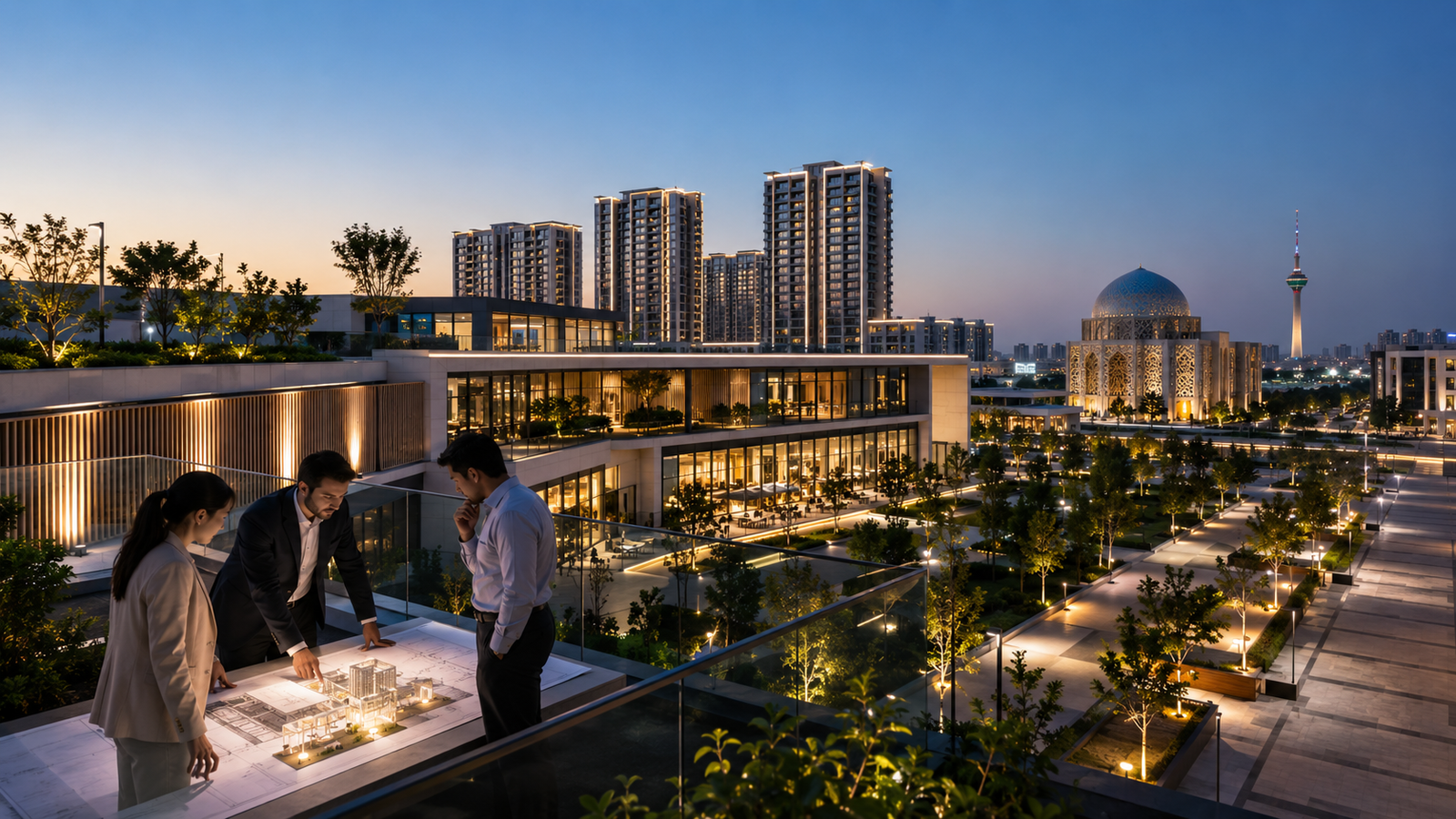
Tashkent Lighting Design Company support matters when a project needs comfort, efficiency, and a clear visual identity. A Tashkent Lighting Design Company should help investors, architects, and contractors turn lighting into a measurable asset.
In Tashkent, commercial spaces, hotels, offices, retail areas, campuses, and mixed-use buildings need lighting strategies that meet international expectations. Good lighting helps people see, move, focus, and trust the space. It also affects energy use, maintenance cost, night-time safety, façade perception, and certification goals.
ERKE approaches lighting as a technical design discipline. The team connects electrical engineering, daylight analysis, automation, sustainability, and green building know-how. This integrated method helps project owners make lighting decisions early, before costly site changes appear.
What Does a Tashkent Lighting Design Company Do?
A professional lighting partner plans how artificial light and daylight work together. The process covers concept design, calculation, fixture selection, lighting control scenarios, technical documentation, and coordination with architecture.
The goal is simple: every space should receive the right light, in the right place, at the right time.
Different building types need different lighting priorities. Offices need visual comfort. Retail areas need product clarity. Industrial facilities need safe, durable, and efficient systems.
A strong team also protects the project from common risks. Overlit areas waste energy. Poor glare control reduces comfort. Weak coordination causes ceiling conflicts.
Why Lighting Design Matters for Projects in Tashkent
Lighting shapes the first impression of a building. It also influences performance every day. The real value comes from the full lifecycle.
Efficient lighting can lower energy demand. Smart controls can reduce unnecessary operation. Better visual comfort can support productivity. Carefully planned exterior lighting can improve safety without creating glare or light trespass.
International certification systems also treat lighting as part of environmental quality. For example, the U.S. Green Building Council explains that responsible exterior lighting should address uplight, glare, and light trespass through proper luminaires, placement, and controls. The Five Principles for Responsible Outdoor Lighting from DarkSky and the Illuminating Engineering Society also emphasize purpose, direction, level, control, and warmer color where appropriate.
These principles fit Tashkent projects because they balance function with urban responsibility. A building can look distinctive at night without flooding the sky or disturbing nearby users.
Tashkent Lighting Design Company Criteria for Owners
Project owners should evaluate a lighting design company with clear criteria. The right partner should ask technical questions before proposing products.
First, the team should understand the building type. A hospital, airport interior, office tower, showroom, and hotel need different light levels and visual priorities.
Next, the company should work with calculations, not assumptions. Lighting simulations show illuminance, uniformity, glare risk, daylight contribution, and façade effects. They help decision-makers compare options with evidence.
Third, the team should coordinate with electrical loads, ceiling layouts, automation panels, emergency lighting, and maintenance plans. Finally, the consultant should connect lighting to sustainability targets.
ERKE’s Integrated Lighting Design Approach
ERKE has delivered electrical project design and lighting consultancy services since 2007. Today, the company combines lighting design with green building consultancy, product sustainability, corporate sustainability, energy modeling, daylight modeling, and light pollution analysis.
Developers want international quality. Tenants expect comfortable spaces. Operators need systems they can manage easily. Architects also need lighting that respects their design intent.
ERKE’s Lighting Consultancy service supports energy-efficient lighting and automation through daylight analysis and daylight modelling. The team can also connect lighting decisions with broader sustainability goals through Green Building Consultancy.
How ERKE Designs Lighting for Performance
ERKE starts with project goals. The team reviews architecture, user profiles, operating hours, brand expectations, and sustainability targets. Then it defines lighting concepts for each zone.
After that, engineers build calculations and test design options. They review light levels, glare, fixture distribution, color temperature, color rendering, control groups, and maintenance access. This stage turns design intent into measurable performance.
Coordination follows. ERKE aligns lighting layouts with electrical infrastructure, reflected ceiling plans, façade details, landscape zones, and automation scenarios. Clear documentation helps contractors price, install, test, and operate the system correctly.
Key Lighting Strategies for Tashkent Buildings
A modern Tashkent project needs more than bright rooms. It needs layered, efficient, and controllable lighting.
Daylight-first planning: Use daylight as an asset. Analyze window orientation, shading, glare, and interior reflectance. Then reduce artificial lighting where daylight already supports the task.
Layered interior lighting: Combine ambient, task, accent, and decorative lighting. This creates depth and flexibility. It also helps each area support a different user need.
Glare control: Choose optics, shielding, mounting heights, and layouts carefully. Glare can damage comfort even when light levels meet the target.
Smart controls: Use presence sensors, daylight dimming, time schedules, scenes, and central monitoring. Controls help the operator match lighting to real use.
Responsible exterior lighting: Aim light only where people need it. Limit spill, avoid upward light, and use appropriate color temperature. DarkSky’s responsible outdoor lighting guidance gives a practical framework for this approach.
Certification alignment: Plan lighting with sustainability requirements in mind. USGBC’s Light Pollution Reduction guidance shows how exterior lighting decisions can support green building goals.
Common Mistakes in Lighting Projects
Many projects face the same lighting problems. They often start with product selection before strategy.
A fixture schedule cannot replace a design concept. Cheap products may raise maintenance costs. High wattage does not guarantee better visibility. Decorative lighting can weaken comfort when it ignores glare. Exterior lighting can harm neighbors when designers skip spill control.
Late coordination also creates risk. If lighting design starts after ceiling and electrical plans finish, the team loses flexibility. Early collaboration saves time and protects quality.
Conclusion: Choose a Lighting Partner That Adds Measurable Value
A good lighting strategy improves comfort, energy performance, safety, brand perception, and long-term operation. It also helps the project team make decisions with data, not guesswork.
ERKE brings lighting consultancy together with electrical engineering and sustainable building expertise. This combination gives Tashkent projects a stronger design process from concept to handover.
For each building type, a Tashkent Lighting Design Company should translate user needs into technical criteria. Early design creates more options, better coordination, and lower risk.
Frequently Asked Questions
What does a Tashkent Lighting Design Company provide?
A Tashkent Lighting Design Company provides lighting concepts, calculations, fixture planning, control scenarios, coordination drawings, and sustainability-focused guidance for buildings.
Why should Tashkent projects use professional lighting design?
Professional lighting design improves comfort, energy efficiency, safety, night-time appearance, and operational control. It also reduces coordination problems during construction.
When should a lighting consultant join the project?
A lighting consultant should join during concept or schematic design. Early input improves daylight use, ceiling coordination, fixture strategy, and budget control.
Can lighting design support green building certification?
Yes. Lighting design can support energy performance, indoor environmental quality, daylight use, exterior light pollution reduction, and commissioning goals.
Start Your Tashkent Lighting Design Project with ERKE
Need a reliable Tashkent Lighting Design Company for an office, hotel, or mixed-use project? Contact ERKE for integrated lighting consultancy, electrical coordination, and sustainable building expertise. Visit the ERKE contact page and share your project details today.