An EDGE Consultant in Dammam helps project teams reduce energy use, water demand, and the embodied impact of building materials. The consultant also turns sustainability goals into clear design actions, cost checks, and certification documents.
For developers, investors, architects, and contractors, early guidance can prevent late redesigns. It can also identify efficiency measures that offer strong value. This support suits residential, commercial, hospitality, healthcare, logistics, and industrial developments.
What Does an EDGE Consultant in Dammam Do?
An EDGE consultant manages the technical path from initial assessment to final certification. The work starts with project data, drawings, specifications, schedules, and expected operating conditions. Next, the consultant builds a baseline and tests practical improvement measures.
EDGE is a measurable green building standard and certification system created by the International Finance Corporation. A project must demonstrate at least 20% savings in energy, water, and embodied energy in materials against a local baseline. The official EDGE overview explains this performance-based approach.
A qualified consultant usually supports:
- Early feasibility and target setting
- EDGE App modeling and option comparisons
- Energy, water, and material efficiency strategies
- Coordination with architects, engineers, and contractors
- Evidence planning and document control
- Responses to auditor or certifier comments
- Final construction-stage verification
This role goes beyond completing software inputs. Strong consultancy connects each modeled measure to the design, specification, procurement package, and site installation.
Why EDGE Certification Matters for Dammam Projects
Resource-efficient buildings can lower operating costs and strengthen asset positioning. They may also support environmental commitments, investor reporting, green finance discussions, and tenant expectations.
The value depends on practical project decisions. Efficient façades, glazing, lighting controls, cooling systems, low-flow fixtures, and lower-impact materials can influence the result. Yet each measure must suit the building type, budget, and delivery plan.
The International Finance Corporation’s green buildings guidance notes that EDGE helps developers design lower-emission, cost-efficient buildings. It also confirms the minimum improvement requirement across three resource categories.
For a Dammam development, the consultant should prioritize measures that remain workable during procurement and construction. A strategy offers little value if suppliers cannot document it or contractors cannot install it correctly.
Key Services Provided by an EDGE Consultant
How an EDGE Consultant in Dammam Manages the Process
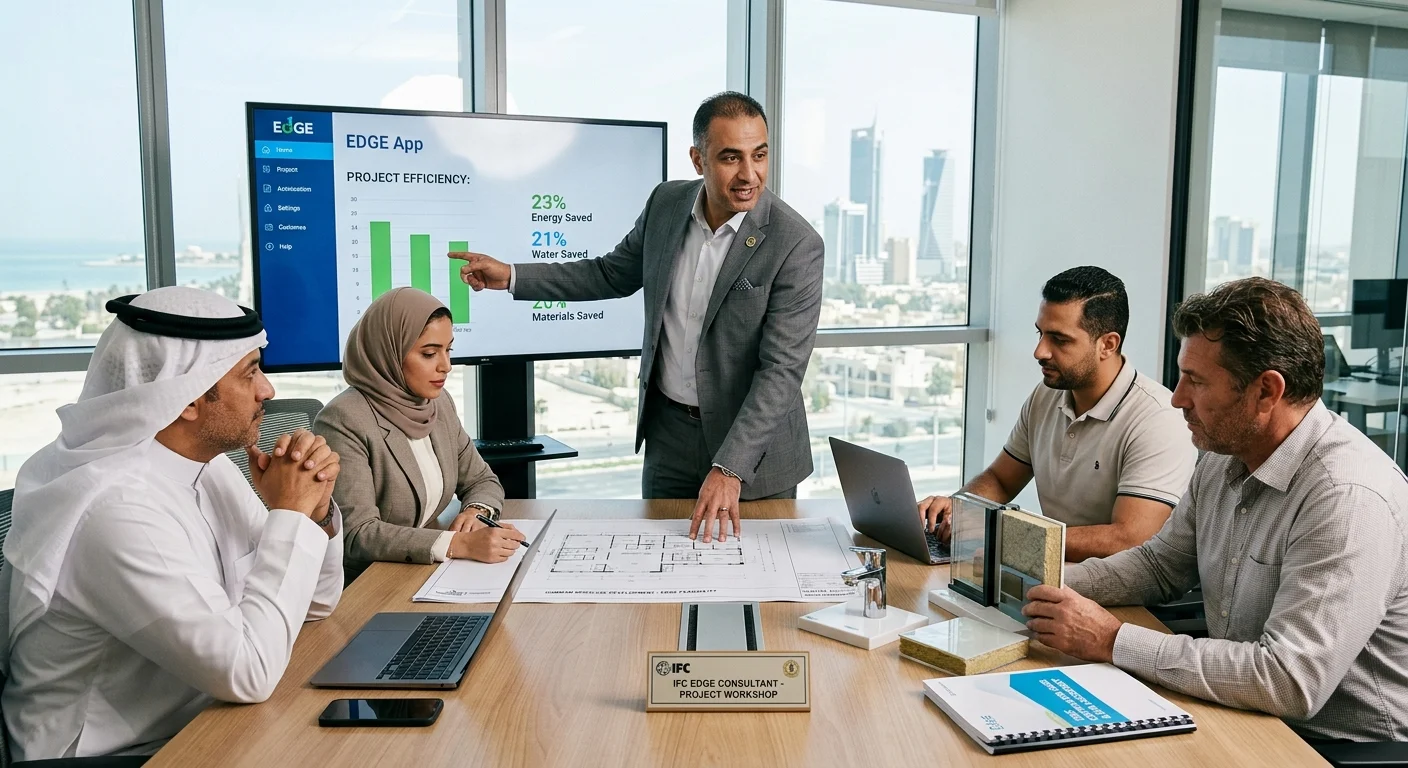
The process normally begins with a project workshop. The consultant confirms the building type, certification scope, design stage, responsibilities, and required data.
Next, the team creates the base case in the EDGE App. Proposed measures are tested against that baseline. The model shows projected savings and helps the team compare alternatives.
Results should arrive in a decision-ready format. Each recommendation should show expected savings, cost implications, design responsibility, and documentation needs.
Energy Efficiency and Cooling Demand
Energy strategy often has the largest effect on operating costs. The consultant reviews orientation, envelope performance, glazing, shading, lighting power, controls, cooling equipment, and renewable energy options.
Good advice starts with reducing demand. Efficient systems can then meet the remaining load with less energy. This sequence supports better equipment sizing and clearer cost evaluation.
The consultant also aligns assumptions with mechanical and electrical teams. Conflicting schedules, occupancy values, or equipment data can weaken the model and create review comments.
Water Efficiency and Fixture Selection
Water savings often depend on plumbing fixtures, irrigation demand, landscape choices, and process water. The consultant calculates fixture performance and checks product data before procurement.
Low-flow fixtures must still support comfort and operations. Therefore, the team should compare flow rates, pressure, maintenance needs, and local availability. Clear fixture schedules help contractors purchase compliant products.
Materials and Embodied Impact
The materials assessment covers major building elements. Structural systems, walls, floor finishes, roofing, insulation, and glazing may affect the result.
A consultant can compare alternatives before specifications become fixed. This allows lower-impact selections without disrupting architecture or performance.
Product data, quantities, and specifications must match the model. Early procurement coordination makes final verification easier.
EDGE Certification Stages
The official EDGE certification process includes preliminary certification during design and final certification after construction. Existing buildings may proceed directly toward final certification when they meet the relevant requirements.
A typical project follows these steps:
- Define the scope and certification target.
- Enter project information in the EDGE App.
- Model measures and confirm minimum savings.
- Prepare drawings, calculations, schedules, and product evidence.
- Submit the design package for audit.
- Track approved measures during construction.
- Compile as-built evidence and support the site audit.
- Close comments and obtain final certification.
The consultant should maintain a live responsibility matrix. It assigns each measure to an owner, deadline, drawing, specification, and evidence item.
When Should You Appoint an EDGE Consultant?
The best time is during concept or early design. At that stage, the team can influence massing, façade design, systems, and materials without expensive changes.
Appointment during detailed design can still work. However, fewer options may remain open. A late appointment often shifts attention from optimization to compliance recovery.
Developers should appoint a consultant before key design packages are frozen. This creates time for modeling, cost review, and coordinated decisions.
ERKE provides integrated EDGE certification consultancy for projects that need structured modeling, multidisciplinary coordination, and certification management.
How to Select the Right Consultant
Choose a team that can explain both the calculation and the construction implication. Software knowledge alone is not enough.
Ask potential consultants:
- Who will manage the model and technical coordination?
- How will measures be prioritized by cost and savings?
- What information must the design team provide?
- How will product substitutions be reviewed?
- Who will track construction evidence?
- How will audit comments be closed?
A strong consultant provides direct answers, defined deliverables, and a realistic schedule. The proposal should also separate consultancy duties from independent audit and certification roles.
Conclusion
An EDGE Consultant in Dammam gives project teams a measurable route toward lower resource use and credible green building certification. The greatest value comes from early modeling, practical choices, disciplined documentation, and construction follow-up.
With the right approach, certification becomes more than a label. It becomes a framework for controlling operating demand, material impact, project risk, and long-term asset performance.
Frequently Asked Questions
What is EDGE certification?
EDGE is an international green building standard and certification system developed by IFC. It evaluates projected savings in energy, water, and embodied energy in materials against a local baseline.
What is the minimum requirement for EDGE certification?
A project must achieve at least 20% savings in energy, water, and embodied energy in materials.
Can existing buildings in Dammam pursue EDGE certification?
Yes. Existing buildings and major renovations can pursue certification when they meet the applicable modeling, documentation, and verification requirements.
Does an EDGE consultant issue the certificate?
No. The consultant prepares the model and supports compliance. An approved independent provider and auditor complete the formal review and certification process.
Planning an EDGE-certified project in Dammam? Contact ERKE Sustainability Consultancy to discuss feasibility, modeling, documentation, and certification management.