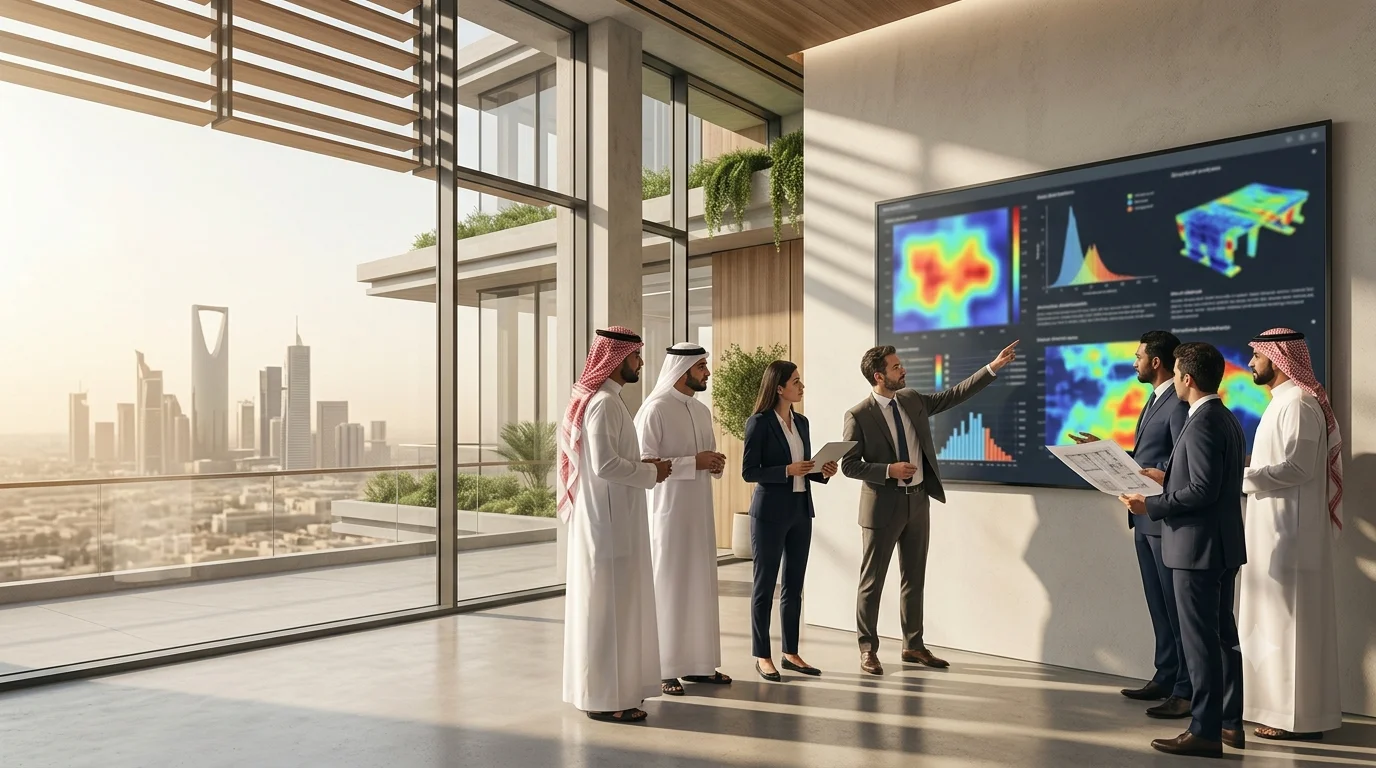
An EDGE Consultant in Riyadh helps project teams turn sustainability targets into measurable design decisions. Working with an EDGE Consultant in Riyadh early can reduce redesign, clarify documentation, and support a smoother certification pathway.
Direct answer: EDGE consulting covers baseline modeling, efficiency measure selection, design coordination, documentation, audit support, and construction-stage verification. The goal is to demonstrate measurable savings in energy, water, and embodied energy in materials.
Riyadh’s market includes offices, homes, hotels, healthcare facilities, retail assets, schools, warehouses, and mixed-use projects. Each building type has different operating patterns. Therefore, the consultant must connect certification requirements with actual use, budget, procurement, and delivery.
Why Choose an EDGE Consultant in Riyadh?
EDGE stands for Excellence in Design for Greater Efficiencies. The system combines a digital modeling tool, a green building standard, and third-party certification. Under the official EDGE certification framework, a standard project must show at least 20% savings in energy, water, and embodied energy in materials against the applicable baseline.
Achieving that threshold requires coordinated decisions across architecture, mechanical systems, electrical design, plumbing, landscape, and material selection. A consultant translates the target into practical actions for every discipline.
Riyadh also presents specific performance priorities. High cooling demand makes façade design, glazing, shading, insulation, equipment efficiency, lighting power, and controls important. Water strategies may include efficient fixtures, irrigation reduction, native planting, and careful system selection. Material choices can influence embodied impacts, procurement risk, and certification evidence.
The Riyadh Sustainability Strategy addresses energy, climate, water, waste, air quality, and biodiversity. This wider direction increases the value of measurable building performance and transparent reporting.
What Does an EDGE Consultant Do?
A strong consultant guides the project from feasibility through final certification. The work should remain technical, transparent, and connected to the design programme.
| Project stage | Consultant’s role | Main output |
|---|---|---|
| Concept | Review scope, building type, location, and targets | Feasibility assessment |
| Schematic design | Build the baseline and test efficiency measures | Initial EDGE model |
| Detailed design | Coordinate selected measures with all disciplines | Updated model and action list |
| Tender | Align specifications and material evidence | Certification-ready requirements |
| Construction | Track substitutions, approvals, and site evidence | Compliance records |
| Completion | Support the audit and close documentation gaps | Final submission |
How an EDGE Consultant in Riyadh Manages Certification
First, the consultant defines the certification boundary and confirms the building typology. Next, the team enters project data into the EDGE App and reviews baseline assumptions. The model then compares proposed measures with a conventional local reference case.
After that, the consultant tests options that can achieve the required savings. Measures may include improved glazing, external shading, efficient cooling, lower lighting power, occupancy controls, low-flow fixtures, reduced irrigation, and lower-impact materials. The final package should balance certification performance, capital cost, operating cost, and constructability.
Finally, the consultant organizes evidence for independent review. Drawings, schedules, calculations, product data, invoices, photographs, and commissioning records may support the submission. The auditor and certification provider verify compliance independently; the consultant prepares the team for that review.
Which Projects Can Pursue EDGE Certification?
EDGE can support many asset types in Riyadh:
- Residential buildings and housing developments
- Offices and corporate headquarters
- Hotels and serviced apartments
- Retail centers and mixed-use developments
- Hospitals, clinics, and educational buildings
- Warehouses, logistics facilities, and industrial assets
The IFC green building program describes EDGE as a global system used across many countries and building sectors. It emphasizes measurable resource reductions and cost-efficient green design.
Projects can pursue certification during design and after construction. Early engagement usually creates more options because the team can improve the envelope, systems, layouts, and specifications before procurement. Late engagement remains possible, but it may limit cost-effective choices.
What Are the Main Benefits for Riyadh Projects?
Lower Operating Demand
Energy and water measures can reduce utility demand across the building’s life. In Riyadh, cooling, lighting, pumping, domestic water, and irrigation deserve close review.
Clear Performance Evidence
EDGE uses modeled results and documented measures. This gives investors, lenders, tenants, and asset managers a consistent performance narrative rather than broad environmental claims.
Better Design Coordination
Certification creates a shared target for architects, engineers, contractors, suppliers, and owners. A live action register helps teams see responsibilities and deadlines.
Stronger Market Positioning
Verified performance can support ESG objectives, investor reporting, tenant communication, and sustainable finance discussions. Commercial value depends on the asset, yet credible certification can strengthen differentiation.
Controlled Certification Risk
A structured process identifies weak points before they become site problems. Early reviews also reduce the risk of unsupported substitutions, missing product data, or inconsistent drawings.
How ERKE Supports EDGE Projects in Riyadh
ERKE combines green building consultancy with engineering analysis and multidisciplinary coordination. Its team has delivered sustainability services since 2007 and supported more than 200 green building certification processes.
For Riyadh projects, ERKE can help owners establish a realistic target, select efficient measures, coordinate design teams, and prepare certification documents. The team can also connect the EDGE model with energy analysis, water strategies, material review, commissioning needs, and cost priorities.
ERKE’s EDGE certification consultancy follows a practical sequence:
- Project review and certification feasibility
- Baseline modeling and initial savings analysis
- Design workshops with project disciplines
- Optimization of energy, water, and material measures
- Documentation planning and evidence tracking
- Audit coordination and response management
- Construction follow-up and final certification support
This method keeps the target visible throughout design and construction. It also gives decision-makers a clear record of measures, expected savings, responsibilities, and open risks.
Conclusion
Choosing an EDGE Consultant in Riyadh can help a project convert sustainability goals into verified performance. Effective support connects modeling, design, procurement, construction evidence, and independent verification.
Early involvement provides the strongest advantage. It allows the team to test alternatives, protect the budget, and avoid late changes. With the right roadmap, EDGE certification can support resource efficiency, operational value, and credible environmental reporting.
Frequently Asked Questions
What Is EDGE Certification?
EDGE is a green building standard, software platform, and certification system created by IFC. Standard certification requires at least 20% savings in energy, water, and embodied energy in materials against a baseline.
When Should an EDGE Consultant Join a Riyadh Project?
The best time is during concept or schematic design. Early involvement gives the team more control over the façade, systems, water fixtures, landscape, and materials.
Does an EDGE Consultant Issue the Certificate?
No. An independent auditor and certification provider verify the project. The consultant manages the model, coordinates measures, prepares evidence, and supports review responses.
Can Existing Buildings Pursue EDGE Certification?
Eligibility depends on current EDGE rules, project scope, and the selected pathway. A consultant should review the building, records, planned upgrades, and operating data first.
How Long Does EDGE Certification Take?
Timing depends on project size, design maturity, document quality, audit scheduling, and response speed. A clear evidence plan and early coordination can prevent avoidable delays.
Planning an EDGE-certified development in Riyadh? Contact ERKE to discuss your project, certification target, and technical requirements with an experienced sustainability team.