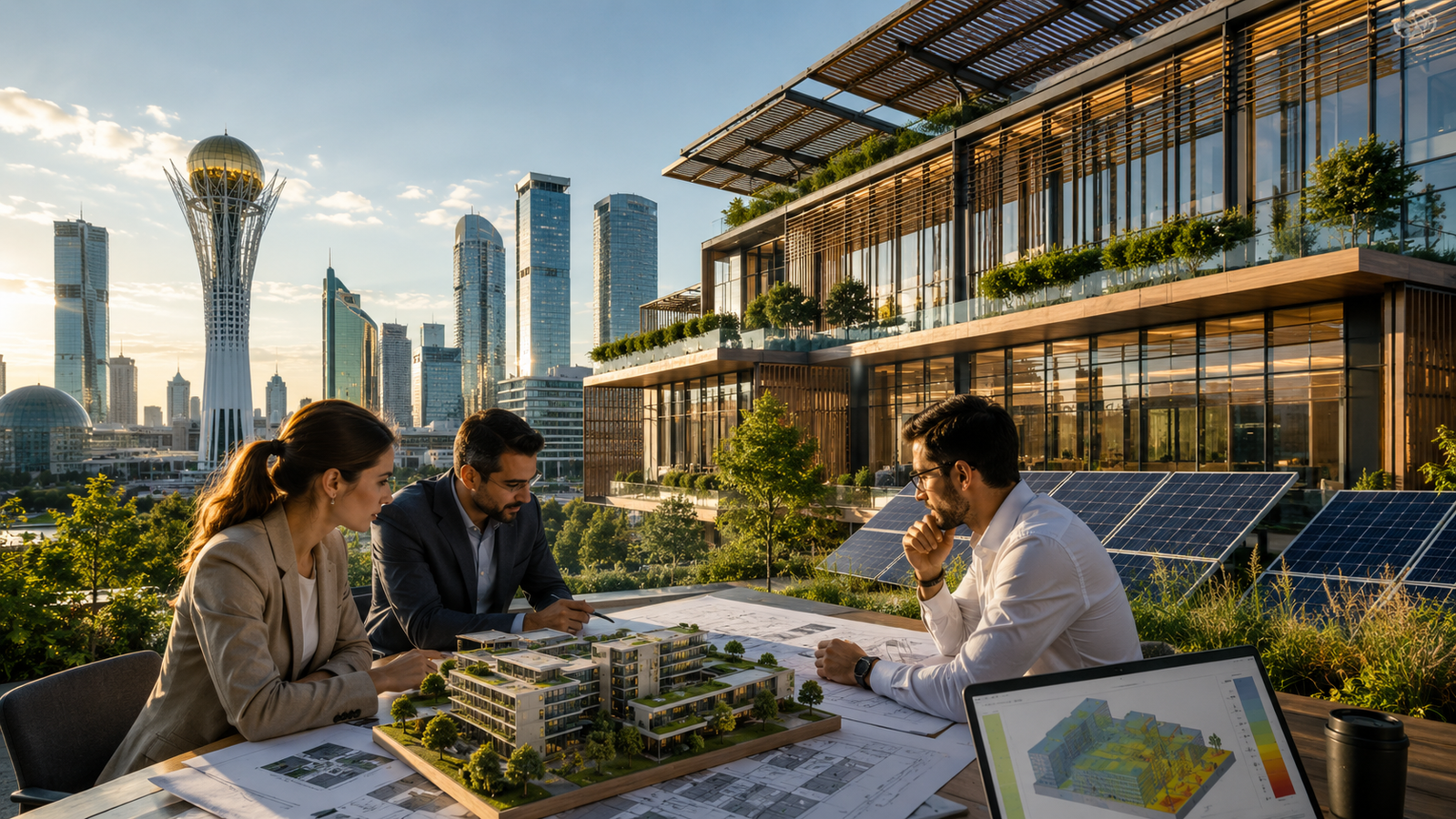
LEED Consultancy Kazakhstan is now a strategic need for developers, investors, architects, and construction teams that want future-ready buildings. LEED Consultancy Kazakhstan also helps projects meet global sustainability expectations while improving energy use, comfort, and long-term asset value.
Kazakhstan’s construction market includes offices, mixed-use projects, logistics assets, hotels, industrial facilities, and public buildings. Each project faces different climate, energy, water, material, and documentation challenges. A professional LEED consultancy firm in Kazakhstan helps teams turn those challenges into a clear certification roadmap.
LEED certification does more than add a label to a building. It creates a structured path for better design decisions, measurable performance, and stronger market credibility.
Why LEED Consultancy Kazakhstan Matters for Developers
A LEED project needs early planning. Teams must select the right rating system, define the project boundary, build a scorecard, assign responsibilities, and collect evidence during design and construction.
Without expert guidance, teams often miss easy credits. They may also discover documentation gaps too late. That creates cost, delay, and stress.
A LEED consultant prevents this problem. The consultant translates certification requirements into practical design and construction actions. This support helps developers in Astana, Almaty, Shymkent, Atyrau, and other cities manage sustainability goals with more confidence.
LEED also supports commercial positioning. Tenants, lenders, international brands, and institutional investors increasingly value buildings with transparent environmental performance. For Kazakhstan projects that target global tenants or ESG-driven investors, certification can strengthen trust.
You can explore ERKE’s dedicated LEED Consulting service to see how professional guidance supports the certification process.
What Does a LEED Consultancy Firm in Kazakhstan Do?
A LEED consultancy firm guides the project team from concept to certification. The work starts before design decisions become fixed.
The consultant usually supports these key areas:
- Rating system selection
- LEED feasibility analysis
- Certification strategy
- Credit scorecard development
- Energy and water efficiency coordination
- Sustainable material planning
- Indoor environmental quality guidance
- Construction documentation control
- Submission management
- Review response coordination
This process helps the team avoid fragmented decisions. It also connects architectural design, MEP systems, façade strategy, landscape planning, commissioning, and material selection.
The U.S. Green Building Council’s LEED rating system explains LEED as a framework for healthy, efficient, and cost-effective green buildings. For Kazakhstan projects, that framework helps teams measure sustainability in a global language.
How a LEED Consultancy Firm in Kazakhstan Adds Value
A strong consultant creates value by simplifying complexity. The team receives clear tasks, deadlines, templates, and technical guidance.
For example, the architect may need support with daylight, open space, heat island reduction, or material selections. The mechanical engineer may need input on energy performance, ventilation, refrigerants, and metering. The contractor may need procedures for construction waste, indoor air quality protection, and product submittals.
Good coordination keeps every discipline aligned. As a result, the project gains better control over both certification risk and building performance.
Key LEED Strategies for Kazakhstan Projects
Kazakhstan has diverse project conditions. A premium office in Astana needs a different strategy than an industrial facility in Atyrau or a hotel in Almaty. Still, most LEED projects benefit from several core actions.
Energy Performance and Carbon Reduction
Energy efficiency often has the highest impact. Kazakhstan’s cold winters and hot summers make façade performance, HVAC efficiency, controls, insulation, and commissioning especially important.
A consultant helps the team test design options through energy modeling. This process can compare glazing ratios, shading, heating systems, ventilation rates, lighting power, and renewable energy potential.
Better energy decisions reduce operational costs. They also support carbon reduction goals and long-term asset resilience.
Water Efficiency and Responsible Site Design
Water efficiency matters for both environmental and cost reasons. LEED projects can reduce potable water demand through efficient fixtures, smart irrigation, native planting, metering, and leak detection.
Site planning also plays a major role. Stormwater control, outdoor comfort, biodiversity, and access to transport can improve the project’s environmental profile.
For Kazakhstan developments, these strategies should match local climate, available infrastructure, and user needs.
Materials, Product Data, and Indoor Quality
Material selection can affect embodied carbon, waste, health, and procurement risk. LEED encourages teams to use products with credible environmental information, including Environmental Product Declarations and responsible sourcing data.
Indoor environmental quality also matters. Fresh air, low-emitting materials, thermal comfort, daylight, acoustics, and views can improve occupant well-being.
A LEED consultant helps teams specify the right products early. This step saves time during procurement and reduces the risk of missing documentation.
How the LEED Certification Process Works
The certification process follows a structured path. First, the team confirms project eligibility and selects the rating system. Then, the project registers and builds a scorecard.
After that, each discipline develops the design according to targeted credits. The consultant tracks progress and collects evidence. During construction, the contractor follows LEED procedures and submits required records.
Finally, the project team submits documentation for review. The Green Business Certification Inc. provides third-party certification and verification services for green building rating systems, including LEED. You can review its role on the official GBCI website.
This process requires discipline. However, it becomes manageable when the project has a clear workflow from day one.
Choosing the Right LEED Partner in Kazakhstan
The right partner should combine technical expertise, certification experience, and strong project management. LEED is not only a paperwork task. It affects design, engineering, procurement, construction, and operations.
A qualified consultant should understand:
- LEED credit requirements
- Energy modeling and commissioning
- Sustainable materials and product documentation
- Local construction workflows
- International investor expectations
- Contractor coordination
- Review comments and response strategy
ERKE brings this integrated approach to sustainable building projects. The team combines green building consultancy, engineering insight, and certification management for complex developments.
Kazakhstan’s economy and infrastructure continue to evolve. The World Bank’s Kazakhstan overview highlights the country’s broader development context, including the need for resilient and sustainable growth. Green buildings can support that direction through better resource use and stronger performance standards.
Common Project Types for LEED in Kazakhstan
Many building types can pursue LEED certification. The best path depends on the project scope and use.
Typical candidates include:
- Corporate office buildings
- Shopping centers and mixed-use developments
- Hotels and hospitality projects
- Logistics and warehouse facilities
- Industrial buildings
- Healthcare projects
- Educational campuses
- Existing buildings seeking operational improvement
New construction projects often focus on design and construction performance. Existing buildings may focus more on operations, metering, maintenance, and continuous improvement.
A consultant helps owners choose the correct certification route before the project invests time and budget.
Conclusion
LEED Consultancy Kazakhstan gives project teams a clear path to better buildings, stronger documentation, and credible green certification. It supports energy efficiency, water conservation, responsible materials, indoor comfort, and long-term value.
Kazakhstan’s developers and investors can use LEED to communicate quality with an internationally recognized framework. More importantly, they can create buildings that perform better for owners, occupants, and the environment.
Frequently Asked Questions
What is a LEED consultancy firm in Kazakhstan?
A LEED consultancy firm in Kazakhstan helps project teams plan, manage, document, and submit green building certification requirements. The consultant coordinates design, engineering, construction, and review tasks.
When should a Kazakhstan project hire a LEED consultant?
A project should hire a LEED consultant during concept or early design. Early involvement helps the team select the right rating system, target realistic credits, and avoid costly redesign later.
Can existing buildings in Kazakhstan pursue LEED certification?
Yes. Existing buildings can pursue LEED through operational performance routes when they meet eligibility requirements. The process may include energy, water, waste, indoor quality, and management improvements.
How does LEED certification benefit building owners?
LEED certification can improve market credibility, reduce operating costs, support ESG goals, and strengthen tenant confidence. It also gives owners a recognized framework for measuring building performance.
What information does a LEED consultant need first?
A consultant usually needs project location, building type, gross floor area, design stage, drawings, MEP strategy, owner goals, target certification level, and construction timeline.
Contact ERKE for LEED Consultancy Firm in Kazakhstan
Planning a project and looking for a reliable LEED Consultancy Firm in Kazakhstan? ERKE can help your team define the right certification strategy, manage documentation, and coordinate the process from early design to final submission.
Visit ERKE’s contact page to discuss your Kazakhstan project with our sustainability consultancy team.