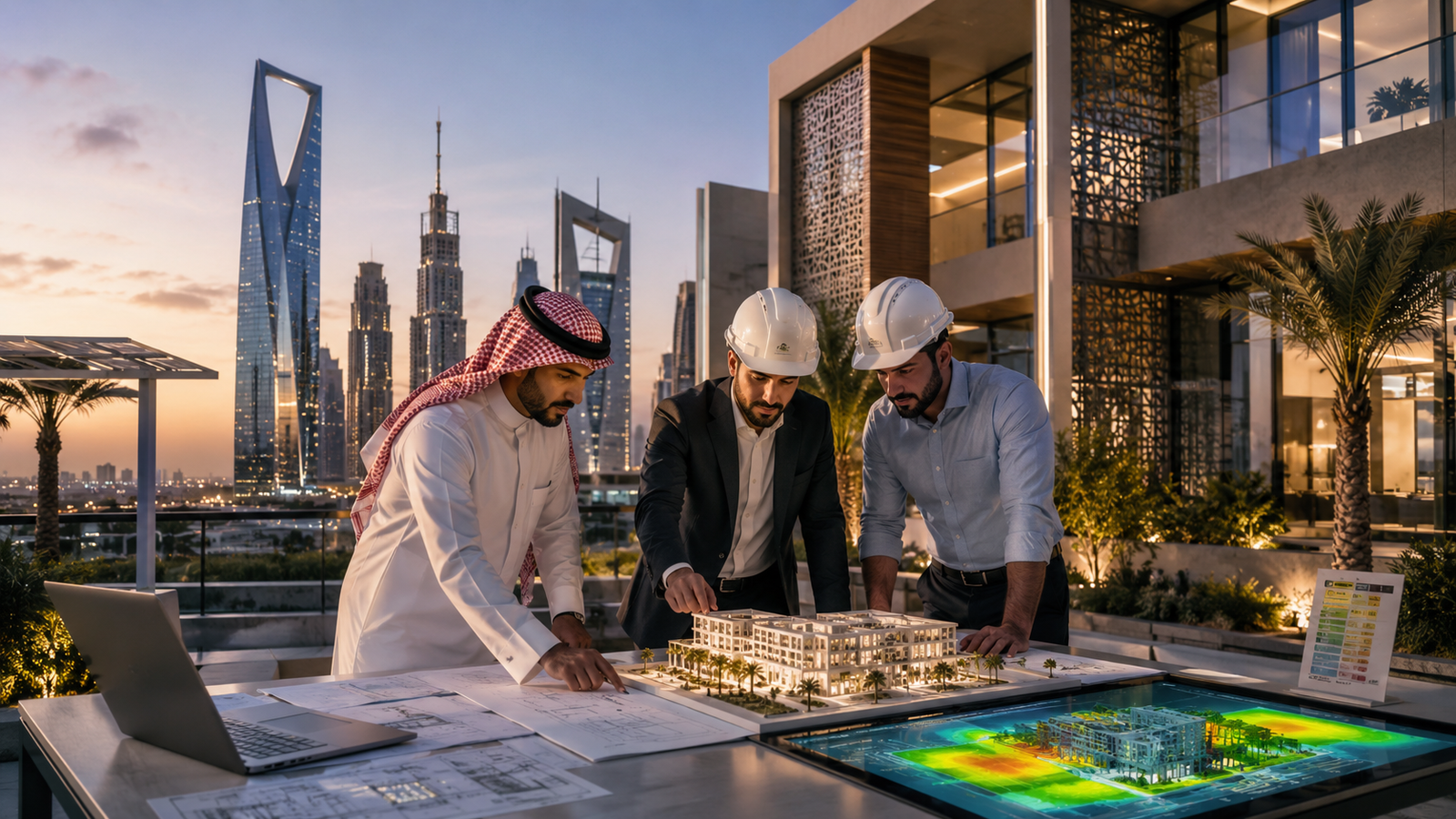
Lighting Design KSA is now a strategic decision for developers, architects, hotel owners, retail operators, and project teams. Lighting Design KSA affects energy use, guest comfort, brand value, safety, and long-term building performance across Saudi Arabia.
Saudi Arabia’s construction market demands more than attractive luminaires. Major developments in Riyadh, Jeddah, NEOM, Red Sea destinations, Diriyah, and mixed-use districts need lighting that supports design intent and daily operation. A strong lighting design company helps project teams turn architecture into a clear night identity. It also protects occupants from glare and unnecessary energy waste.
For KSA projects, lighting should work as a technical system and a visual language. It must guide people, support well-being, respect local climate conditions, and match sustainability goals. This guide explains what to expect from a professional lighting design partner in Saudi Arabia.
Why Lighting Design KSA Matters for Modern Developments
Lighting design shapes how people see, use, and remember a space. In hotels, it sets the guest journey from lobby arrival to room comfort. In offices, it supports focus and reduces eye fatigue. Within retail spaces, it highlights products and strengthens dwell time.
Saudi Arabia’s Vision 2030 continues to accelerate urban development, tourism, hospitality, culture, and lifestyle projects. The official Saudi Vision 2030 projects platform presents national projects that show the scale of transformation. Each project type needs lighting decisions that balance image, efficiency, maintenance, and user comfort.
Good lighting also supports sustainability. Designers reduce installed power, improve daylight use, and select controls that adapt to occupancy and time. As a result, the building can lower energy demand without losing visual quality.
What a Lighting Design Company in Saudi Arabia Should Deliver
A professional lighting consultant does not start with fixtures. The process begins with users, architecture, brand, climate, budget, and operation.
Key deliverables should include:
- Lighting concept and visual strategy
- Daylight analysis and daylight integration
- Interior lighting layouts and ceiling coordination
- Exterior, façade, and landscape lighting concepts
- Lux level calculations and glare control
- Luminaire schedules and technical specifications
- Lighting control scenarios and automation logic
- Energy efficiency review and sustainability coordination
- Mock-up guidance and site supervision support
This approach helps the design team avoid late changes. It also gives owners a clear route from concept design to construction documentation.
Lighting Design KSA for Energy Efficiency and Comfort
Lighting Design KSA should focus on performance, not only appearance. A beautiful scheme can still fail if it creates glare, heat, high energy use, or difficult maintenance.
Experienced consultants use daylight modelling, photometric calculations, beam angle studies, and control strategies. These tools help them choose the right light levels for offices, malls, hotels, airports, healthcare spaces, and public areas.
In Saudi Arabia, exterior lighting needs extra care. Bright façades, large public plazas, and hospitality landscapes can create light spill if teams skip proper aiming and shielding. The Five Principles for Responsible Outdoor Lighting from DarkSky International and the Illuminating Engineering Society offer a practical framework for purposeful, targeted, low-impact night lighting.
Key Design Considerations for KSA Projects
Every project has its own priorities. Still, most Saudi developments share common lighting challenges.
1. Climate and Heat
High temperatures influence fixture selection and long-term reliability. Designers should review IP ratings, thermal management, driver quality, and maintenance access. Exterior luminaires must survive dust, heat, wind, and cleaning cycles.
2. Architecture and Cultural Context
Saudi projects often combine contemporary forms with local identity. Lighting should respect materials, textures, geometry, and cultural setting. Warm tones may support hospitality and heritage projects. Cooler, crisp schemes may fit transport, healthcare, or high-tech workplaces.
3. Daylight and Glare
Strong sun exposure creates both opportunity and risk. Daylight can reduce electricity use and improve occupant experience. However, uncontrolled glare can harm comfort. A capable team studies daylight paths, shading, glass performance, and interior reflectance.
4. Controls and Smart Operation
Smart lighting controls create value when they serve real use patterns. Occupancy sensors, time schedules, dimming scenes, daylight harvesting, and building management integration can support flexible operation. The design must stay simple enough for facility teams to manage.
5. Sustainability and Certification
Lighting contributes to energy performance, indoor environmental quality, user comfort, and exterior light control. Projects that target green building certifications need early coordination. ERKE’s Lighting Consultancy service supports energy-efficient lighting, automation systems, daylight analysis, and light pollution assessments for better indoor comfort.
How ERKE Approaches Lighting Design in Saudi Arabia
ERKE combines engineering discipline with design sensitivity. The team looks at lighting as part of the building’s wider performance system. Each decision must serve people, architecture, energy goals, and long-term operation.
For Saudi Arabia, this integrated view matters. A villa compound, airport, shopping mall, hospital, school, hotel, or office tower may have different design drivers. Yet each project needs clear coordination between lighting, electrical systems, interiors, façade design, landscape, sustainability, and commissioning.
ERKE can support project teams with concept design, technical calculations, daylight analysis, automation strategy, sustainable lighting criteria, and coordination with green building targets. This helps owners reduce risk and improve final implementation quality.
How to Choose the Right Lighting Design Partner
A strong partner should ask practical questions before offering solutions. They should also explain trade-offs in simple terms.
Look for these qualities:
- Experience with energy-efficient lighting and daylight analysis
- Understanding of Saudi Arabia’s project scale and climate
- Clear design documentation and calculation reports
- Coordination with architects, MEP engineers, and contractors
- Knowledge of sustainability criteria and light pollution control
- Practical support during procurement, mock-ups, and construction
Price should not drive the decision alone. A weak lighting package can create over-lighting, under-lighting, poor visual comfort, and high maintenance cost. Better design usually saves money during operation.
Conclusion
Lighting Design KSA plays a direct role in how Saudi projects perform, feel, and communicate identity. The right design partner helps teams create efficient, comfortable, memorable, and future-ready spaces.
As Saudi Arabia invests in ambitious hospitality, commercial, residential, cultural, and public developments, lighting must do more than illuminate. It should support architecture, protect comfort, reduce waste, and create a high-quality experience for users.
Frequently Asked Questions
What does a lighting design company in Saudi Arabia do?
A lighting design company in Saudi Arabia plans interior, exterior, façade, landscape, and specialty lighting. It also prepares calculations, fixture specifications, control scenarios, daylight studies, and coordination documents.
Why is lighting design important for KSA projects?
Lighting design improves visibility, comfort, safety, energy efficiency, and brand identity. In KSA, it also helps projects respond to climate, large-scale development needs, hospitality standards, and sustainability goals.
When should a project team hire a lighting consultant?
Teams should hire a lighting consultant during concept or schematic design. Early input improves daylight use, ceiling coordination, façade integration, control strategy, cost planning, and sustainability outcomes.
Can lighting design support green building certification?
Yes. Lighting can support energy performance, occupant comfort, daylight quality, controllability, and light pollution reduction. Early coordination helps the project team connect lighting decisions with certification goals.
Ready to work with a professional Lighting Design Company Saudi Arabia KSA? Contact ERKE to discuss lighting design, daylight analysis, automation, and sustainable lighting consultancy for your project.