Turkiye Lighting Design Company searches often start with a clear business need: find a partner that can combine visual quality, technical accuracy, and sustainability. A Turkiye Lighting Design Company should do more than place fixtures; it should improve comfort, safety, brand identity, energy use, and certification outcomes from concept to operation.
For global investors, architects, developers, and corporate teams, lighting design requires more than local coordination. It needs international standards, reliable documentation, energy-conscious decisions, and a design language that supports people inside each space. ERKE brings this integrated mindset to lighting consultancy, electrical project design, and sustainable building services.
Why Choose a Turkiye Lighting Design Company?
A professional lighting partner in Türkiye can support regional and global projects. This matters when a project team needs local execution with international expectations. A strong consultant understands design intent, technical compliance, procurement realities, and sustainability targets.
Lighting affects how users perceive a building from the first visit. In offices, it supports focus and visual comfort, In hotels, it shapes atmosphere and guest memory, In retail, it guides attention and product experience. For industrial or logistics spaces, it helps safety, efficiency, and operational clarity.
Good lighting also reduces waste. Teams can avoid over-lighting, poor fixture placement, glare, and unnecessary energy demand. As a result, the owner gets a better space and a more resilient operating model.
Turkiye Lighting Design Company Services: What Should You Expect?
A qualified consultant should offer a structured scope, not isolated recommendations. Key services often include:
- Concept lighting design and visual strategy
- Interior, exterior, façade, and landscape lighting
- Daylight analysis and artificial lighting balance
- Lux level, luminance, uniformity, and glare studies
- Luminaire selection and photometric review
- Smart controls, sensors, dimming, and scene planning
- Coordination with architecture, MEP, and sustainability teams
- LEED, BREEAM, WELL, or similar certification support
- Tender documentation, specifications, and design review
This scope helps project teams decide early, reduce redesign, protect budgets, and improve technical consistency.
What Makes Corporate Lighting Design Effective?
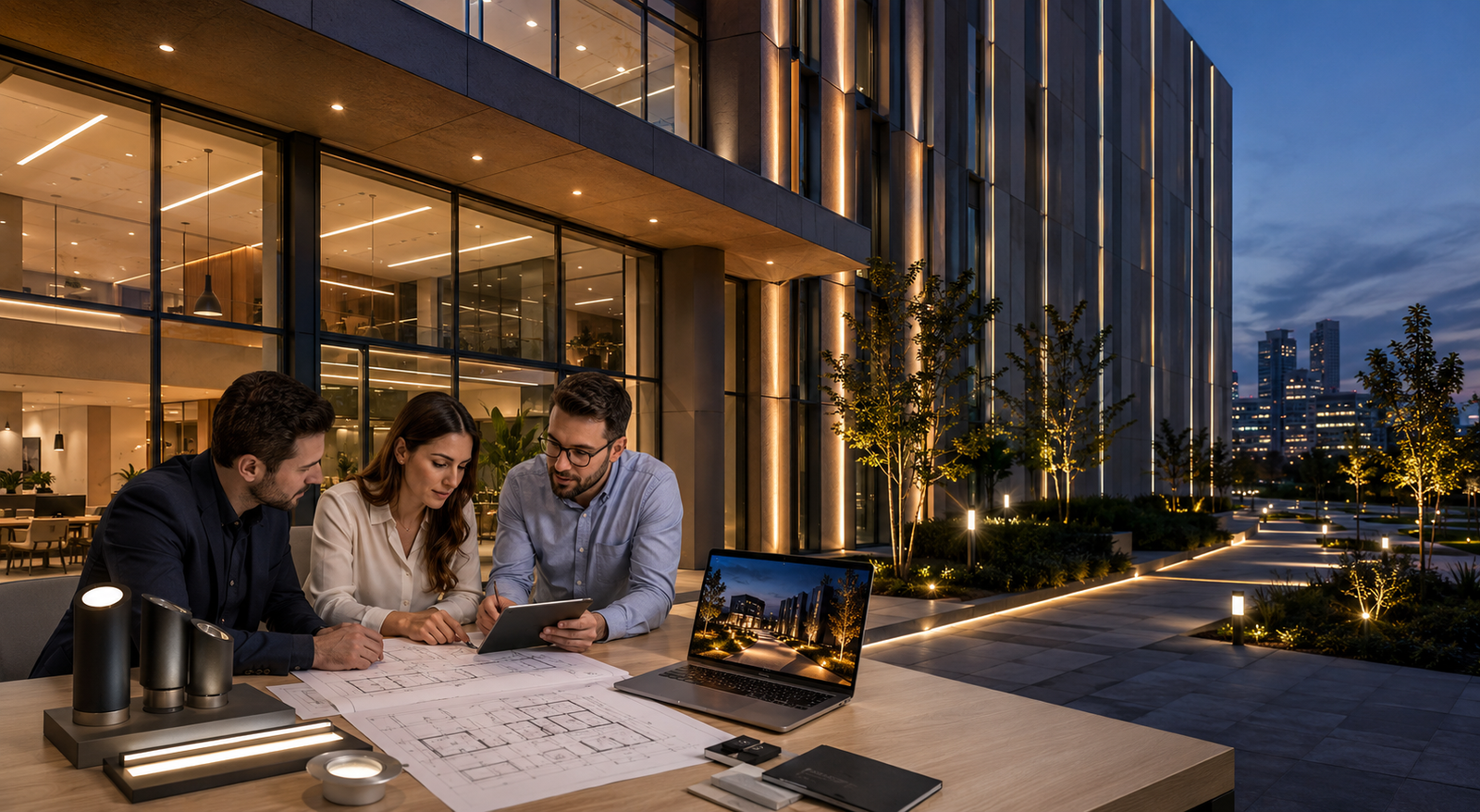
Corporate lighting design starts with purpose. Each space needs a clear visual hierarchy, suitable illuminance, controlled glare, and the right color quality. A lobby should welcome visitors. A meeting room should support faces, screens, and flexible scenes. Workstations need visual comfort. Outdoor zones need safe movement without excessive spill light.
Sustainability adds another layer. Project teams can reduce installed power through efficient luminaires, zoning, controls, daylight use, and commissioning. They can also limit night-time impact through careful exterior design. USGBC’s Light Pollution Reduction guidance highlights necessary lighting, luminaire placement, glare, trespass, uplight, and control strategy.
Global projects also benefit from shared technical language. The CIE international standards cover areas such as photometry, colorimetry, workplace lighting, emergency lighting, and energy performance in buildings.
How ERKE Connects Lighting Design with Sustainable Buildings
ERKE’s background combines electrical project design, lighting consultancy, green building consultancy, product sustainability, and corporate sustainability. The company started in 2007 with electrical project design and lighting consultancy, then expanded into green and sustainable building services in 2009.
This history matters for clients that want one coordinated strategy. Lighting decisions can affect energy modeling, façade design, material choices, user comfort, landscape design, and certification documentation. A narrow lighting approach may miss these links. ERKE’s multidisciplinary perspective helps teams connect lighting with the wider building performance plan.
Explore ERKE’s integrated consultancy scope on the What We Do page. This structure supports owners, architects, developers, and project managers during design and construction.
Key Project Types for Lighting Consultancy in Türkiye
Different building types need different lighting priorities. A corporate office may focus on productivity, glare control, and meeting room flexibility. A hospitality project may need emotional atmosphere, warm scenes, and strong guest orientation. A retail project depends on product visibility, contrast, and brand expression. Industrial buildings need safety, maintenance access, durability, and efficient operation.
Mixed-use developments create complex conditions. They often combine offices, retail, parking, hospitality, outdoor areas, and public circulation. In these projects, a lighting consultant must protect identity while keeping each zone technically correct.
| Project Type | Main Lighting Priority |
|---|---|
| Offices | Visual comfort, focus, screen-friendly light |
| Hotels | Atmosphere, guest experience, scene control |
| Retail | Product emphasis, contrast, brand identity |
| Industrial | Safety, efficiency, durability |
| Mixed-use | Consistency, navigation, outdoor comfort |
| Public spaces | Security, accessibility, low light pollution |
How to Evaluate a Lighting Design Partner
Before choosing a consultant, ask direct questions. Does the team coordinate with architects and engineers from early design? Can they prepare clear specifications? Do they understand certification goals? Will they review photometric data, controls, glare, and maintenance factors? Can they communicate with international stakeholders?
The best partner should explain trade-offs clearly. A brighter space does not always mean a better space. Higher wattage can increase glare and operating cost. Poor color temperature can damage brand mood. An attractive fixture may fail when controls, maintenance, or photometric performance do not match the project.
Look for a team that balances creativity with evidence. Lighting design should feel inspiring, yet it should also rely on calculations, mock-ups, standards, and coordinated documentation.
Practical Lighting Design Process for Global Clients
A clear process helps global teams move faster. Start with project goals, brand expectations, target certifications, and operational needs. Then define design criteria for each zone. After that, test the concept with calculations, fixture options, control scenarios, and coordination drawings.
During design development, the consultant should align ceiling plans, façade details, landscape zones, electrical loads, and control logic. Procurement support also matters because substitutions can change performance, color quality, beam angles, and warranty conditions.
At construction stage, site coordination protects design intent. The team should check installation heights, aiming angles, dimming groups, scene settings, and commissioning notes. This step turns design documents into real performance.
Conclusion
A Turkiye Lighting Design Company can create much more than attractive illumination. The right partner can improve comfort, reduce energy demand, support green building goals, and strengthen each space. For international projects, the value grows when the consultant understands both local execution and global standards.
ERKE offers a corporate, technical, and sustainability-driven approach for owners, developers, architects, and project managers. With integrated expertise, your project can move from concept to coordinated implementation with greater clarity.
Frequently Asked Questions
What does a Turkiye Lighting Design Company do?
A Turkiye Lighting Design Company plans interior, exterior, façade, landscape, and technical lighting systems. It also coordinates fixtures, calculations, controls, specifications, and sustainability goals.
Why should global investors work with a lighting design company in Türkiye?
Global investors gain regional coordination, technical design support, and international project communication. A Türkiye-based consultant can also connect local execution with global standards.
How does lighting design support sustainable buildings?
Lighting design supports sustainability through efficient luminaires, daylight integration, smart controls, lower installed power, glare control, and reduced light pollution. These decisions can also support green building certification targets.
When should a lighting consultant join the project?
A lighting consultant should join during concept or schematic design. Early input improves ceiling coordination, façade details, energy strategy, control planning, and budget decisions.
Ready to plan your next project with ERKE? Contact our team through the ERKE contact page for Turkiye Lighting Design Company services.