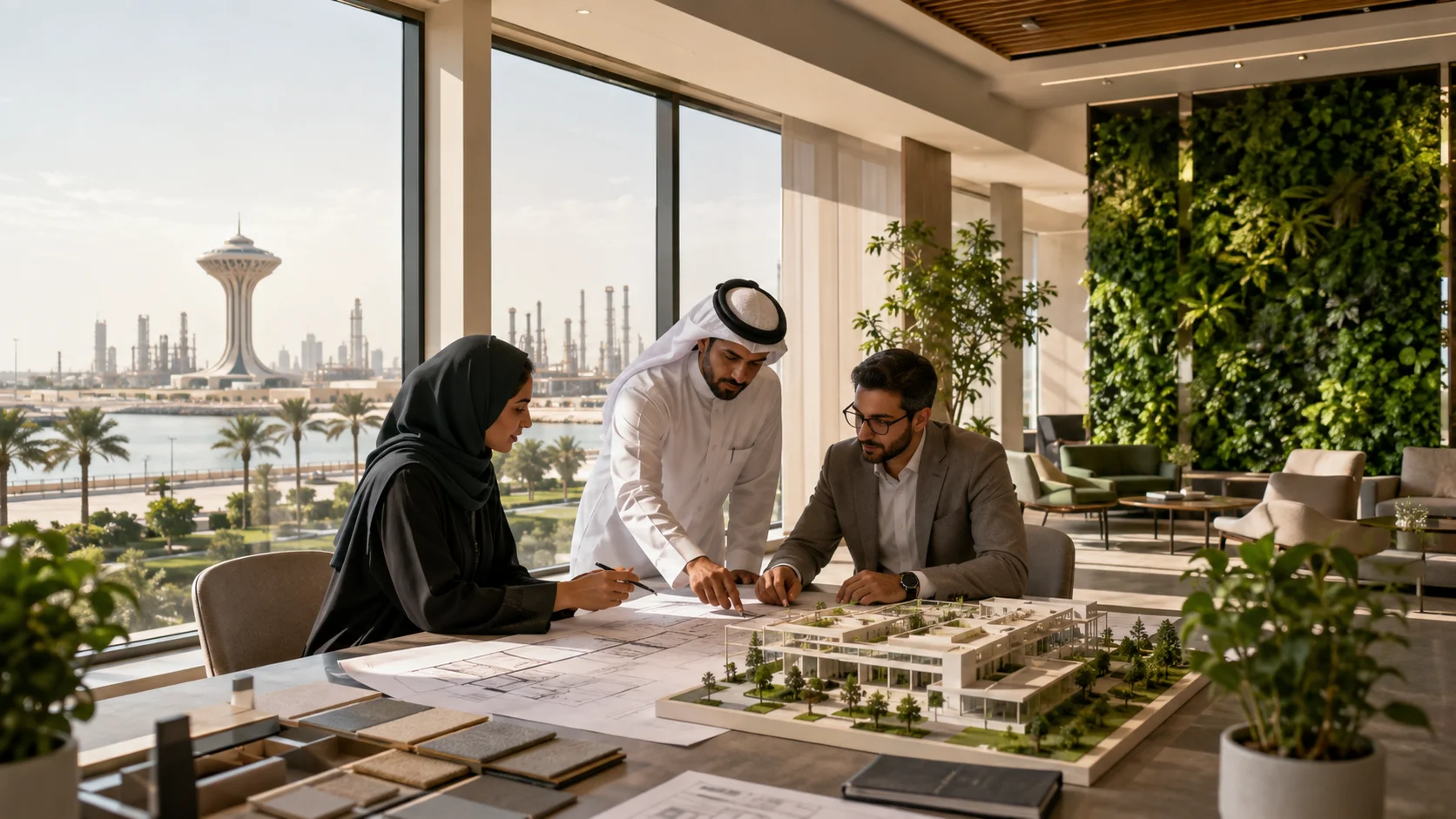
A WELL Consultant in Dammam helps project teams create buildings that support occupant health, comfort, and well-being. Working with a WELL Consultant in Dammam also gives owners a clear path for integrating WELL requirements into design, construction, operations, and documentation.
For developers, architects, MEP teams, contractors, and corporate occupiers, WELL can turn health goals into measurable building strategies. The process covers far more than indoor air quality. It also addresses water, lighting, movement, thermal comfort, sound, materials, mental well-being, nourishment, and community.
What Does a WELL Consultant in Dammam Do?
A WELL consultant converts the WELL Building Standard into a practical project roadmap. The consultant reviews project goals, builds the scorecard, coordinates technical disciplines, and tracks evidence.
Typical responsibilities include:
- Selecting suitable WELL features for the project.
- Reviewing architectural, mechanical, electrical, and plumbing designs.
- Coordinating air quality, lighting, thermal comfort, acoustics, and water strategies.
- Identifying required operational policies and owner commitments.
- Managing documentation and verification responsibilities.
- Tracking preconditions and selected optimizations.
- Supporting the project team through review comments and final submissions.
IWBI organizes WELL v2 around ten concepts: Air, Water, Nourishment, Light, Movement, Thermal Comfort, Sound, Materials, Mind, and Community. These concepts connect design, operations, policies, and measurable performance in one health-focused framework.
Why WELL Matters for Projects in Dammam
For Dammam projects, WELL provides a structured way to address indoor environmental quality and occupant experience. Offices, hotels, healthcare facilities, schools, and retail spaces can all benefit from coordinated health-focused design decisions.
The Air concept supports strategies that reduce pollutant exposure and improve ventilation planning. Thermal Comfort helps teams evaluate conditions that affect occupant comfort. Light addresses visual quality, while Sound covers acoustic performance.
The standard also extends beyond engineering systems. Materials, movement, nourishment, mind, and community measures can influence fit-out decisions, workplace policies, occupant experience, and operational practices.
For owners, this broader approach creates a clear advantage. Instead of treating health measures as isolated upgrades, the project team can coordinate them through one measurable framework.
How a WELL Consultant in Dammam Coordinates the Team
A WELL consultant acts as the technical link between certification requirements and the project team. Early coordination keeps different disciplines aligned.
An air-quality strategy may involve the HVAC designer, architect, contractor, facility manager, and testing team. A daylight strategy may connect façade design, interior planning, lighting controls, and user needs. Acoustic measures can influence partitions, equipment selection, finishes, and space planning.
Clear responsibility matrices reduce confusion. They also help the team assign each requirement before construction advances.
How Does WELL Certification Work?
The WELL journey starts with project enrollment, goal setting, and scorecard development. The team then integrates selected requirements into design, construction, policies, and operations.
A typical process includes five stages:
- Project assessment: Define scope, building type, health goals, and target achievement level.
- Scorecard strategy: Select required preconditions and relevant optimizations.
- Design and documentation: Integrate requirements into drawings, specifications, policies, and schedules.
- Review and performance verification: Submit documentation and complete required onsite testing or verification activities.
- Certification and ongoing performance: Address comments and finalize results.
IWBI states that WELL Certification uses documentation review and performance verification to evaluate whether a project meets WELL requirements. Project teams should therefore plan evidence collection alongside technical design.
Which Dammam Projects Can Benefit from WELL?
WELL can support a wide range of building types and sectors. IWBI designed WELL v2 to accommodate diverse project types and geographies.
Common applications include:
- Corporate offices: Improve workplace comfort, air quality, lighting, movement, and employee experience.
- Healthcare facilities: Support environments that prioritize comfort, hygiene, mental well-being, and user needs.
- Hotels and hospitality projects: Strengthen guest experience through comfort, lighting, acoustics, and indoor quality.
- Educational buildings: Create spaces that support concentration, comfort, movement, and healthy routines.
- Commercial developments: Add a recognized health and well-being framework to tenant and visitor environments.
- Industrial offices and support spaces: Apply WELL strategies to administrative, control, meeting, and staff areas.
The best scorecard depends on project scope, occupancy, design stage, and operational model. A tailored assessment avoids unnecessary measures.
How ERKE Supports WELL Projects in Dammam
ERKE combines sustainability consultancy with multidisciplinary engineering coordination. This approach helps project teams connect certification targets with practical design and construction decisions.
Through ERKE’s Green Building Consultancy, project teams can receive support from early assessment through technical coordination and certification management.
ERKE’s WELL consultancy approach can include:
- Initial feasibility and gap analysis.
- WELL scorecard development.
- Design-stage workshops with architects and engineers.
- Technical review of relevant building systems.
- Documentation planning and quality control.
- Coordination of policies and operational requirements.
- Support during review comments.
- Preparation for performance verification.
- Final certification coordination.
Early engagement provides the strongest value. When the consultant joins during concept or schematic design, the team can evaluate WELL requirements before major systems and layouts become difficult to change.
What Are the Main Benefits of WELL Consultancy?
A structured WELL consultancy process can help owners control risk and improve coordination. First, the consultant gives the team a clear certification roadmap. This reduces uncertainty about responsibilities, documents, and technical requirements.
Second, coordinated reviews can identify conflicts before construction. That can reduce redesign and protect the project schedule. Third, WELL creates a common language for health-focused design across owners, designers, contractors, and operators.
Most importantly, the process keeps occupant experience visible throughout the project. Health, comfort, and operational quality remain design priorities rather than late-stage additions.
Conclusion
Choosing a WELL Consultant in Dammam can simplify the path from health-focused design goals to measurable project outcomes. The right consultant coordinates technical disciplines, documentation, policies, verification activities, and certification milestones.
For Dammam developers and project teams, early WELL planning can improve decision-making. It helps align indoor air quality, thermal comfort, lighting, acoustics, materials, water, and occupant-focused strategies before costly changes arise.
Frequently Asked Questions
What is a WELL Consultant in Dammam?
A WELL Consultant in Dammam guides building owners and project teams through WELL planning, design coordination, documentation, review, and performance verification. The consultant translates WELL requirements into clear technical and operational actions.
When should a WELL consultant join a project?
The ideal time is during concept or schematic design. Early involvement gives the team more flexibility to coordinate building systems, layouts, specifications, policies, and verification requirements.
Does WELL only focus on indoor air quality?
No. WELL v2 covers ten concepts: Air, Water, Nourishment, Light, Movement, Thermal Comfort, Sound, Materials, Mind, and Community. The standard combines physical building performance with policies and operational strategies.
Can existing buildings in Dammam pursue WELL?
Existing buildings can evaluate applicable WELL pathways according to their scope, use, current performance, and operational conditions. A preliminary assessment can identify the most appropriate strategy and improvement opportunities.
How can ERKE support a WELL project in Dammam?
ERKE can support the project from initial assessment and scorecard development through design coordination, documentation, review responses, and performance verification planning.
Planning a WELL project in Dammam? Contact ERKE Sustainability Consultancy to discuss your project scope, WELL goals, and the most efficient certification strategy.