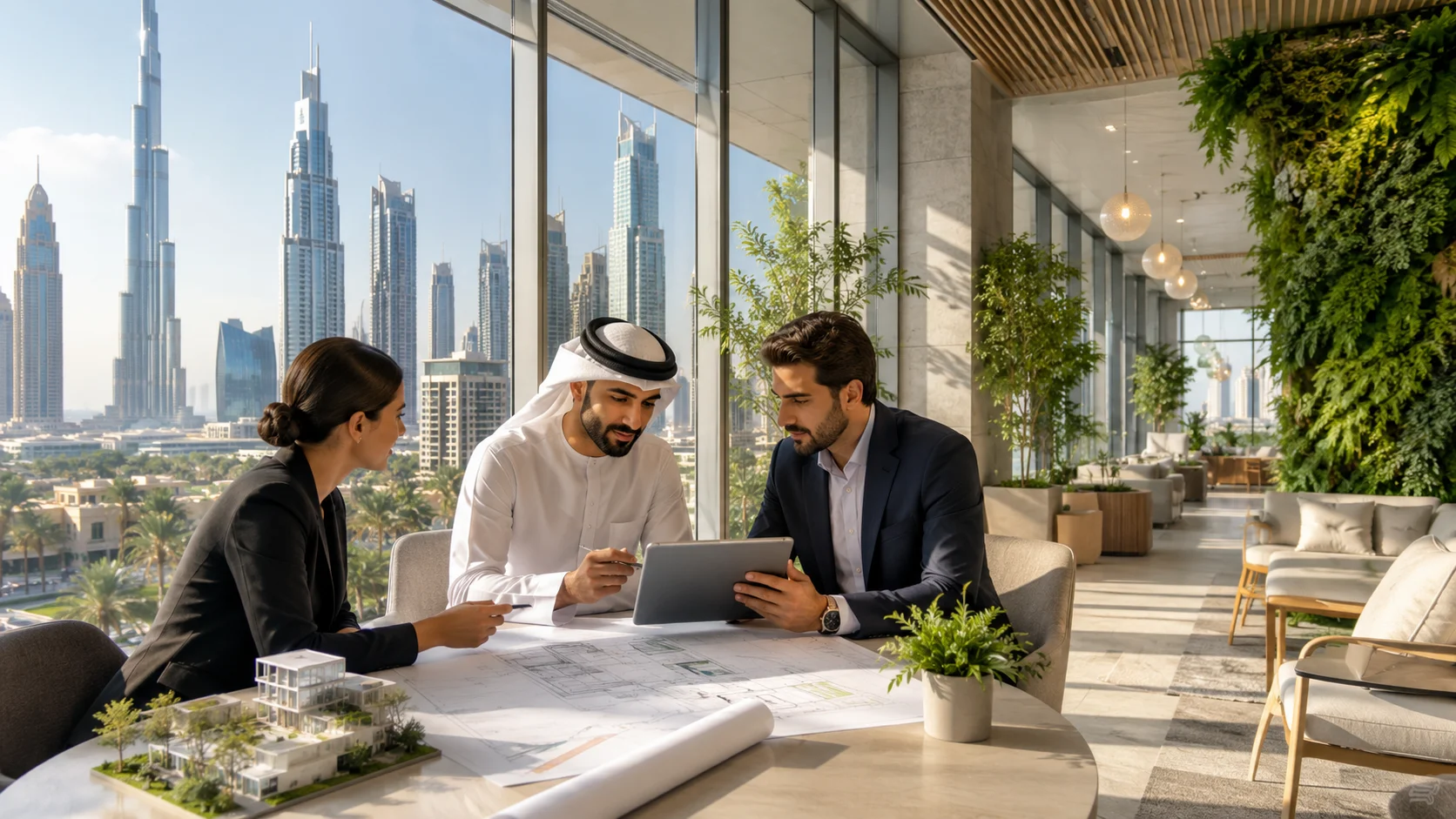
A WELL Consultant in Dubai helps project teams turn health and well-being goals into practical design, construction, and operational requirements. A WELL Consultant in Dubai also coordinates those requirements with local project realities, from early design decisions to performance verification.
Dubai’s real estate market places strong attention on high-performance buildings, workplace quality, hospitality experience, and long-term asset value. WELL provides a structured way to address the people inside those spaces. The International WELL Building Institute organizes WELL Certification around ten concepts: Air, Water, Nourishment, Light, Movement, Thermal Comfort, Sound, Materials, Mind, and Community.
For developers, owners, architects, and corporate occupiers, the challenge is not simply choosing WELL as a target. The challenge is integrating it early enough to influence design, procurement, policies, commissioning, and operations without avoidable redesign.
What Does WELL Certification Focus On?
WELL Certification focuses on how a building or interior supports human health and well-being. It combines design measures with operational policies, management practices, and verified performance.
A WELL project may address indoor air quality, drinking water, lighting, thermal comfort, acoustics, materials, movement, mental health, and inclusive community strategies.
The official WELL framework includes mandatory preconditions and optional optimizations. Projects build a strategy around the certification level they want to pursue. Third-party review and performance verification help confirm that selected measures work as intended.
This makes WELL more than a design checklist. Teams must connect design intent with measurable building performance.
Why Hire a WELL Consultant in Dubai?
A WELL Consultant in Dubai brings the certification process into the project workflow before key decisions become expensive to change. Early coordination can reduce conflicts between architecture, MEP systems, interiors, procurement, HR policies, and facility operations.
Dubai projects also operate within a strong local sustainability framework. Al Sa’fat – Dubai Green Building System sets green building requirements for the emirate. WELL can complement this framework by adding a focused layer around occupant health, comfort, and well-being.
A consultant should therefore review both the certification target and the wider project context. This helps the team identify synergies, avoid duplicated work, and assign responsibilities clearly.
What Does a WELL Consultant in Dubai Manage?
A WELL consultant typically supports several connected workstreams:
- Feasibility and gap analysis: Review the brief, building type, design stage, and certification ambition.
- Scorecard development: Select realistic optimizations and establish a target pathway.
- Design coordination: Translate WELL requirements into actions for architects, engineers, lighting designers, and interior teams.
- Material and product review: Check relevant specifications, emissions criteria, and procurement requirements.
- Policy development: Coordinate operational requirements involving HR, facility management, cleaning, food services, or workplace policies.
- Documentation management: Prepare and organize evidence for WELL submissions.
- Performance verification readiness: Help the team prepare for on-site testing.
- Close-out support: Track remaining actions and review comments.
WELL Strategies That Matter in Dubai Projects
Dubai’s climate and diverse building typologies make early technical coordination especially important. Offices, hotels, residential developments, healthcare facilities, retail projects, and mixed-use assets may each need a different WELL approach.
Indoor Air Quality and Ventilation
Air quality starts with source control, filtration, ventilation, and construction management. Teams should also consider how interior materials, cleaning products, and facility procedures affect indoor conditions after handover.
A WELL consultant connects design requirements with commissioning and operational practices. Good specifications alone do not guarantee good indoor air.
Light, Thermal Comfort, and Sound
People judge indoor environments through temperature, glare, daylight, noise, and visual comfort. These factors shape the daily experience of a building.
In Dubai, solar exposure and cooling demand make façade design, shading, controls, HVAC zoning, and lighting coordination especially relevant. Acoustic planning also deserves early attention in offices, hotels, healthcare spaces, and mixed-use buildings.
Materials, Mind, Movement, and Community
Healthy-building strategies extend beyond mechanical systems. WELL also considers materials, movement, mental well-being, inclusive design, and community experience.
Measures may include active circulation, restorative spaces, ergonomic planning, occupant education, or policies that support healthier routines. The strongest strategies match actual users instead of adding generic features.
How the WELL Certification Process Works
A clear process helps project teams protect both schedule and certification goals.
First, the owner defines the project scope and target. The consultant then performs a gap analysis and develops the initial scorecard. Next, responsibilities move into the design program and project specifications.
During design and construction, the team tracks technical requirements, materials, policies, and evidence. The consultant coordinates documentation and resolves gaps before formal review.
Performance verification becomes a critical milestone near completion or occupancy. Testing confirms selected environmental conditions and supports the final certification decision.
Early planning is the most effective way to control risk. Late WELL adoption can force teams to revisit layouts, systems, specifications, or policies.
Integrating WELL with Broader Green Building Goals
Many Dubai owners pursue several performance objectives at the same time. A project may combine WELL with energy efficiency, low-carbon targets, LEED, local requirements, or corporate sustainability goals.
Integrated consulting helps map overlapping requirements and avoid separate, disconnected checklists. One coordinated evidence strategy can also make responsibilities easier to manage.
ERKE’s Green Building Consultancy approach supports this integrated perspective across design disciplines. ERKE operates from Dubai, alongside London and Istanbul, giving project teams access to local coordination and multidisciplinary sustainability expertise.
Choosing the Right WELL Consultant in Dubai
The right consultant should understand both certification requirements and real project delivery. Look for a team that can communicate with designers, contractors, owners, and facility managers.
Strong WELL consulting should provide early feasibility advice, clear scorecard ownership, multidisciplinary coordination, material and policy review, documentation management, and performance verification preparation.
Project teams should also ask how the consultant handles design changes. WELL strategies often evolve as budgets, tenants, systems, and procurement decisions change.
Conclusion
A WELL Consultant in Dubai helps transform health-focused building goals into coordinated project actions. The role covers strategy, design integration, documentation, operational policies, and performance verification.
For Dubai owners, WELL can add a strong human-health dimension to broader sustainability and asset-performance goals. The best results come when the process starts early and remains integrated with design and operations.
Frequently Asked Questions
What does a WELL consultant do?
A WELL consultant guides certification strategy, scorecard planning, design coordination, documentation, policy development, and performance verification preparation. The consultant also tracks responsibilities across the project team.
Is WELL Certification suitable for projects in Dubai?
Yes. WELL can apply to many building and interior project types in Dubai. Its health and well-being focus can complement local green building requirements and wider sustainability targets.
When should a project appoint a WELL consultant?
Ideally, appoint the consultant during concept or early design. Early involvement gives the team more options and reduces the risk of costly changes later.
Can WELL be combined with LEED or other green building systems?
Yes. Many strategies overlap across indoor environmental quality, materials, commissioning, and building performance. Coordinated consulting can help teams capture those synergies efficiently.
Plan Your WELL Certification Strategy with ERKE
If you are planning an office, hospitality, residential, healthcare, commercial, or mixed-use project, early WELL planning can protect your certification target and schedule.
Speak with ERKE about WELL Consultant in Dubai services and build a clear certification roadmap. Contact ERKE Sustainability Consultancy to discuss your project requirements.