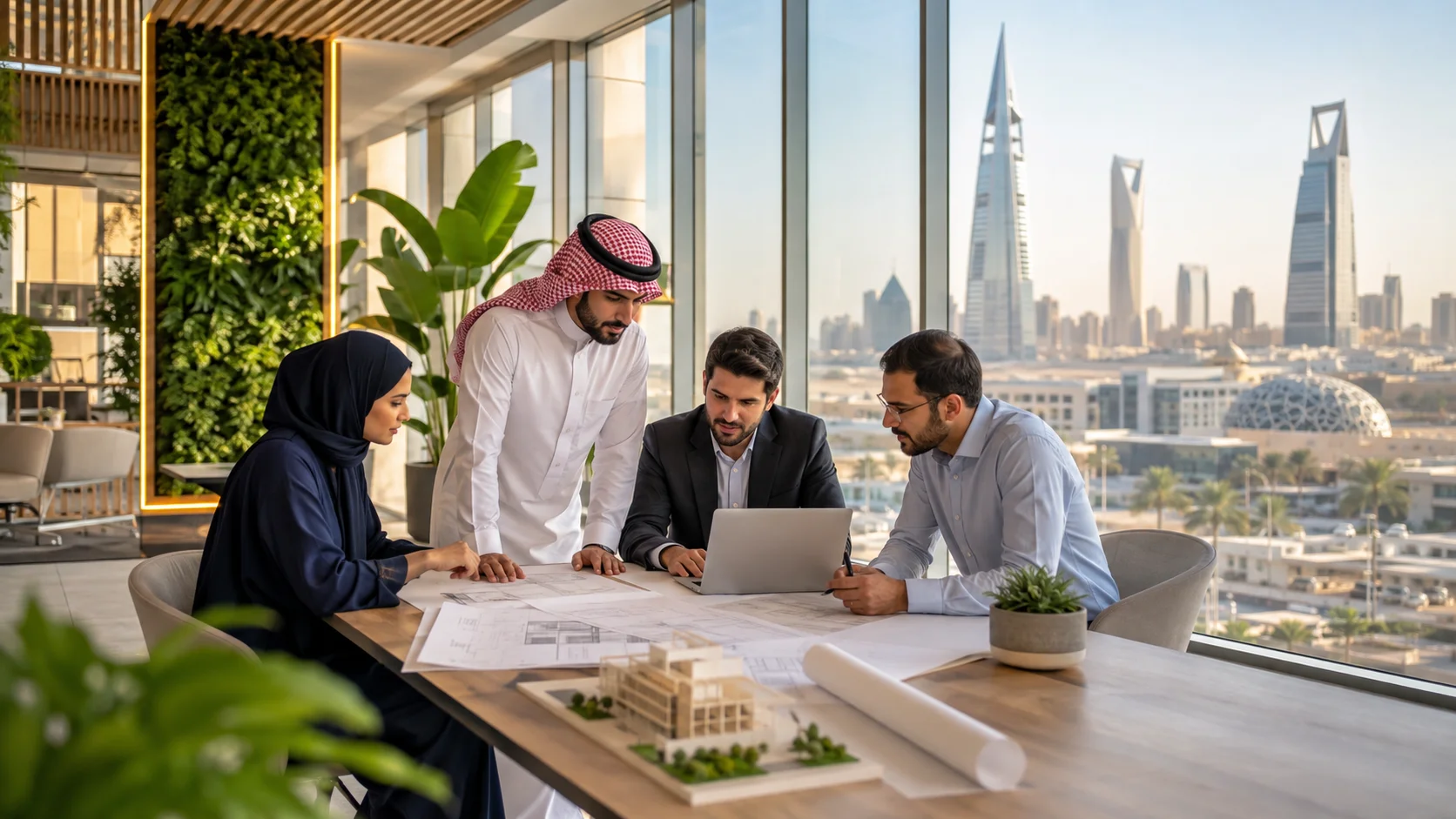
A WELL Consultant in Riyadh helps project teams turn health and well-being goals into measurable building strategies. Choosing a WELL Consultant in Riyadh early can also reduce redesign, clarify responsibilities, and keep certification tasks aligned with the project schedule.
WELL Certification focuses on how buildings and organizations support people through design, operations, and policies. The current framework addresses ten concepts: Air, Water, Nourishment, Light, Movement, Thermal Comfort, Sound, Materials, Mind, and Community. For developers, owners, architects, and corporate occupiers in Riyadh, it provides a practical framework for healthier and more people-centered spaces.
What Does a WELL Consultant in Riyadh Do?
A WELL consultant translates certification requirements into practical actions for architects, engineers, contractors, facility teams, and owners. The role can start with project assessment and continue through design coordination, documentation, performance verification, and final certification support.
At the beginning, the consultant reviews the project scope and identifies the most suitable pathway. Next, the team maps relevant WELL features against the design, budget, program, and operational goals. This review shows which strategies need design changes, policies, testing, or supporting records.
ERKE provides WELL Certification Consulting for projects that need structured support from early planning through certification. The service connects health-focused goals with engineering, sustainability, lighting, materials, and building-performance decisions.
Why a WELL Consultant in Riyadh Should Join Early
Early involvement creates a stronger foundation for certification. Many WELL requirements influence decisions that become difficult or expensive to change after construction starts.
For example, indoor air quality may affect ventilation, filtration, source control, and material selection. Light requirements can influence façade design, electric lighting, glare control, and occupant settings. Thermal comfort strategies may affect HVAC zoning, controls, and workplace planning.
A consultant can flag these dependencies during concept or schematic design. That allows the design team to solve them together instead of treating WELL as a late documentation exercise.
Which WELL Areas Matter Most for Riyadh Projects?
Every project needs its own assessment. However, several WELL concepts often require close coordination in offices, hotels, mixed-use developments, healthcare buildings, schools, and commercial projects.
Air and Indoor Environmental Quality
Healthy indoor air depends on more than ventilation rates. Teams may need to review filtration, pollutant sources, construction practices, cleaning procedures, moisture control, and ongoing monitoring.
In Riyadh, local outdoor conditions should inform filtration and air-management strategies. A WELL consultant can coordinate these topics with mechanical engineers and facility teams.
Light and Thermal Comfort
Lighting affects visual comfort and the daily experience of occupants. WELL strategies may address daylight, glare, electric light quality, and access to appropriate light across occupied areas.
Thermal comfort also needs careful coordination. Temperature, humidity, air movement, clothing, activity, controls, and occupant expectations all affect comfort. The consultant can help connect these goals with HVAC design, zoning, controls, façade decisions, and user feedback.
Materials, Sound, Mind, and Community
WELL also looks beyond mechanical performance. Material choices can support healthier interiors. Acoustic strategies can reduce distraction. Mind and Community features can support mental well-being, inclusion, access, and positive workplace practices.
These topics involve both technical and organizational teams. WELL works best when design and operations are planned together.
How Does WELL Certification Work?
The International WELL Building Institute develops and administers the WELL Building Standard. Its current approach combines evidence-based strategies with third-party verification.
A typical project follows a structured path:
- Define the project scope and certification target.
- Register the project and assign responsibilities.
- Build a WELL scorecard and implementation roadmap.
- Integrate requirements into design and specifications.
- Track evidence during design and construction.
- Prepare policies, plans, and operational procedures.
- Complete documentation review and performance verification.
- Resolve comments and finalize certification.
The exact sequence can vary by project type and pathway. The official WELL Certification resources provide the current program framework.
What Should Owners Expect From a WELL Consultancy Team?
A strong consultancy team should provide more than a checklist. It should create clear ownership, technical coordination, and decision support.
Owners should expect the consultant to establish a responsibility matrix, maintain the scorecard, review design packages, track open items, and organize evidence. The consultant should also explain risks before they affect cost or schedule.
Communication matters as much as technical knowledge. Project managers need concise updates. Designers need clear comments. Contractors need practical submittal requirements. Facility teams need policies they can operate after handover.
WELL and Other Sustainability Goals
Many Riyadh projects pursue several performance goals at once. A development may target energy efficiency, lower carbon emissions, water conservation, responsible materials, and occupant well-being.
A coordinated strategy can reduce duplicated effort. Energy models, daylight studies, commissioning activities, material reviews, and operational plans may support several goals when teams plan them together.
WELL does not need to compete with environmental performance. It can complement broader sustainability targets by placing human health and experience at the center of project decisions.
Why Work With ERKE for WELL Consulting in Riyadh?
ERKE approaches WELL through an interdisciplinary sustainability and engineering lens. The team can coordinate certification goals with building systems, lighting, materials, environmental performance, and project documentation.
This integrated approach supports complex projects with many consultants and decision-makers. It helps teams connect design intent with measurable requirements while keeping responsibilities visible.
A WELL Consultant in Riyadh should understand that certification success depends on technical design and operational readiness. ERKE supports this connection from early strategy through final-stage coordination.
Conclusion
Working with a WELL Consultant in Riyadh gives owners and design teams a structured path toward healthier, more comfortable, and better-managed spaces. The greatest value comes from early coordination, clear responsibilities, and practical integration with architecture, engineering, construction, and operations.
WELL Certification is not only about collecting points. It asks project teams to make health and well-being part of everyday building decisions. With the right roadmap, those decisions become easier to manage and verify.
Frequently Asked Questions
What Does a WELL Consultant in Riyadh Do?
A WELL Consultant in Riyadh manages the certification roadmap, coordinates WELL requirements with design teams, tracks documentation, supports performance verification, and helps resolve certification comments.
When Should a WELL Consultant Join a Project?
The best time is during concept or early design. Early involvement gives teams more flexibility to address air, light, thermal comfort, materials, acoustics, and operational policies before late changes become costly.
Can Existing Buildings in Riyadh Pursue WELL Certification?
Yes. Existing buildings can pursue applicable WELL pathways when they meet the relevant requirements. A consultant should first assess current systems, policies, occupant conditions, and upgrade needs.
Does WELL Replace Other Green Building Certifications?
No. WELL centers on human health and well-being. Other systems may place stronger emphasis on energy, water, carbon, materials, and broader environmental performance. Many projects use them together.
Start Your WELL Project in Riyadh
Planning a new development, fit-out, renovation, or existing-building improvement in Riyadh? ERKE can help define the certification target, organize the technical roadmap, and coordinate the process through verification.
Contact ERKE to discuss professional WELL Consultant in Riyadh services for your project.