WELL Consultant Saudi Arabia services help developers turn health and well-being goals into measurable building strategies. In Saudi Arabia, this approach is relevant for offices, hotels, mixed-use developments, healthcare facilities, residential projects, and major urban programs that aim to improve occupant experience.
The WELL Building Standard focuses on how buildings and organizational practices affect people. The International WELL Building Institute structures WELL v2 around 10 concepts: Air, Water, Nourishment, Light, Movement, Thermal Comfort, Materials, Sound, Mind, and Community. For owners, the value lies in translating these concepts into clear design actions, operational policies, documentation, and verified performance.
Why a WELL Consultant Saudi Arabia Team Matters
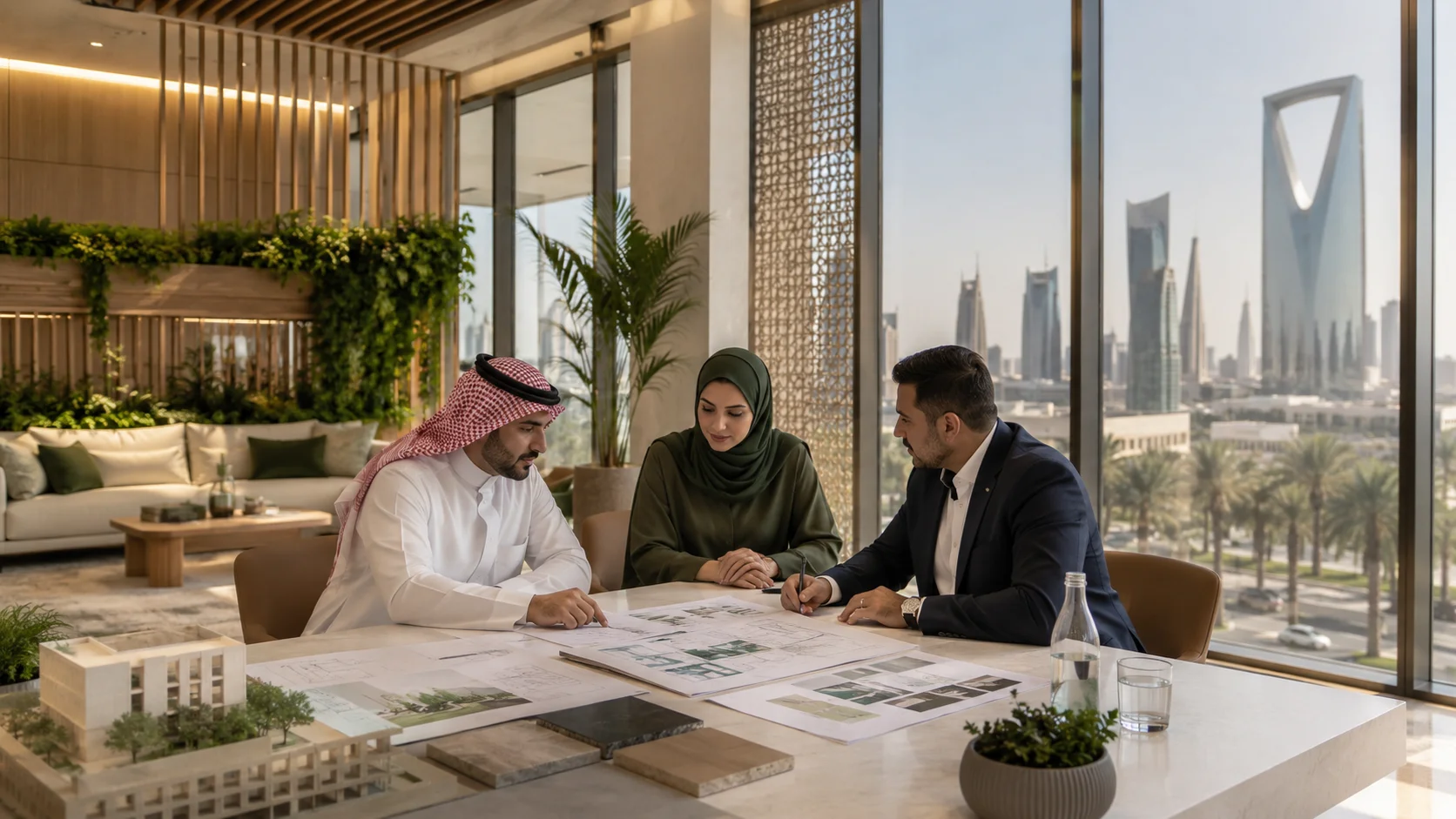
WELL Certification requires more than a checklist. Project teams must coordinate architects, MEP engineers, interior designers, contractors, facility managers, HR teams, and owners around shared health targets. A qualified consultant creates that coordination structure early.
Early involvement also reduces late-stage redesign. A project may need to address ventilation, filtration, lighting quality, acoustic comfort, water quality, material selection, movement opportunities, and workplace policies. When teams consider these topics during early design, they can align specifications and responsibilities before construction advances.
Saudi projects also operate within a distinctive climate. High temperatures, dust, intense solar exposure, cooling demand, and indoor-outdoor transitions can influence comfort and building operation. A WELL strategy should respond to these local conditions rather than copy a generic international template.
Saudi Vision 2030 emphasizes a vibrant society, modern amenities, and quality-of-life outcomes. That wider direction makes people-centered building performance increasingly relevant to developers and organizations.
What Does a WELL Consultant Do?
A WELL consultant converts certification requirements into a practical project roadmap. The role starts with defining project scope, target level, responsibilities, and the features that best match the asset.
A typical consultancy scope includes:
- WELL applicability and gap assessment
- Preliminary scorecard and feature selection
- Design workshop and responsibility matrix
- Review of architectural, MEP, lighting, and interior strategies
- Policy and operations guidance
- Product and material documentation coordination
- Submission planning and quality control
- Preparation for performance verification
- Review comment management
- Recertification planning
This process gives the owner a single coordination point. It also helps each discipline understand what evidence it must produce.
What a WELL Consultant in Saudi Arabia Coordinates
The strongest WELL strategy connects design intent with actual building performance. IWBI requires documentation review and performance verification for WELL Certification. Performance verification includes on-site measurements of conditions such as air, water, light, thermal comfort, and sound.
That requirement changes the consulting approach. A design may look compliant on paper, yet real conditions still need to perform. Therefore, consultants should track technical requirements through design, procurement, construction, commissioning, and occupancy.
For Saudi projects, coordination may include HVAC performance, particulate control, water testing, glare management, acoustic zoning, thermal comfort, low-emitting materials, active design, and occupant policies. The exact strategy depends on the asset and selected WELL features.
WELL Priorities for Projects in Saudi Arabia
A useful WELL plan focuses first on project-specific risks:
| Priority | Why it matters | Typical consultant action |
|---|---|---|
| Indoor air quality | Dust and pollutants affect indoor conditions | Coordinate filtration, ventilation, monitoring, and testing |
| Thermal comfort | Hot climates increase cooling and comfort challenges | Review zoning, controls, and setpoints |
| Light | Daylight and electric light affect visual comfort | Coordinate glare control and lighting targets |
| Water quality | WELL includes health-focused water requirements | Plan sampling, treatment, and checks |
| Materials | Interior products affect indoor environmental quality | Review product data and low-emitting criteria |
| Sound | Acoustics influence focus, rest, and privacy | Coordinate zoning and acoustic treatments |
| Movement | Design can encourage physical activity | Integrate stairs, circulation, and amenities |
| Mind and Community | Policies shape well-being beyond engineering | Align programs with physical design |
Project teams can review the official WELL v2 standard for current feature requirements and health-focused strategies.
How the WELL Certification Process Works
The process should begin before major design decisions become fixed. IWBI’s current guidance combines documentation review with performance verification to confirm both planned strategies and actual conditions.
1. Define scope and goals.
The owner confirms the project boundary, certification path, schedule, and business objectives.
2. Build the scorecard.
The consultant selects strategies that match the project, budget, and occupant profile.
3. Integrate requirements into design.
Each discipline receives clear responsibilities. The team embeds WELL requirements into drawings, specifications, equipment selections, policies, and procurement packages.
4. Prepare documentation.
The consultant collects evidence, reviews technical documents, and checks consistency before submission. IWBI associates each pursued feature with defined verification methods.
5. Prepare for performance verification.
The team confirms that the completed space can meet real-world testing requirements. WELL performance verification uses third-party on-site assessment rather than relying only on design documents.
6. Manage review and close-out.
The consultant tracks comments, coordinates responses, and supports corrective actions when needed.
This structured path reduces uncertainty and prevents the team from treating certification as a last-minute documentation exercise.
How WELL Supports Business and Asset Value
WELL focuses on health and well-being, while its practical value can extend across workplace experience, hospitality quality, occupant satisfaction, and corporate wellness objectives. Certification also gives owners an established framework for demonstrating a people-centered approach to building performance.
For investors and developers, WELL can complement broader sustainability targets. It can sit alongside energy, water, carbon, green building, or ESG strategies. ERKE’s WELL Certification Consulting service helps teams integrate these requirements into a wider sustainability plan.
This integrated model matters on complex Saudi developments. Large projects often carry multiple standards, ambitious design targets, and strict delivery schedules. Coordinated consultancy can reduce duplication and clarify which actions support several objectives at once.
Why Work With ERKE for WELL Consulting?
ERKE has delivered engineering and sustainability consultancy services since 2007. Its multidisciplinary approach brings architects and engineers together around building performance, certification, and implementation.
For WELL projects, that combination supports practical decision-making. The consultant must understand certification language and communicate effectively with design and construction teams. ERKE focuses on connecting both sides from concept through verification.
Frequently Asked Questions
What is WELL Certification?
WELL Certification is a third-party verified framework for creating spaces that support human health and well-being. WELL v2 organizes strategies across 10 concepts covering environmental conditions, occupant experience, operations, and organizational practices.
Is WELL suitable for projects in Saudi Arabia?
Yes. WELL can support many building and project types in Saudi Arabia. The strategy should reflect local climate, building use, occupant needs, project objectives, and the selected certification pathway.
When should a WELL consultant join the project?
A WELL consultant should join as early as possible, ideally during concept or schematic design. Early engagement gives the project team more options to integrate requirements into design and documentation.
Does WELL require on-site testing?
Yes. WELL Certification includes third-party performance verification. On-site measurements help confirm environmental conditions related to areas such as air, water, light, thermal comfort, and sound.
Conclusion
A successful WELL project connects human health goals with measurable design, operational, and performance outcomes. For Saudi developers, owners, and organizations, early coordination can make the certification process clearer and more efficient.
Choosing the right WELL Consultant Saudi Arabia team turns requirements into coordinated actions across design, construction, documentation, and verification. ERKE supports projects with a multidisciplinary approach that links healthy building strategies to broader sustainability goals.
Planning a WELL project in Saudi Arabia? Contact ERKE to discuss WELL Consultant in Saudi Arabia services, project scope, certification strategy, and next steps.