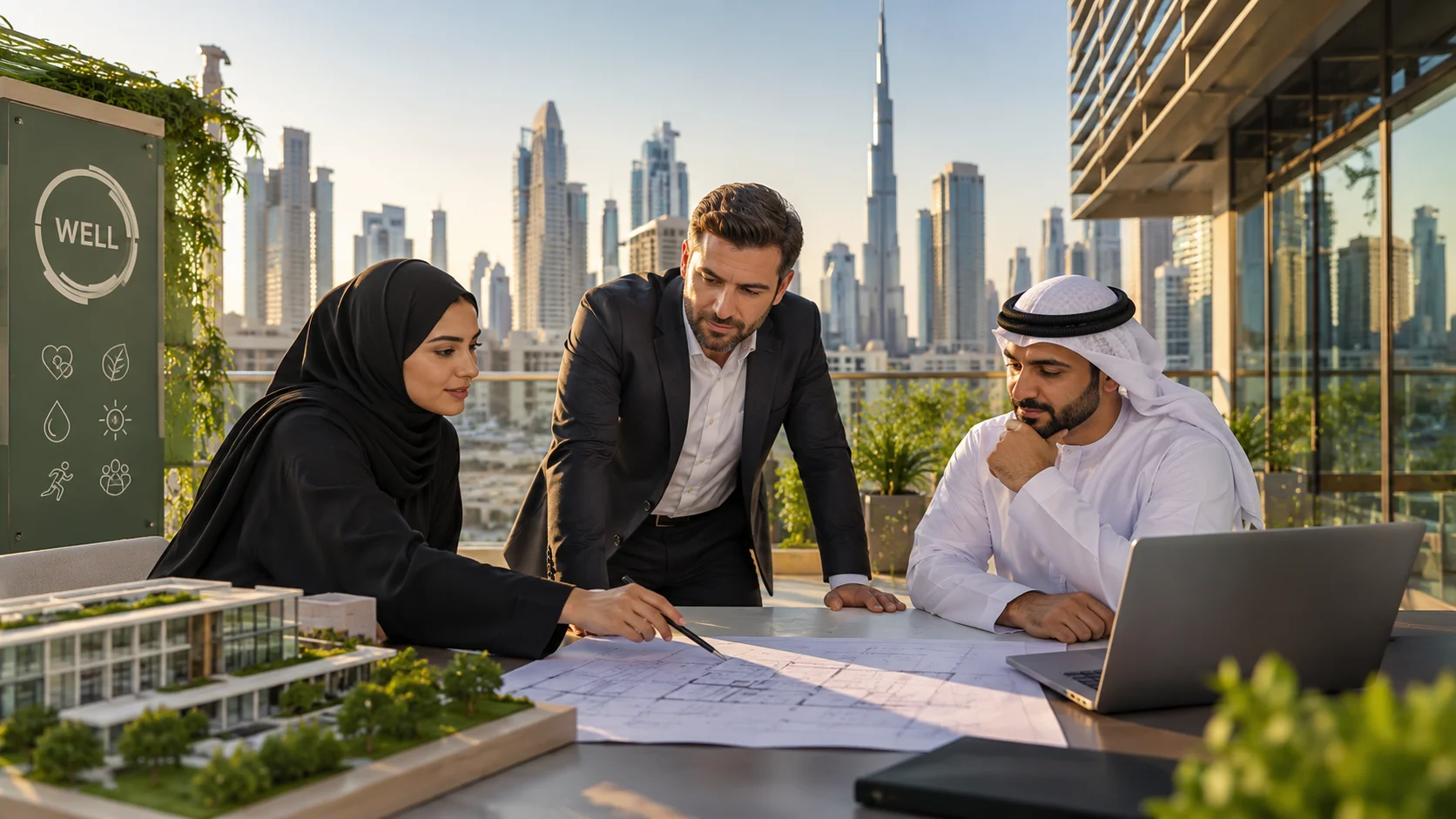
A WELL Consultant in UAE helps project teams turn health and well-being goals into measurable building strategies. Working with a WELL Consultant in UAE also helps owners coordinate design decisions, documentation, operational policies, and performance testing from the start.
For developers, asset owners, architects, and corporate occupiers, WELL offers a clear framework for creating healthier places. It goes beyond energy efficiency and focuses on how buildings support the people who use them every day. In the UAE, that approach is relevant for offices, hospitality assets, healthcare facilities, schools, residential developments, and mixed-use projects.
What Does a WELL Consultant in UAE Do?
A WELL consultant manages the technical and administrative path toward WELL Certification. The role connects the owner, design team, MEP engineers, contractors, facility managers, and operational stakeholders.
Typical responsibilities include:
- Assessing the project against applicable WELL requirements.
- Creating a certification roadmap and target scorecard.
- Assigning actions to architects, engineers, contractors, and operators.
- Reviewing drawings, specifications, calculations, and policies.
- Coordinating documentation before formal submission.
- Preparing the project for performance verification.
This coordination reduces gaps between design intent and actual building performance. It also gives decision-makers a single technical framework for health-focused design.
ERKE provides dedicated WELL Certification Consulting for projects that need structured support from early assessment through certification.
Why WELL Matters for UAE Buildings
The UAE has a desert climate, with hot and humid summer conditions. This places strong demands on indoor environments and building systems. Dubai Municipality also maintains guidance and oversight related to indoor air quality and water quality. WELL can complement these priorities with a structured, people-centered performance framework. It does not replace local codes or authority requirements.
For project teams, health strategies should influence ventilation, filtration, thermal comfort, lighting, acoustics, material selection, water quality, and operational policies. A strong WELL strategy connects technical decisions with occupant experience.
How Does WELL Certification Work?
The International WELL Building Institute’s WELL Certification framework evaluates health and well-being strategies across 10 concepts: Air, Water, Nourishment, Light, Movement, Thermal Comfort, Sound, Materials, Mind, and Community.
| WELL concept | Typical project focus |
|---|---|
| Air | Ventilation, filtration, pollutant control |
| Water | Water quality, testing, treatment |
| Nourishment | Healthy food environments |
| Light | Daylight, electric lighting, visual comfort |
| Movement | Physical activity and active design |
| Thermal Comfort | Temperature, humidity, controls |
| Sound | Acoustic comfort and noise management |
| Materials | Exposure reduction and material health |
| Mind | Mental well-being and restorative spaces |
| Community | Inclusion, policies, engagement |
The consultant helps the team select strategies that fit the building type, design stage, operations, budget, and certification goals.
Why Choose a WELL Consultant in UAE Early?
Early involvement gives the project team more options. A consultant can review the concept design before key systems, layouts, and specifications become difficult to change.
For example, ventilation choices may affect air quality goals. Lighting design can influence visual comfort. Space planning may support movement and well-being. Material specifications can affect emissions and exposure risks.
Starting early also helps the team separate mandatory actions from optional opportunities. As a result, owners can prioritize measures with strong value and avoid late redesign.
Documentation and Performance Verification
WELL Certification does not rely on design documents alone. IWBI requires documentation review and performance verification. During WELL performance verification, approved testing professionals collect on-site data for relevant environmental parameters.
Testing can include air, water, light, thermal comfort, and sound measurements. This step confirms that the completed space performs as intended.
A WELL consultant prepares the team for this stage. The consultant checks evidence, tracks open items, coordinates responsibilities, and helps resolve gaps before final review.
What Should a UAE WELL Strategy Prioritize?
Every project needs a tailored approach. However, several priorities often deserve early attention.
Indoor air quality: Teams should coordinate ventilation, filtration, source control, construction practices, and monitoring.
Thermal comfort: UAE projects rely heavily on cooling. Therefore, temperature, humidity, zoning, controls, and occupant expectations need careful coordination. The UAE’s national climate planning also identifies rising temperature and humidity as factors that increase electricity and water demand.
Light and visual comfort: Daylight can support occupant experience, yet glare and solar exposure need control.
Water quality: Project teams should define testing, treatment, maintenance, and operational responsibilities clearly.
Sound and acoustic comfort: Offices, hotels, schools, and healthcare spaces all face different acoustic needs.
Policies and operations: WELL also addresses organizational practices. Facility management, HR teams, and operators may need to contribute evidence.
Which UAE Projects Benefit Most from WELL Consulting?
WELL v2 accommodates different project types and sectors. A consultant can adapt the approach to each asset’s users, operational model, and ownership structure.
Corporate offices often focus on employee experience, air quality, light, movement, and workplace policies. Hospitality projects may emphasize guest comfort, acoustics, water, nourishment, and restorative spaces.
Healthcare and education projects can use WELL strategies to support sensitive occupant groups. Residential and mixed-use developments may use the framework to strengthen health-focused design.
The best starting point is not “How many points can we earn?” A better question is “Which health outcomes matter most for this building and its users?”
Why Work with ERKE for WELL Consulting in the UAE?
ERKE Sustainability Consultancy operates a Dubai office and supports projects through a multidisciplinary team of engineers and architects. Its wider services include green building consultancy, sustainable building analyses, lighting, electrical design, and commissioning.
ERKE’s broader experience includes international green building, sustainable building, engineering, and certification-related services. The company’s internal profile also documents its long-term sustainability consultancy experience and multidisciplinary technical structure.
That integrated approach helps WELL coordination because health-focused building performance crosses several disciplines. A single requirement may involve architecture, mechanical systems, controls, materials, construction procedures, and operations.
For UAE owners, early technical coordination can make the certification path clearer while protecting design quality.
Conclusion
Choosing the right WELL Consultant in UAE can turn a complex certification process into a coordinated project plan. The consultant should connect health goals with design decisions, construction controls, operational policies, documentation, and verified performance.
For the strongest results, involve the consultant before major design choices become fixed. This approach gives the project more flexibility, reduces certification risk, and keeps occupant well-being visible throughout delivery.
Frequently Asked Questions
What does a WELL consultant in UAE do?
A WELL consultant assesses the project, develops the certification roadmap, coordinates the design team, manages documentation, and prepares the building for performance verification.
When should a WELL consultant join a UAE project?
Ideally, the consultant should join during concept or early design. Early involvement creates more opportunities to integrate WELL requirements without redesign or late construction changes.
What does WELL performance verification test?
Performance verification uses on-site testing and third-party review to confirm relevant environmental conditions. Depending on the project, testing may cover air, water, light, thermal comfort, and sound.
How much does WELL Certification cost in the UAE?
WELL fees depend on project area and program structure. IWBI currently applies an enrollment fee, an area-based certification fee, and separate performance testing costs. Consulting fees also vary by project scope.
Planning WELL Certification for a project in Dubai, Abu Dhabi, or elsewhere in the UAE? Contact ERKE Sustainability Consultancy to discuss your WELL strategy and certification roadmap.