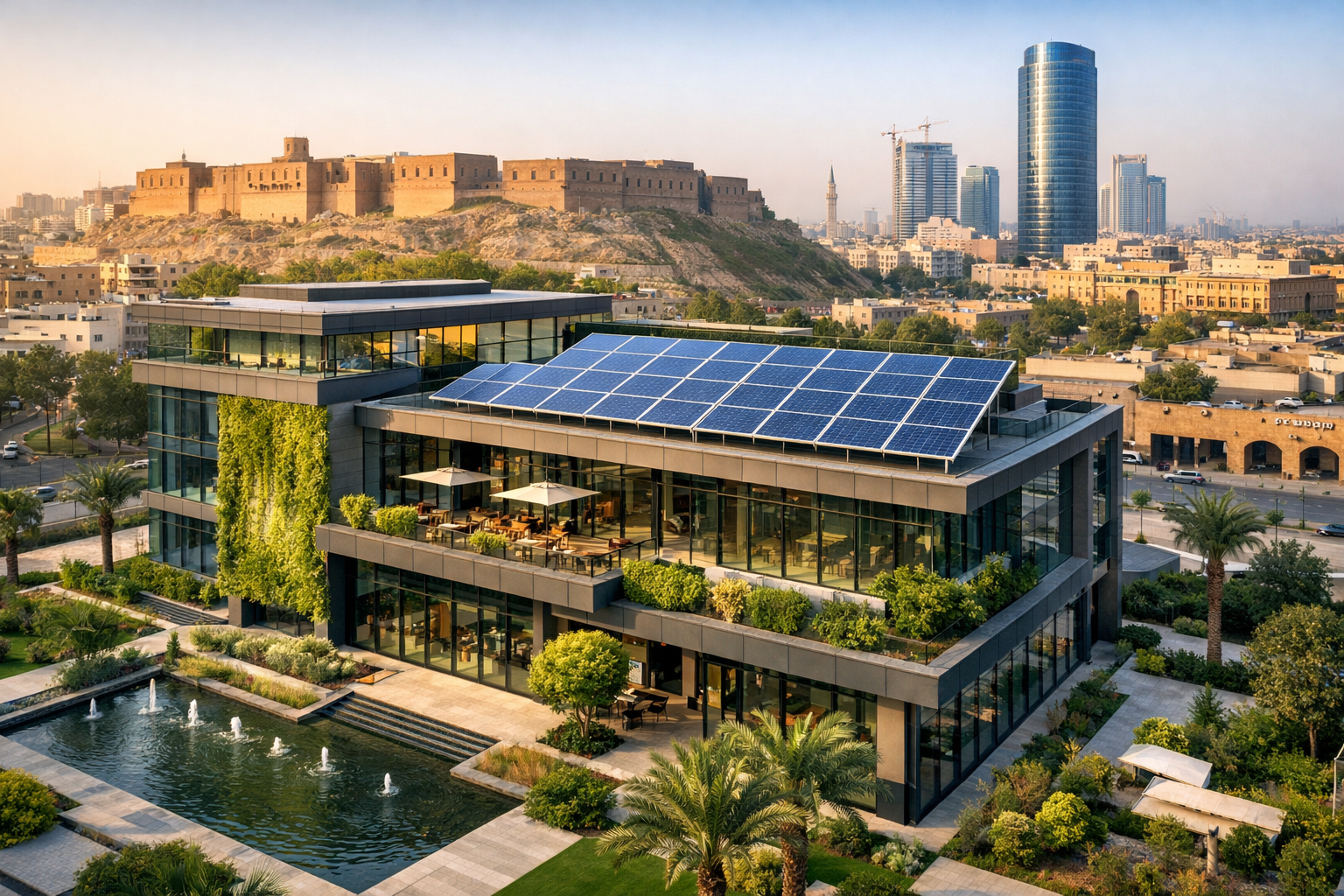
As sustainability becomes a strategic priority for real estate developers and investors worldwide, LEED (Leadership in Energy and Environmental Design) certification is increasingly gaining attention in emerging markets. In Iraq—particularly in Erbil, the commercial hub of the Kurdistan Region—interest in LEED-certified buildings is rising due to international investment, multinational tenants, and long-term operational efficiency goals.
However, the top challenges of LEED certification in Iraq and how to overcome them differ significantly from those faced in more mature markets. Regulatory gaps, limited local supply chains, and lack of regional experience can make the certification process complex without expert guidance.
This article provides a practical, region-specific analysis of LEED certification challenges in Iraq and outlines proven solutions tailored to Erbil-based projects.
Why LEED Certification Matters in Iraq and Erbil
LEED certification is more than an environmental label. In Iraq, it increasingly serves as:
-
A market differentiator for Class A commercial and mixed-use developments
-
A requirement for international tenants and institutional investors
-
A framework to reduce long-term energy and water costs
-
A tool to align projects with global ESG and sustainability standards
Despite these benefits, pursuing LEED certification in Iraq requires navigating a unique set of challenges.
1. Limited Local Experience with LEED Certification in Iraq
One of the most common LEED certification challenges in Iraq is the lack of experienced local consultants, contractors, and suppliers familiar with USGBC requirements.
Many project teams in Erbil are highly skilled technically but may not be fully aligned with:
-
LEED documentation standards
-
Credit interpretation requirements
-
Energy modeling and commissioning protocols
How to Overcome This Challenge
Engaging an internationally experienced LEED consultancy from the early design stage is critical. A qualified consultant bridges the gap between local construction practices and global LEED standards, ensuring that credits are targeted realistically and documented correctly.
👉 Learn more about professional support via ERKE’s
LEED Consulting Services
2. Climate and Resource Constraints Affecting LEED Credits
Iraq’s climate presents another major obstacle when addressing the top challenges of LEED certification in Iraq. High temperatures, water scarcity, and energy-intensive cooling systems directly affect credits related to:
-
Energy & Atmosphere
-
Water Efficiency
-
Indoor Environmental Quality
How to Overcome This Challenge
Successful LEED projects in Erbil adapt credit strategies to local conditions by:
-
Prioritizing high-performance building envelopes
-
Implementing efficient HVAC systems designed for hot climates
-
Using water-efficient fixtures and irrigation strategies
Rather than chasing all credits, an optimized scorecard aligned with Iraq’s climate yields better certification outcomes.
3. Limited Availability of LEED-Compliant Materials in Iraq
Another key LEED certification challenge in Iraq is the restricted availability of locally sourced, LEED-compliant materials, including:
-
Low-VOC products
-
Materials with EPDs (Environmental Product Declarations)
-
Regionally manufactured sustainable products
Importing such materials can increase costs and timelines.
How to Overcome This Challenge
Early-stage sustainable material analysis is essential. By identifying acceptable local alternatives and selectively importing only high-impact materials, project teams can still achieve Materials & Resources credits efficiently.
Explore ERKE’s approach to this process through
Green Building Consultancy Services
4. Regulatory and Documentation Gaps in Iraq
LEED certification in Iraq often faces challenges due to:
-
Inconsistent local building codes
-
Limited energy benchmarking data
-
Absence of standardized commissioning practices
These gaps can complicate LEED documentation and verification.
How to Overcome This Challenge
International frameworks compensate for local gaps. Referencing global standards and authoritative sources such as:
-
U.S. Green Building Council (USGBC) – official LEED framework
https://www.usgbc.org/leed -
World Bank Iraq Climate & Infrastructure Reports
https://www.worldbank.org/en/country/iraq
An experienced LEED consultant ensures compliance even when local regulations are underdeveloped.
5. Cost Perception and ROI Concerns
Many developers perceive LEED certification in Iraq as a high-cost, low-return investment, especially during early feasibility stages.
How to Overcome This Challenge
In reality, LEED-certified buildings in Erbil often deliver:
-
Lower operational energy costs
-
Higher asset valuation
-
Improved tenant retention
-
Stronger appeal to international occupiers
Clear life-cycle cost analysis and ROI modeling help decision-makers understand the financial benefits beyond initial certification costs.
6. Coordination Challenges Among Project Stakeholders
LEED certification requires close coordination between architects, MEP engineers, contractors, and owners. In Iraq, fragmented workflows can threaten credit achievement.
How to Overcome This Challenge
Integrated LEED project management ensures:
-
Clear responsibility matrices
-
Timely documentation uploads
-
Credit tracking throughout design and construction
This structured approach significantly reduces certification risks.
Frequently Asked Questions (FAQ)
Is LEED certification possible in Iraq?
Yes. LEED certification is fully applicable in Iraq, including Erbil, provided projects are guided by experienced consultants familiar with regional challenges.
What are the biggest LEED challenges in Erbil?
The main challenges include climate-related energy performance, limited sustainable materials, and lack of local LEED expertise.
Which LEED rating system is best for Iraq?
LEED BD+C is commonly used for new developments, while LEED O+M is suitable for existing buildings in Erbil seeking performance improvements.
How long does LEED certification take in Iraq?
Depending on project size and preparedness, LEED certification typically takes 12–24 months in Iraq.
Does LEED certification increase property value in Erbil?
Yes. LEED-certified properties are more attractive to international tenants and investors, improving long-term asset value.
Conclusion: Turning LEED Challenges in Iraq into Opportunities
Understanding the top challenges of LEED certification in Iraq and how to overcome them is the key to successful, future-ready developments in Erbil. While local constraints exist, they are not barriers when addressed with the right strategy, expertise, and planning.
With proper guidance, LEED certification becomes not just achievable—but a powerful competitive advantage in Iraq’s evolving real estate market.
If you are planning a project in Erbil or anywhere in Iraq and want to overcome the challenges of LEED certification with confidence, our expert team is ready to support you.
👉 Contact ERKE Sustainability Consultancy today to discuss tailored LEED strategies for your project:
https://erkeconsultancy.com/contact-us/