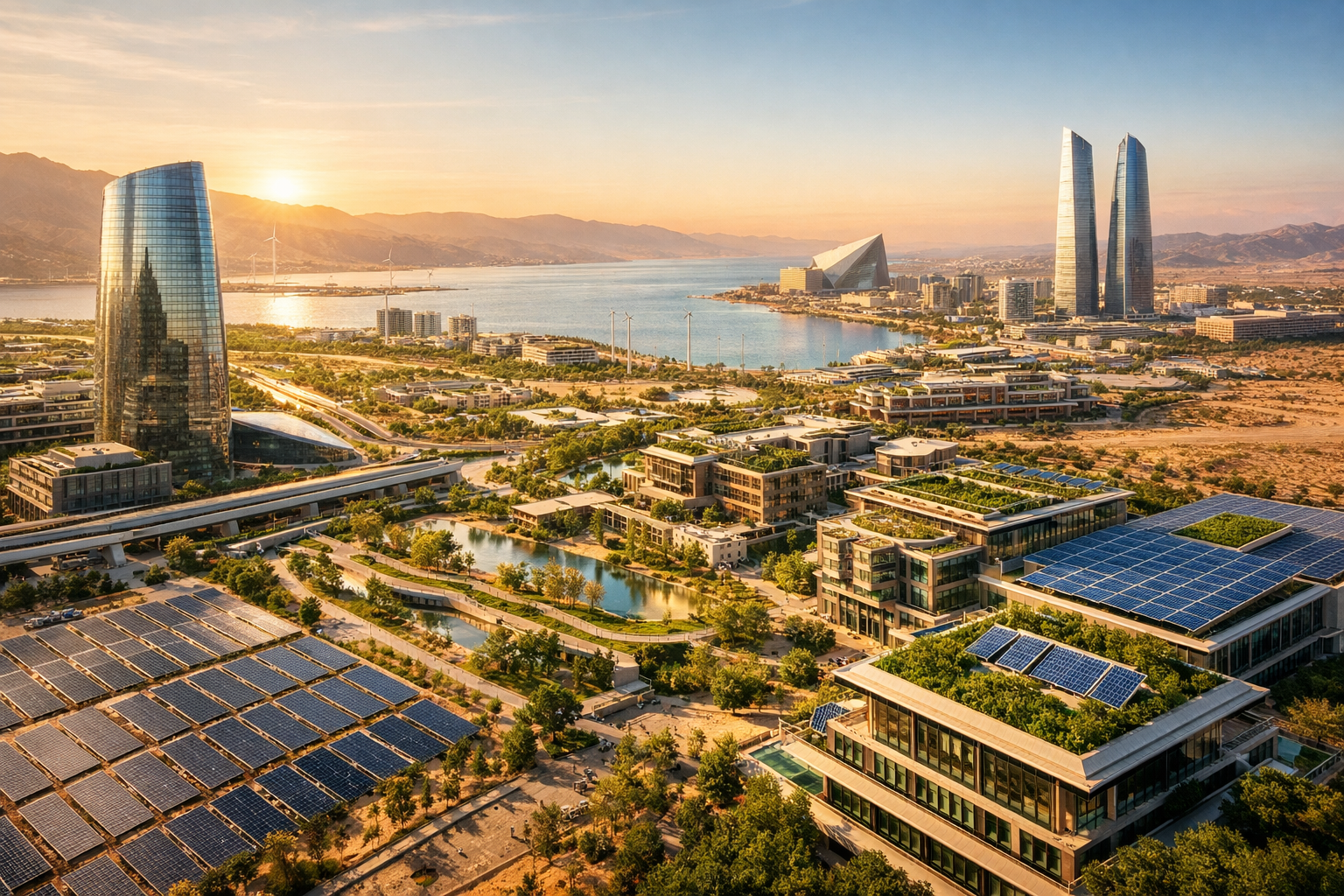
Saudi Arabia is redefining the global construction and development landscape through ambitious giga projects such as NEOM, The Red Sea Project, Qiddiya, Diriyah Gate, and Amaala. These mega-scale developments are not only unprecedented in size and investment but are also positioned as global benchmarks for sustainability, innovation, and ESG performance.
In this context, LEED Saudi giga projects alignment has become a critical topic for developers, investors, and authorities. LEED (Leadership in Energy and Environmental Design) offers a globally recognized sustainability framework that closely supports the environmental, social, and governance requirements embedded in Saudi Vision 2030.
This article explains how LEED certification aligns with Saudi giga project requirements, why it is increasingly preferred, and how international best practices can be localized for the Kingdom’s unique environmental and regulatory context.
Understanding Saudi Giga Project Sustainability Requirements
Saudi giga projects are not conventional real estate developments. They are designed as future-ready ecosystems that must meet strict sustainability, climate resilience, and digital governance criteria.
Key sustainability expectations typically include:
-
Net-zero or low-carbon operational targets
-
Renewable energy integration
-
Advanced water efficiency and desalination management
-
Biodiversity protection and land stewardship
-
Smart city technologies and performance monitoring
-
ESG transparency for global investors
While Saudi Arabia has its own evolving regulatory frameworks, many giga projects intentionally align with international sustainability standards to ensure global credibility and investor confidence.
This is where LEED Saudi giga projects integration becomes strategically valuable.
Why LEED Is Highly Relevant for Saudi Giga Projects
LEED is not just a building certification—it is a performance-based sustainability system applicable across master plans, districts, buildings, and infrastructure.
Global Recognition with Local Adaptability
LEED is administered by the U.S. Green Building Council (USGBC) and is widely accepted by international investors, development banks, and ESG rating agencies. At the same time, LEED allows regional adaptation for climate, water scarcity, and energy profiles—critical for Saudi Arabia.
Official LEED framework reference:
👉 https://www.usgbc.org/leed
Alignment with Vision 2030 Sustainability Pillars
Saudi Vision 2030 emphasizes:
-
Environmental protection
-
Energy diversification
-
Efficient resource management
-
High-quality urban living
LEED credit categories—such as Energy & Atmosphere, Water Efficiency, Sustainable Sites, and Materials—directly support these pillars.
LEED Saudi Giga Projects: Credit-Level Alignment
Energy Efficiency & Renewable Integration
Saudi giga projects aim to reduce dependence on fossil fuels while maintaining performance in extreme climates. LEED supports this through:
-
Energy modeling and performance optimization
-
On-site and off-site renewable energy credits
-
District energy system optimization
This aligns perfectly with large-scale solar and hybrid energy strategies adopted across giga developments.
Water Stewardship in Arid Environments
Water scarcity is one of Saudi Arabia’s most critical challenges. LEED addresses this through:
-
Ultra-low water-use fixtures
-
Greywater and blackwater reuse
-
Cooling tower optimization
-
Landscape irrigation reduction
For LEED Saudi giga projects, water credits are often among the highest-impact categories.
Sustainable Materials & Circular Economy
Saudi giga projects increasingly require:
-
Low-carbon construction materials
-
Environmental Product Declarations (EPDs)
-
Responsible sourcing and waste management
LEED directly rewards:
-
Life Cycle Assessment (LCA)
-
Locally sourced and low-emission materials
-
Construction waste diversion
District-Scale and Master Plan Compatibility
Many Saudi giga projects are certified not only at the building level but also at:
-
LEED for Cities & Communities
-
LEED Neighborhood Development (LEED ND)
These systems allow sustainability to be embedded at:
-
Infrastructure planning
-
Mobility networks
-
Public realm design
-
Mixed-use zoning
This is particularly relevant for projects like NEOM, which operate at a city scale rather than a single asset level.
ESG, Reporting, and Investor Confidence
Global investors increasingly demand measurable ESG performance, not just design intent. LEED provides:
-
Third-party verified benchmarks
-
Transparent performance metrics
-
International comparability
For Saudi giga projects targeting sovereign funds, institutional investors, and international partners, LEED certification strengthens credibility and reduces ESG risk.
Localizing LEED for Saudi Arabia
While LEED is global, successful LEED Saudi giga projects require:
-
Climate-responsive energy modeling
-
Local material benchmarking
-
Integration with Saudi codes and giga project authorities
-
Coordination with master developers and ESG teams
This is where experienced consultancy becomes essential.
At ERKE Sustainability Consultancy, we support developers through localized LEED strategies that align international standards with Saudi project realities.
🔗 Internal reference: https://erkeconsultancy.com/leed-consulting/
The Strategic Advantage of LEED for Saudi Giga Projects
Choosing LEED is not only about certification—it is about:
-
Long-term operational efficiency
-
International reputation
-
Regulatory readiness
-
Future-proof asset value
As Saudi Arabia positions itself as a global sustainability leader, LEED Saudi giga projects will continue to serve as reference models for the region and beyond.
Frequently Asked Questions (FAQ)
Is LEED mandatory for Saudi giga projects?
LEED is not legally mandatory nationwide, but many giga project authorities require or strongly encourage LEED or equivalent international certifications as part of their sustainability frameworks.
Which LEED rating systems are most used in Saudi Arabia?
Commonly used systems include LEED BD+C, LEED ND, and LEED for Cities & Communities, depending on project scale and scope.
Can LEED be combined with local Saudi sustainability requirements?
Yes. LEED is often used alongside local regulations, project-specific sustainability guidelines, and Vision 2030 KPIs.
Does LEED work in extreme desert climates?
Yes. LEED is performance-based and can be adapted through climate-specific energy and water strategies suitable for Saudi Arabia.
How early should LEED be integrated into a giga project?
Ideally at master planning or concept design stage to maximize credit potential and avoid costly redesigns later.
Expert Support for LEED Saudi Giga Projects
Successfully aligning LEED Saudi giga projects with Vision 2030, ESG targets, and giga-scale technical requirements demands specialized expertise.
If you are developing, investing in, or managing a giga project in Saudi Arabia and want to ensure globally credible, locally optimized LEED certification, our team is ready to support you.
👉 Contact ERKE Sustainability Consultancy today to discuss tailored LEED strategies for your Saudi giga project:
🔗 https://erkeconsultancy.com/contact-us/