Sustainability as a New Competitive Standard
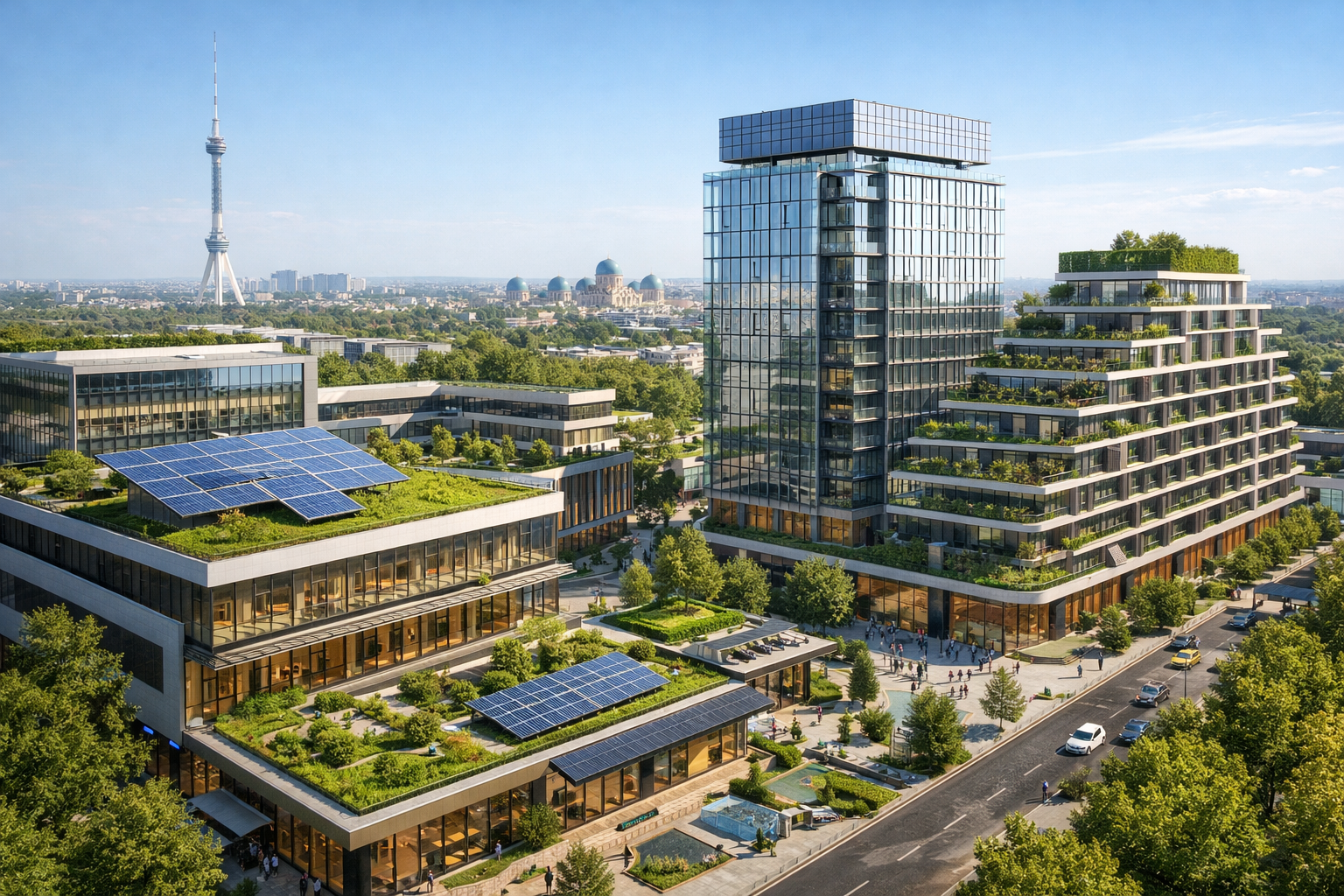
LEED projects in Uzbekistan are increasingly becoming a defining factor in the competitiveness of modern real estate developments. As Uzbekistan continues to open its economy to foreign investment and large-scale urban development, sustainability is no longer a niche concept—it is a strategic differentiator.
International investors, multinational tenants, and financial institutions are aligning their decisions with environmental, social, and governance (ESG) criteria. In this context, LEED (Leadership in Energy and Environmental Design) certification provides a globally recognized framework that enhances asset value, reduces operational risk, and strengthens long-term market positioning in Uzbekistan’s rapidly evolving real estate sector.
This article explores what makes LEED projects more competitive in Uzbekistan real estate, from financial performance and investor confidence to regulatory alignment and future-proofing.
Uzbekistan Real Estate Market: A Transforming Landscape
Uzbekistan has emerged as one of Central Asia’s most promising real estate markets. Large-scale developments in Tashkent and regional hubs are driven by:
-
Foreign direct investment (FDI)
-
Infrastructure modernization
-
New commercial, hospitality, and mixed-use projects
-
Government-led urban transformation programs
However, as supply grows, competition among projects intensifies. Traditional factors such as location and size are no longer sufficient. Developers must now differentiate through quality, efficiency, and sustainability, where LEED projects in Uzbekistan gain a clear advantage.
Why LEED Projects in Uzbekistan Stand Out
1. International Credibility and Investor Confidence
One of the strongest competitive advantages of LEED projects in Uzbekistan is global credibility. LEED certification is developed by the U.S. Green Building Council (USGBC) and recognized worldwide.
For international investors and tenants:
-
LEED acts as an independent verification of quality
-
Reduces perceived market and operational risk
-
Aligns projects with global ESG and sustainability standards
This is particularly important in emerging markets, where transparency and benchmarking are critical decision-making factors.
(Source: U.S. Green Building Council – https://www.usgbc.org)
2. Higher Asset Value and Market Differentiation
LEED-certified buildings consistently demonstrate:
-
Higher rental premiums
-
Increased occupancy rates
-
Stronger long-term asset valuation
In Uzbekistan’s competitive real estate environment, LEED projects differentiate themselves by offering measurable performance metrics in energy, water, materials, and indoor environmental quality.
For commercial and mixed-use developments, LEED certification signals:
-
Long-term operational efficiency
-
Reduced lifecycle costs
-
Higher resale and exit value
3. Operational Cost Efficiency in a Growing Market
Energy and water efficiency are central to LEED certification—and highly relevant in Uzbekistan.
LEED projects in Uzbekistan typically achieve:
-
Reduced energy consumption through efficient HVAC and lighting systems
-
Lower water usage with smart fixtures and landscape strategies
-
Optimized maintenance and operational performance
These efficiencies translate directly into lower operating expenses, a decisive advantage for owners and tenants alike, especially as utility costs rise over time.
4. Alignment with Global ESG and Financing Requirements
Another factor that makes LEED projects more competitive in Uzbekistan real estate is access to sustainable finance.
Many international banks, development funds, and institutional investors now require:
-
ESG compliance
-
Environmental performance reporting
-
Sustainable asset classification
LEED certification supports compliance with these expectations and can improve eligibility for:
-
Green loans
-
Preferential financing terms
-
International development funding
According to global market research by the World Bank, sustainable buildings are increasingly favored in emerging economies due to their risk resilience and long-term stability.
(Source: World Bank – https://www.worldbank.org)
LEED Projects as a Strategic Tool for Developers in Uzbekistan5. Competitive Advantage in Tenant Attraction
Multinational corporations, embassies, international hotels, and global brands operating in Uzbekistan actively seek LEED-certified spaces.
Key tenant benefits include:
-
Healthier indoor environments
-
Better employee productivity and comfort
-
Alignment with corporate sustainability commitments
As a result, LEED projects in Uzbekistan often secure longer lease terms and higher-quality tenants, reducing vacancy risks.
6. Future-Proofing Against Regulatory Changes
Sustainability regulations are evolving worldwide—and Uzbekistan is no exception.
LEED-certified buildings are inherently:
-
More adaptable to future environmental regulations
-
Better prepared for energy performance standards
-
Aligned with international best practices
This future-proofing protects developers and investors from costly retrofits and compliance risks in the years ahead.
The Role of Professional LEED Consultancy
While the benefits are clear, achieving LEED certification requires strategic planning and technical expertise from early design stages.
Working with an experienced consultancy ensures:
-
Correct LEED rating system selection
-
Cost-effective credit strategies
-
Smooth certification process without delays
ERKE provides end-to-end LEED consultancy services for international projects. Learn more about our expertise on our LEED Consulting Services page:
👉 https://erkeconsultancy.com/leed-consulting/
Frequently Asked Questions (FAQ)
What types of projects in Uzbekistan can pursue LEED certification?
Commercial offices, residential buildings, hotels, mixed-use developments, healthcare facilities, and industrial projects can all pursue LEED certification in Uzbekistan.
Is LEED certification recognized by international investors?
Yes. LEED is one of the most widely recognized green building certification systems globally and is highly valued by international investors and tenants.
Do LEED projects cost more to develop?
Initial costs may be slightly higher, but lifecycle savings, higher asset value, and better financing opportunities typically outweigh upfront investments.
Can existing buildings in Uzbekistan become LEED certified?
Yes. Existing buildings can pursue LEED O+M (Operations and Maintenance) certification to improve performance and market positioning.
Conclusion: Why LEED Is a Strategic Advantage in Uzbekistan Real Estate
In an increasingly competitive and internationalized market, LEED projects in Uzbekistan represent far more than sustainability—they represent strategic intelligence.
By delivering:
-
Global credibility
-
Higher asset value
-
Lower operational costs
-
Stronger investor and tenant appeal
LEED certification positions real estate projects in Uzbekistan for long-term success.
Work with ERKE
If you are planning a real estate project and want to understand what makes LEED projects more competitive in Uzbekistan real estate, our expert team is ready to support you.
👉 Contact ERKE today to explore tailored LEED consultancy solutions for your project:
https://erkeconsultancy.com/contact-us/
Let’s transform sustainability into your strongest competitive advantage.