LEED Consultant in Austria support helps project owners turn sustainability goals into a clear certification roadmap. LEED Consultant in Austria services also help design teams align energy, water, materials, carbon, and occupant well-being decisions from the first project stage.
Austria already has a strong culture of efficient buildings. Developers in Vienna, Graz, Linz, Salzburg, and Innsbruck now face higher expectations from investors, tenants, ESG teams, and EU policy. LEED gives these stakeholders a recognized way to measure performance and communicate results. A skilled consultant connects global LEED requirements with local design practice, climate conditions, supplier data, and project documentation.
For international investors, LEED also creates a common language. It helps teams compare an office, hotel, logistics center, hospital, mixed-use development, or interior fit-out against a global benchmark. That clarity matters when a project must prove lower impacts, better indoor quality, and stronger long-term asset value.
Why Work With a LEED Consultant in Austria?
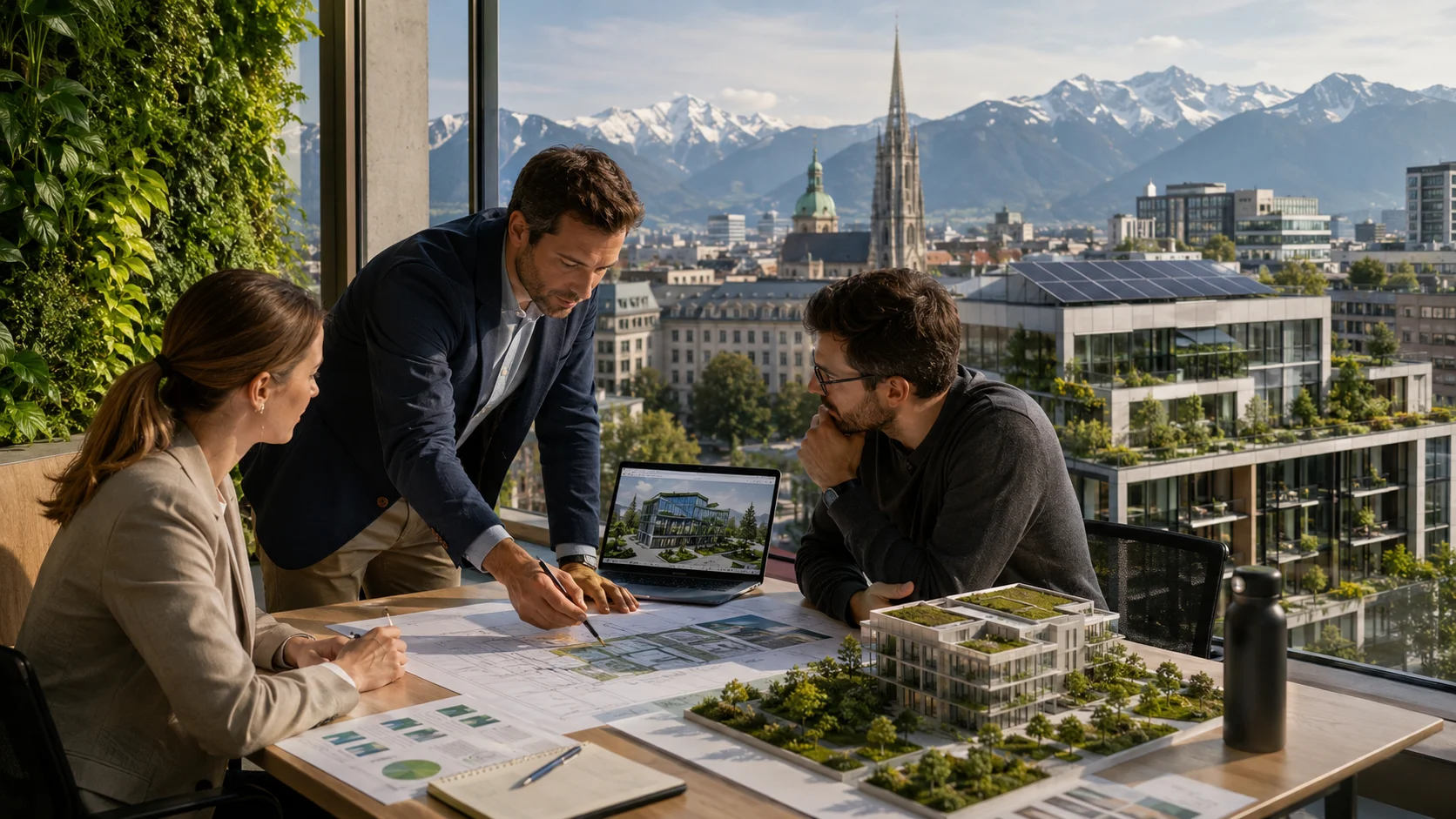
A LEED Consultant in Austria guides the team from early feasibility to final certification. The consultant helps select the right rating system, define the LEED boundary, prepare a scorecard, coordinate credits, and manage documentation.
This role saves time because success depends on early decisions. Site selection, energy strategy, water fixtures, commissioning scope, low-emitting materials, waste planning, and metering choices can affect the final score. When teams delay these choices, they often lose points or create redesign work.
A consultant also translates requirements into practical actions for architects, engineers, contractors, cost managers, and owners. Each discipline gets clear tasks. As a result, the project avoids confusion and moves toward a realistic certification level.
ERKE supports project teams through integrated sustainability expertise. You can review our dedicated LEED consulting services to see how we structure certification support across design, construction, and documentation.
What LEED Certification Means for Austrian Projects
LEED, developed by the U.S. Green Building Council, gives projects a framework for healthier, more efficient, and more cost-effective green buildings. The official USGBC LEED rating system covers multiple project types, including new construction, interiors, operations, neighborhoods, and cities.
For Austria, this global framework works best when teams connect it to local priorities. These priorities include high energy performance, fossil-free heating pathways, climate resilience, public transport access, biodiversity, circular materials, and strong indoor comfort.
The European context also matters. The revised Energy Performance of Buildings Directive aims to support a decarbonised building stock by 2050. It also highlights renovation, zero-emission buildings, solar readiness, building automation, and indoor environmental quality. LEED can help project teams organize many of these themes in one measurable plan.
Austria also promotes sustainable construction through local initiatives. The klimaaktiv building standard focuses on energy, materials, location, comfort, and health. A LEED consultant can help teams understand where international certification and Austrian sustainability expectations support each other.
Key Services of a LEED Consultant in Austria
LEED Consultant in Austria: Early Feasibility and Strategy
The first step is a feasibility review. The consultant checks project type, scope, site context, schedule, budget, and target certification level. This review answers a simple question: which LEED pathway gives the project the best value?
Next, the team builds a preliminary scorecard. It should include secure points, stretch points, risks, owners, and deadlines. This scorecard becomes the project’s sustainability control panel.
Strong feasibility work also protects the budget. It identifies low-cost design synergies early, such as daylight access, efficient envelope design, water savings, waste diversion, and product disclosure planning.
Documentation, Coordination, and Quality Control
LEED rewards performance, but it also requires evidence. A consultant coordinates drawings, narratives, calculations, commissioning reports, material submittals, energy models, waste logs, and supplier declarations.
Clear coordination matters in Austria because many project teams include local designers, international owners, and multinational contractors. Everyone needs the same credit intent, file naming approach, and submission timeline.
Quality control should start before construction. The consultant reviews specifications, tender requirements, and contractor responsibilities. This approach reduces missing data later and helps the team maintain certification momentum.
High-Impact LEED Credit Areas for Austria
Energy and carbon usually create the largest strategic impact. Austrian projects can benefit from efficient building envelopes, heat pump systems, district energy analysis, renewable energy, advanced metering, and commissioning. These measures support lower operating costs and better carbon outcomes.
Materials also deserve early attention. Teams should request Environmental Product Declarations, recycled content data, regional sourcing information, low-emitting product certificates, and responsible procurement documentation. Early supplier engagement makes credit achievement much smoother.
Indoor environmental quality can strengthen tenant appeal. Fresh air, thermal comfort, daylight, acoustic quality, and low-emitting materials improve the daily experience for occupants. These factors matter in offices, schools, hotels, healthcare spaces, and residential projects.
Location and transport credits can also fit many Austrian urban projects. Dense neighborhoods, bicycle infrastructure, electric vehicle readiness, and public transport access often align well with Vienna, Graz, and other transit-connected locations.
How ERKE Adds Value for Austrian LEED Projects
ERKE combines engineering discipline with green building certification experience. Our team has worked across LEED strategy, energy analysis, sustainable materials, and project documentation. This model helps owners reduce coordination gaps.
The company’s background includes over 40 million square meters of project experience. That track record gives clients an advantage during certification decisions.
For Austria, ERKE focuses on clear communication, fast risk identification, and measurable results. We help the team choose credits that fit the project’s commercial goals, technical systems, and long-term sustainability strategy.
Project Types That Benefit Most
Commercial offices often use LEED to attract international tenants and align with corporate sustainability policies. Hotels can use certification to improve guest confidence, operational efficiency, and brand positioning.
Industrial, logistics, healthcare, education, and interior fit-out projects can also benefit. Each project type needs a tailored scorecard, clear material rules, and early mechanical coordination.
Frequently Asked Questions
What does a LEED Consultant in Austria do?
A LEED Consultant in Austria manages the certification roadmap. The consultant selects the rating system, prepares the scorecard, coordinates the design team, tracks credits, and supports documentation until review.
Is LEED certification suitable for projects in Austria?
Yes. LEED works for Austrian projects that want a globally recognized green building certification. It suits offices, hotels, mixed-use buildings, logistics facilities, interiors, campuses, and major renovations.
When should we hire a LEED consultant?
Hire a consultant before concept design or early schematic design. Early support helps the team set realistic targets, avoid missed credits, and integrate energy, water, material, and comfort strategies.
Can LEED support ESG and investor reporting?
Yes. LEED can support ESG communication because it organizes measurable building performance topics. These include energy use, emissions, water efficiency, materials, waste, transport, and occupant health.
Conclusion
LEED Consultant in Austria support gives owners a structured path from ambition to certification. It helps project teams make better decisions, reduce documentation risk, and connect global sustainability standards with Austrian building priorities.
A successful LEED project starts early. It needs the right rating system, a realistic scorecard, disciplined coordination, and strong evidence. With the right advisory partner, certification becomes a practical management process, not a last-minute paperwork exercise.
For expert support on LEED Consultant in Austria services, contact ERKE today. Start your project discussion through our contact page and build a clearer path to high-performance certification.