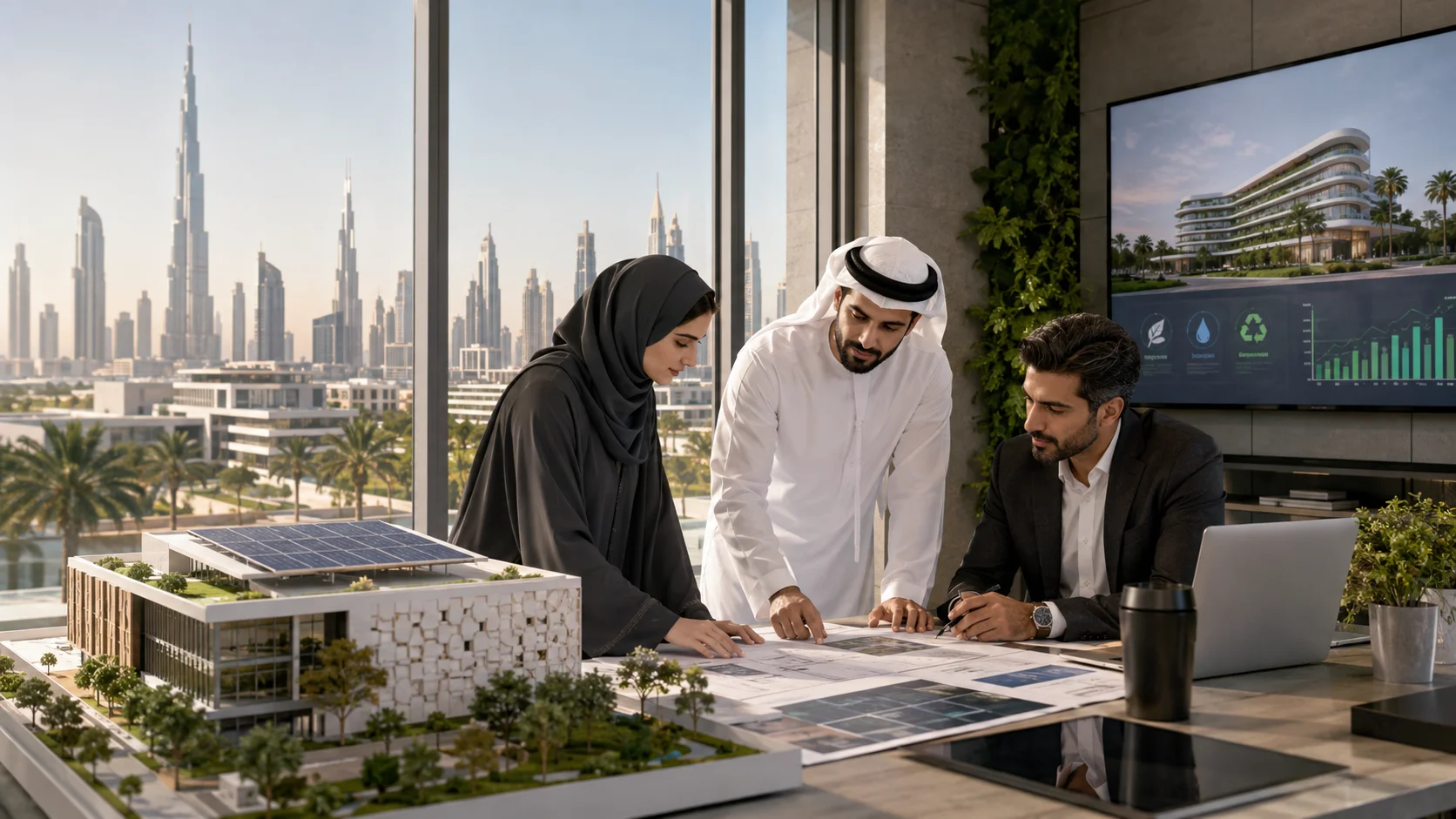
A Middle East LEED Consultant helps project teams turn sustainability targets into a clear certification strategy. The right advisor also coordinates design, documentation, and construction decisions before they become costly late-stage changes.
Across the Middle East, developers are pursuing higher-performance buildings in demanding climates. LEED offers a recognized framework for energy efficiency, water stewardship, lower-carbon design, responsible materials, and healthier indoor environments. The challenge is not simply earning points. It is creating a roadmap that fits the project type, budget, schedule, and operational goals.
ERKE supports project teams through its LEED Consulting service, from early strategy to certification documentation.
Why a Middle East LEED Consultant Matters
LEED requirements are global, but project conditions are local. Climate, water availability, utility systems, construction practices, material supply chains, and authority requirements can affect the best certification pathway.
A consultant should therefore connect LEED criteria with real design decisions. In the Middle East, this often means close attention to cooling demand, envelope performance, water efficiency, commissioning, indoor air quality, and material selection. Early coordination can reduce redesign and help teams protect both points and budget.
LEED v5 centers its framework on decarbonization, quality of life, and ecological conservation and restoration. Project teams can review the current framework through the official USGBC LEED v5 resource.
How a Regional LEED Consultant Adds Value
A strong consultant does more than prepare forms. The consultant translates certification requirements into clear responsibilities for architects, MEP engineers, contractors, suppliers, and owners.
Typical tasks include:
- Selecting the correct LEED rating system and certification target.
- Preparing a preliminary scorecard and credit feasibility review.
- Identifying high-risk prerequisites and credits early.
- Coordinating energy, water, materials, and indoor environmental quality strategies.
- Tracking design decisions, construction evidence, and contractor documentation.
- Managing responses during the certification review process.
This structure gives the project team one coordinated roadmap instead of separate sustainability tasks.
What Should Be Decided at the Start of a LEED Project?
The most important decisions happen before detailed design progresses too far. Teams should first confirm project scope, rating system, certification level, and key performance targets.
For new construction and major renovation projects, the USGBC LEED BD+C framework is often the starting point. However, the correct system depends on project scope and occupancy conditions.
A practical kickoff should answer five questions:
- Which LEED rating system applies?
- What certification level is realistic?
- Which prerequisites create the highest technical risk?
- Which credits offer the best value for the project?
- Who owns each calculation, drawing, specification, and construction record?
Clear answers prevent duplicated work. They also create accountability across the project team.
When Should You Appoint a LEED Consultant?
Appoint the consultant during concept or early design whenever possible. Early involvement gives the team more options and reduces the chance of losing credits through fixed design decisions.
Late appointments can still help, but they often require a gap analysis. The consultant must then identify what remains achievable and which documentation gaps need urgent action.
For complex developments, early integration is especially important. Airports, hospitality projects, healthcare facilities, offices, industrial buildings, and data centers can involve many consultants. A single certification strategy keeps those teams aligned.
Middle East Priorities for High-Performance LEED Projects
Projects in the region often benefit from a performance-first approach. Instead of treating certification as a documentation exercise, teams should use LEED to guide measurable design outcomes.
Energy and carbon: High cooling loads make efficient HVAC design, envelope optimization, controls, metering, and commissioning important project topics. Energy modeling can help teams compare options before construction.
Water: Potable water reduction, efficient fixtures, irrigation strategy, metering, and leak detection can support both certification and long-term operating performance.
Materials: Product transparency, embodied carbon, low-emitting materials, and responsible procurement require early coordination with the specification and purchasing teams.
Indoor environmental quality: Ventilation, filtration, thermal comfort, low-emitting products, and air quality management can directly affect occupant experience.
Resilience: Climate risks, operational continuity, and long-term adaptability are becoming more important in sustainable building decisions.
The goal is not to chase isolated points. A good strategy connects credits so one design decision supports several project objectives.
How to Evaluate a LEED Consultant in the Middle East
Start with technical depth and regional delivery capability. Ask how the consultant coordinates with design disciplines, manages documentation, and responds when a targeted credit becomes difficult.
You should also review experience across relevant building types. Local presence can improve coordination with owners, consultants, contractors, and suppliers. ERKE operates from Dubai, alongside its Istanbul and London offices, which supports regional project communication.
GBCI provides third-party certification services and maintains a regional presence through GBCI MENA. This makes it useful for project teams to understand both the LEED framework and the formal certification process.
A capable advisor should also explain trade-offs clearly. If a credit adds cost without meaningful project value, the team should know early. If another strategy improves performance and certification potential together, it should receive priority.
What Does ERKE Bring to Middle East LEED Projects?
ERKE combines green building consultancy with engineering and sustainability expertise. This integrated approach helps project teams connect LEED objectives with technical design, product decisions, and construction requirements.
Its multidisciplinary structure supports coordination between architecture, MEP systems, energy performance, materials, and certification documentation.
For Middle East projects, that coordination matters because certification decisions cross disciplines. A water target can affect landscape design. An energy target can change equipment selection. A materials target can influence procurement lead times.
Conclusion
Choosing a Middle East LEED Consultant is a project management decision as much as a sustainability decision. The right partner helps define the certification path, manage technical risks, coordinate documentation, and keep sustainability goals connected to design and construction.
Early engagement gives teams the best chance to protect schedule, budget, and performance. It also allows LEED requirements to support better building outcomes instead of becoming a late compliance exercise.
Frequently Asked Questions
What does a LEED consultant do?
A LEED consultant plans the certification strategy, coordinates project responsibilities, tracks prerequisites and credits, reviews documentation, and supports the team through the certification review process.
When should a Middle East project hire a LEED consultant?
The best time is during concept or early design. Early appointment gives the team more flexibility to select cost-effective credits and avoid redesign.
Is LEED suitable for projects in the Middle East?
Yes. LEED is used internationally and can apply to many project types. The best strategy should reflect local climate, water conditions, construction practices, and project goals.
Which LEED rating system should a project use?
The correct rating system depends on the project type, scope, occupancy, and construction status. A consultant should confirm the applicable system before registration.
Can a LEED consultant help control certification costs?
Yes. A consultant can compare credit options, flag expensive or risky strategies, and prioritize measures that deliver both certification value and building performance.
Planning a LEED project in the region? Work with ERKE to build a practical certification roadmap from concept through submission. Contact ERKE Sustainability Consultancy to discuss your Middle East project.