A Factory LEED Consultant helps existing factories improve performance without stopping production. Many industrial owners now seek a LEED Consultant for Existing Factories because buyers, investors, and supply chains expect measurable sustainability.
Factories use energy, water, materials, and maintenance systems every day. These operations shape cost, comfort, carbon performance, and brand trust. LEED gives facility teams a clear framework for improving those areas. It also turns scattered upgrades into one coordinated certification path.
For existing factories, the right strategy matters. A consultant should understand shift patterns, process loads, HVAC systems, worker health, documentation, and facility limits. The goal is not only to earn a certificate. Instead, the aim is a cleaner, more efficient factory.
What Does a Factory LEED Consultant Do?
A Factory LEED Consultant guides an existing industrial facility through LEED strategy, performance improvement, documentation, and review coordination. The consultant connects management goals with practical actions on site.
This work starts with a gap analysis. The team reviews energy use, water use, waste streams, purchasing habits, indoor air quality, cleaning policies, and maintenance practices. Then the consultant identifies which credits fit the factory best.
A strong consultant also works with different teams. Facility managers, EHS teams, production leaders, procurement teams, and finance teams all affect LEED results. Clear coordination keeps the process realistic.
In many cases, existing factories align with LEED for Operations and Maintenance. USGBC explains that this path supports existing buildings focused on operational improvement, including projects with little or no construction work through USGBC’s LEED for existing buildings guidance.
Why Existing Factories Need a Factory LEED Consultant
Existing factories often have complex systems. Production areas may operate long hours. Offices, laboratories, canteens, and utility zones may sit inside the same site.
A consultant helps the owner avoid guesswork. Instead of chasing random green measures, the project team creates a scorecard. This scorecard links actions to business value.
| Factory Priority | LEED-Related Improvement |
|---|---|
| Lower utility costs | Energy metering, HVAC optimization, lighting upgrades |
| Water efficiency | Fixture review, leak detection, process water awareness |
| Better worker comfort | Ventilation, thermal comfort, lighting quality |
| ESG credibility | Verified documentation and transparent performance data |
| Waste reduction | Recycling systems, purchasing policies, operational tracking |
These improvements can also support customer audits. Many global buyers ask suppliers for environmental data. A LEED strategy helps the factory present that data with more confidence.
How a Factory LEED Consultant Starts the Process
The process should begin with a short discovery phase. During this phase, the consultant defines the project boundary, reviews data, and checks the right rating system.
Next, the team creates a LEED action plan. This plan shows required tasks, responsible people, timelines, and missing documents. It also separates quick wins from longer upgrades.
For example, a factory may already have good waste practices. The consultant can document those practices fast. However, energy optimization may need meter data, equipment review, and commissioning support.
The team should also review certification steps early. USGBC describes the commercial LEED certification process as registration, application, technical review, and final certification through its Guide to LEED Certification. Early planning reduces delays during review.
Key Areas for LEED Performance in Existing Factories
A successful factory project usually focuses on three performance areas.
Energy and Carbon Performance
Energy use often drives the biggest opportunity. Factories may run boilers, chillers, compressed air systems, pumps, motors, ovens, and heavy ventilation equipment.
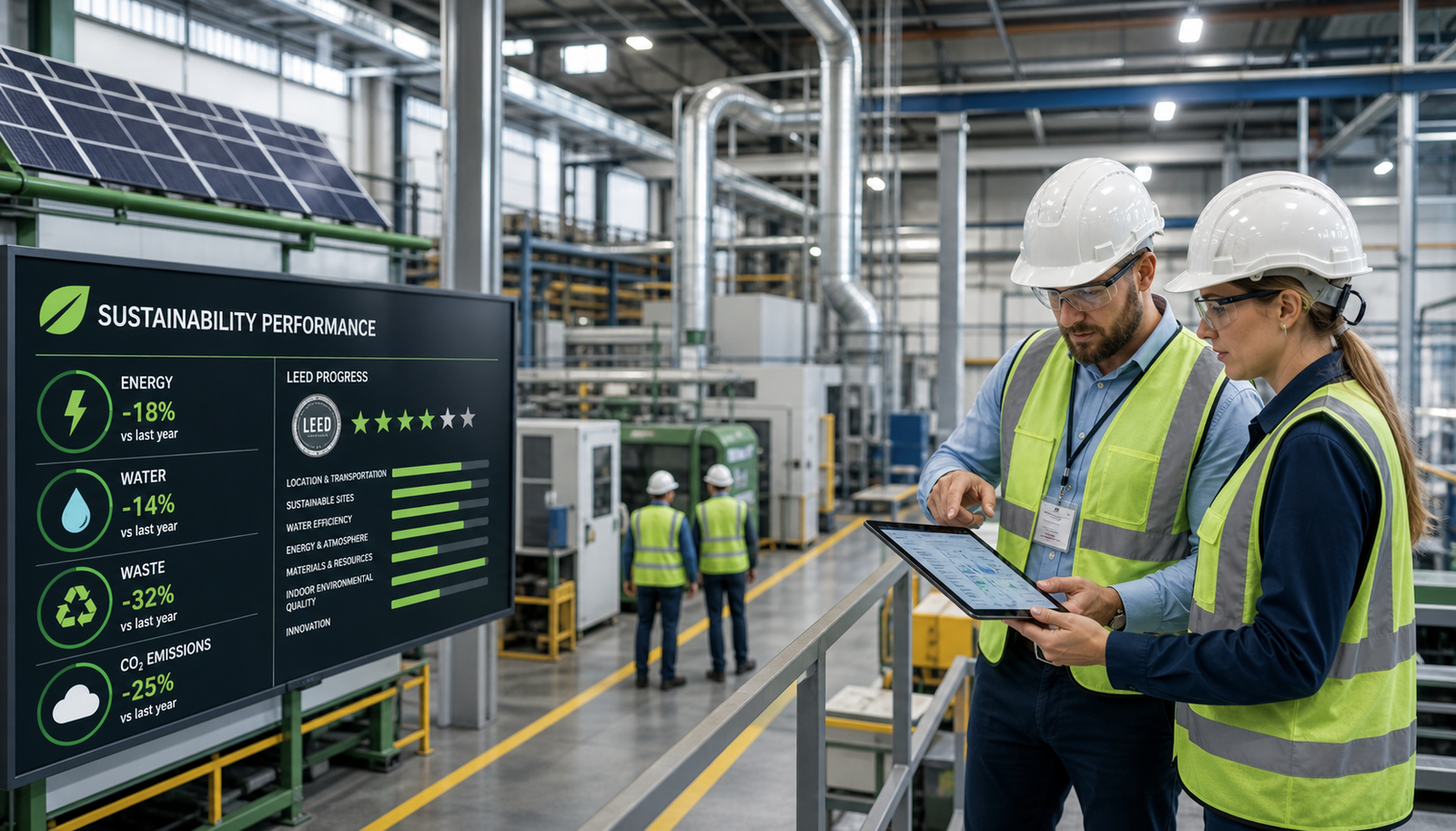
A consultant reviews utility bills, operating schedules, sub-metering options, and equipment efficiency. The team can then target improvements with a clear payback logic. Actions may include LED lighting, smart controls, HVAC tuning, compressed air leak reduction, and renewable energy planning.
Many multinational customers now ask factories to show energy and emissions progress. LEED documentation can support that conversation.
Water, Comfort, and Operational Quality
Water performance depends on the factory type. Some plants use water mostly in restrooms and kitchens. Others use it in cooling, washing, production, or laboratory processes. The consultant maps water points and checks fixture performance.
Factories also need healthy spaces for workers. Good ventilation, low-emitting materials, comfortable temperatures, glare control, acoustic awareness, and cleaning quality all matter. The team should adapt measures to production areas, warehouses, control rooms, and support offices.
Materials, Waste, Site, and Resilience
Existing factories buy many products. Cleaning chemicals, lamps, filters, packaging, office supplies, spare parts, and fit-out materials all create impact. LEED encourages better purchasing habits and waste tracking.
A factory site also affects sustainability. Heat island reduction, rainwater management, outdoor lighting, alternative transport, and EV readiness may support the scorecard. Resilience deserves attention too, because flood risk, heat stress, and power reliability can affect operations.
What Documents Will the Factory Need?
Documentation makes or breaks the certification process. A consultant helps collect proof before deadlines create pressure.
Typical documents include energy and water bills, floor plans, boundary drawings, equipment lists, maintenance records, waste reports, purchasing policies, air quality records, photos, and operating schedules.
Clean documentation saves time. It also helps the team answer review comments with confidence.
Choosing the Right LEED Consultant for Existing Factories
Factory projects need more than general sustainability knowledge. The consultant must understand live operations. Production cannot pause for every survey or meeting.
Look for a team that can translate LEED requirements into factory language. The right partner should speak with engineers, operators, finance leaders, and executives. This skill keeps the process practical.
Existing factories may include mixed spaces, special ventilation needs, process loads, hazardous storage rules, and strict hygiene standards. A capable advisor respects these realities.
ERKE supports project teams with international green building expertise, engineering insight, and structured certification management. Our LEED consulting service helps owners plan, document, and manage certification paths for demanding building types.
Conclusion
A Factory LEED Consultant helps existing factories turn sustainability goals into a clear, measurable, and credible action plan. The process can improve energy efficiency, water performance, indoor quality, waste management, and ESG reporting.
Existing factories have constraints, but they also have strong opportunities. Many improvements come from better operations, smarter tracking, and focused management. With the right consultant, LEED becomes a practical roadmap for a more efficient industrial asset.
Frequently Asked Questions
What is a Factory LEED Consultant?
A Factory LEED Consultant is a green building expert who guides existing industrial facilities through LEED strategy, documentation, and certification coordination. The consultant helps teams improve operations, collect evidence, and align actions with LEED requirements.
Can an existing factory get LEED certification?
Yes. An existing factory can pursue LEED certification if it meets the rating system requirements and can document operational performance. Many existing facilities use a path focused on operations and maintenance rather than new construction.
How long does LEED certification take for an existing factory?
The timeline depends on data readiness, building performance, site complexity, and improvement needs. A prepared factory with strong records can move faster. Facilities with missing data may need more time for monitoring and corrective actions.
Ready to evaluate your facility? Contact ERKE to discuss LEED Consultant for Existing Factories services and build a practical certification roadmap for your site.