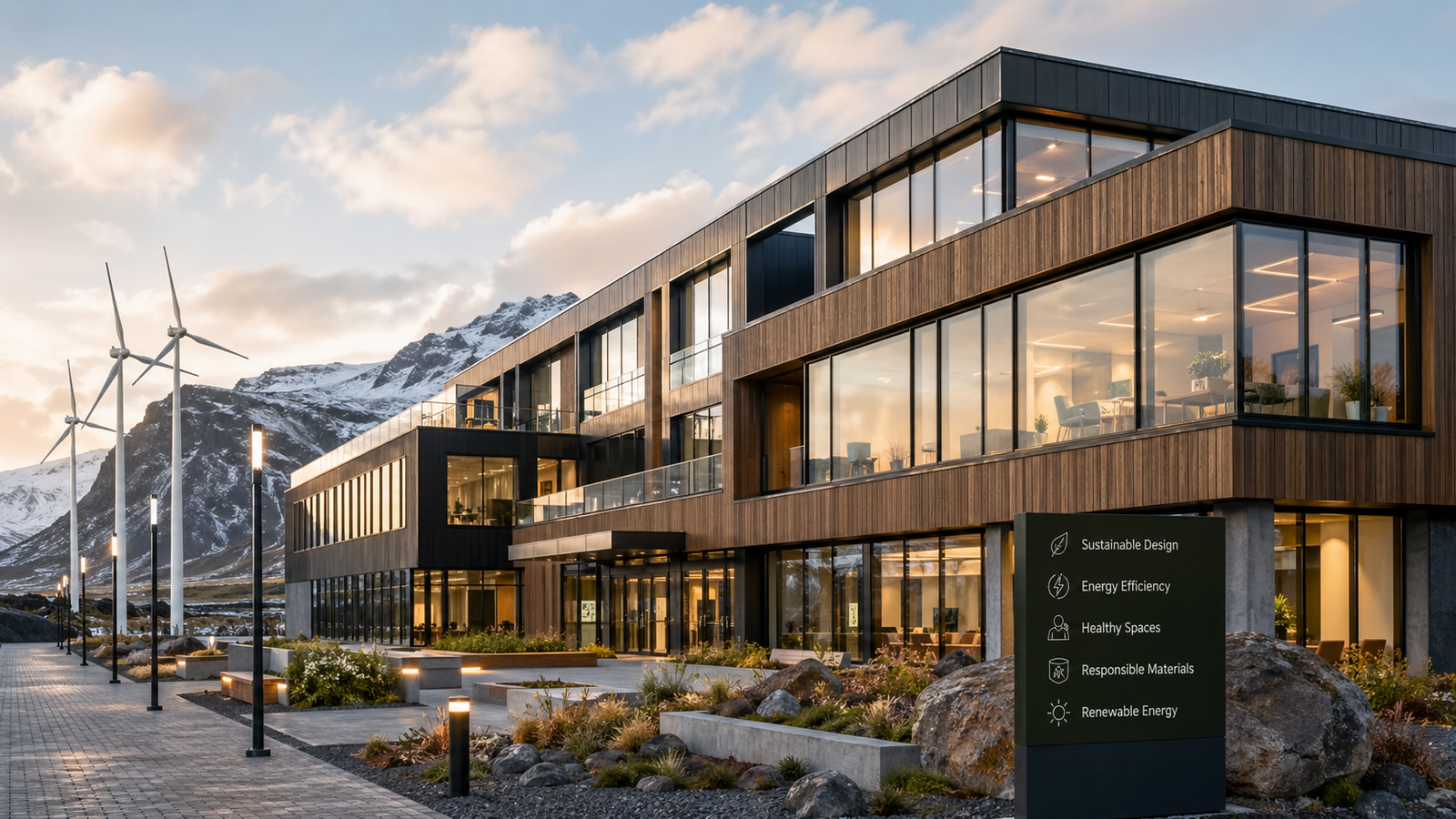
LEED Consultant Iceland is a strategic service for developers, architects, investors, and owners who want credible results. LEED Consultant Iceland support helps teams plan certification, reduce design risks, and align sustainability goals with Iceland’s climate, energy profile, and construction expectations.
Iceland offers a unique context for high-performance buildings. Renewable energy gives many projects a strong starting point, yet certification still requires disciplined decisions on materials, indoor quality, commissioning, site impact, and long-term performance. A skilled consultant turns these requirements into a clear action plan.
LEED rewards verified performance, complete documentation, and smart coordination. When the certification strategy starts during concept design, project teams protect budgets, avoid late redesign, and create buildings that perform well after handover.
Why LEED Consultant Iceland Matters for Local Projects
A LEED project in Iceland needs more than a generic checklist. Climate, daylight patterns, wind exposure, site sensitivity, heating systems, and material availability shape certification choices. A consultant helps the team select practical credits before costly decisions become fixed.
The official LEED rating system provides a global framework for healthier, efficient, and lower-impact buildings. Each project must translate that framework into local design actions. In Iceland, this often means careful work on energy modelling, envelope performance, responsible procurement, occupant comfort, and construction waste planning.
Developers also face rising expectations from tenants, investors, and sustainability teams. A certified building can support stronger asset positioning and improve reporting quality for organisations that track carbon, energy, and environmental performance.
What LEED Certification Means in Iceland
LEED stands for Leadership in Energy and Environmental Design. It evaluates location, sustainable sites, water efficiency, energy, materials, indoor environmental quality, innovation, and regional priorities.
Certification suits many building types. Offices, hotels, logistics facilities, mixed-use assets, retail projects, campuses, and major renovations can pursue LEED when the right rating system fits the scope.
In Iceland, LEED can help project teams answer direct business questions. How can the building reduce operational demand? Which materials support lower embodied carbon? How will the design protect comfort during cold, windy, or low-light seasons? What documentation will reviewers need?
What a LEED Consultant in Iceland Should Manage
First, the consultant confirms the rating system. A new office building may follow a different path than an interior fit-out or an existing building.
Second, the consultant builds a realistic scorecard. This scorecard should show target credits, responsibilities, risks, deadlines, and backup options.
Third, the consultant leads design integration. Energy efficiency, daylight, material choices, acoustics, air quality, and water systems affect one another. Coordinated decisions create better results than isolated credit chasing.
Fourth, the consultant manages documentation. LEED reviewers expect consistent drawings, calculations, narratives, product data, commissioning records, and construction evidence.
Finally, the consultant supports the project through review comments. Clear responses can save time and protect certification targets.
Key Benefits of LEED Consultant Iceland Services
The right consultant adds value before construction begins. Early advice can identify low-cost credit opportunities and reveal difficult credits that may not suit the project.
This reduces uncertainty for investors and project managers. Instead of guessing, the team sees a structured pathway. Each credit has a purpose, an owner, and a documentation plan.
LEED Consultant Iceland services can also strengthen market credibility. Tenants and buyers often ask for proof, not claims. Certification gives them a recognized benchmark.
Indoor environmental quality offers another benefit. Good ventilation, low-emitting materials, daylight access, thermal comfort, and acoustic planning support healthier spaces.
Material strategy deserves special attention. Icelandic projects may use imported products, local resources, or hybrid supply chains. A consultant can help the team review Environmental Product Declarations, recycled content, sourcing data, low-emission criteria, and construction waste pathways.
How ERKE Supports LEED Projects from Strategy to Submission
ERKE supports project teams with integrated green building consultancy and technical coordination. For service details, visit our LEED consulting services page.
Our approach starts with a certification feasibility review. We assess the project type, location, design stage, owner goals, schedule, and available documentation. Then we create a practical roadmap.
Next, we coordinate the LEED scorecard with the design team. This step helps architects, engineers, contractors, and owners focus on priority actions.
During design, ERKE reviews drawings, specifications, energy strategies, material choices, and indoor quality measures. During construction, we help teams collect evidence for submittals, product data, waste reports, commissioning records, and site practices.
After submission, ERKE supports responses and clarifications. This keeps the process organised and helps the team move toward certification.
LEED Consultant Iceland Checklist for Project Teams
Define the building type and certification goal. Decide whether the project aims for Certified, Silver, Gold, or Platinum.
Hold an early sustainability workshop. Bring the owner, architect, engineers, cost consultant, contractor, and facility team into the same discussion.
Confirm climate and site priorities. Study wind, daylight, rainwater, transport access, habitat, and resilience needs.
Plan energy performance early. Iceland’s renewable energy context helps, but the building still needs efficient systems and strong envelope design.
Review materials before procurement. Ask for EPDs, VOC data, recycled content, responsible sourcing records, and durability information.
Set a documentation calendar. Assign every credit to a responsible person and define what proof they must provide.
Iceland’s Sustainability Direction and Building Expectations
Iceland has clear climate ambitions. The Government of Iceland climate page states that the country aims to reach carbon neutrality before 2040 and uses an updated climate action plan as a main policy tool. Projects can support this direction through energy efficiency, low-carbon materials, durable design, and operational transparency.
Even where renewable energy is common, buildings still create impacts through construction, transport, materials, maintenance, and end-of-life scenarios. LEED helps teams address these wider impacts in a structured way.
Project owners should also consider future readiness. Regulations, investor expectations, and tenant requirements continue to move toward stronger environmental proof. A building that documents performance today can adapt more easily tomorrow.
Conclusion: Choose a Clear LEED Path in Iceland
LEED Consultant Iceland support gives project teams a practical route from ambition to verified performance. It connects design quality, documentation discipline, material strategy, energy efficiency, and occupant well-being.
Icelandic projects have strong opportunities, yet they also require local awareness and precise coordination. With the right consultant, owners can reduce risk, guide their teams, and create buildings that stand out in a competitive sustainability market.
Frequently Asked Questions
What does a LEED consultant do in Iceland?
A LEED consultant in Iceland guides the certification process from planning to submission. The consultant selects the rating system, builds the scorecard, coordinates the design team, checks documentation, supports construction evidence, and responds to review comments.
When should a project hire a LEED consultant?
A project should hire a LEED consultant during concept design. Early involvement gives the team more credit options, better cost control, and fewer documentation problems.
Which buildings can pursue LEED certification in Iceland?
Offices, hotels, retail spaces, mixed-use buildings, logistics assets, campuses, residential projects, and major renovations may qualify when the correct rating system matches the scope.
Ready to plan your project with a trusted LEED Consultant Iceland team? Contact ERKE through our contact page and take the next step toward a certified, high-performance building.