LEED Consultant in Indonesia services help owners, developers, architects, and contractors align projects with global green building expectations. A LEED Consultant in Indonesia can also reduce certification risk by guiding the team from early design to final documentation.
Indonesia’s building market is moving fast. Jakarta, Surabaya, Bali, and new industrial zones all face stronger demand for energy efficiency, water conservation, resilient design, and healthier indoor environments. LEED gives project teams a clear framework for these goals. Yet certification needs more than good intentions. It needs the right rating system, a realistic scorecard, coordinated design decisions, and accurate evidence.
ERKE supports project teams with structured LEED strategy, technical coordination, and documentation management. We help your team focus on credits that create real project value.
Why Choose a LEED Consultant in Indonesia?
A LEED project requires many decisions before design becomes fixed. The owner must select the correct rating system. Design teams must check prerequisites. Engineers need energy, water, and commissioning inputs. Contractors must track materials and site practices. When these tasks start late, the project can lose points, time, and budget control.
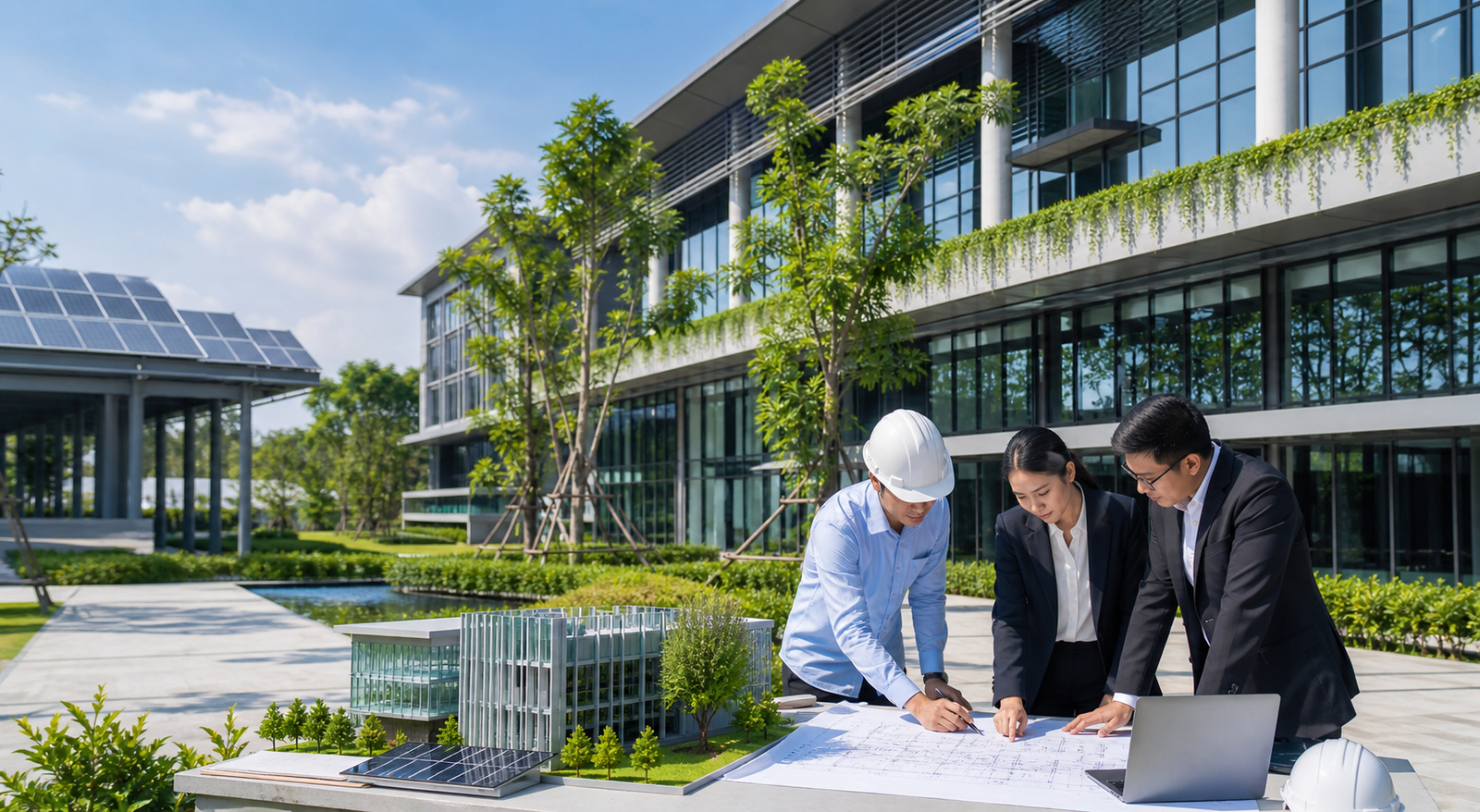
A consultant brings order to this process. The consultant sets the roadmap, assigns responsibilities, and keeps each discipline aligned. This support matters in Indonesia because project contexts vary widely. A hotel in Bali, an office tower in Jakarta, a data center in Batam, and a manufacturing plant in West Java may need different credit priorities.
LEED also works well with local sustainability ambitions. Indonesia has its own green building ecosystem, and Green Building Council Indonesia runs GREENSHIP and other certification activities. For local context, review Green Building Council Indonesia certification resources.
What Does a LEED Consultant Do?
A strong consultant turns a complex certification process into clear actions. The work starts with feasibility. First, the team reviews the project type, floor area, site conditions, climate risks, energy systems, and owner goals. Then the consultant recommends the most suitable pathway.
For international projects, LEED rating systems may include BD+C for new construction, ID+C for interiors, or O+M for existing buildings. The official USGBC LEED resources explain rating systems, minimum program requirements, credit guidance, and certification tools.
After rating system selection, the consultant builds a scorecard. This document shows likely points, stretch points, prerequisites, responsible parties, and evidence needs. It should guide design decisions, not sit in a folder.
How a LEED Consultant in Indonesia Supports Each Stage
During concept design, the consultant helps the owner define the target level. Many teams aim for Certified, Silver, Gold, or Platinum. The right target depends on budget, schedule, building use, and brand goals.
During schematic design, the consultant coordinates high-impact strategies. These may include passive design, daylight access, efficient HVAC systems, renewable energy options, and sustainable site planning.
During design development, the consultant checks drawings and specifications. This step prevents common gaps. The project may need low-emitting materials, construction waste planning, submetering, commissioning scope, or indoor air quality requirements.
During construction, the consultant helps the contractor collect evidence. Material invoices, product data sheets, waste logs, photographs, commissioning records, and test reports all matter. Clean documentation saves time during review.
Key LEED Priorities for Indonesian Projects
Indonesia’s tropical climate creates clear design priorities. Cooling loads can dominate energy use. Heavy rain can affect stormwater planning. Urban heat islands can reduce comfort. High humidity can challenge indoor air quality.
A LEED strategy should respond to these local realities. It should not copy a scorecard from another country. Instead, the team should use climate, site, and building-use data.
Energy performance often offers the biggest opportunity. Early modeling can compare envelope performance, shading, HVAC efficiency, controls, and renewable energy. Better decisions at this stage can reduce operating costs.
Water efficiency also deserves early attention. Low-flow fixtures, condensate recovery, landscape choices, cooling tower strategy, and rainwater reuse can support cost and resilience goals.
Materials need careful planning. LEED may reward product transparency, environmental product declarations, responsible sourcing, recycled content, and low-emitting products. These credits require procurement discipline.
Indoor environmental quality shapes occupant satisfaction. Better ventilation, daylight, views, acoustic comfort, thermal comfort, and healthy materials can improve the daily experience for tenants, guests, students, or employees.
How ERKE Helps Project Teams
ERKE provides LEED consulting with an integrated engineering mindset. Our team understands green building strategy, energy performance, documentation, and design coordination. We focus on practical decisions that fit the project’s budget, timeline, and market goals.
You can explore our approach on our LEED consulting services page. This page explains how ERKE supports certification planning and delivery for international projects.
Our process starts with a kickoff workshop. We clarify goals, constraints, target level, and decision timelines. Then we create a LEED action plan.
Next, we coordinate the scorecard with architects, engineers, contractors, and suppliers. Each credit receives an owner, deadline, and documentation path.
Finally, we manage quality checks before submission. This step improves consistency across drawings, calculations, narratives, and forms.
Common Mistakes to Avoid
Many projects lose time because they involve a consultant too late. Early decisions affect site selection, envelope design, mechanical systems, materials, and commissioning.
Another mistake is chasing points without value. A good LEED plan should support the project’s business case. It should prioritize performance, resilience, occupant health, and documentation certainty.
Teams also underestimate supplier documentation. Product data, declarations, test certificates, and sourcing details can take time. Procurement teams should understand LEED needs before purchase orders go out.
Conclusion
A LEED Consultant in Indonesia helps project teams move from ambition to measurable action. The right consultant clarifies the rating system, builds a realistic scorecard, coordinates design teams, and protects the documentation process.
For Indonesian projects, local climate, construction methods, supply chains, and market expectations all matter. A strong LEED strategy should connect global standards with project-specific realities.
ERKE helps owners, developers, architects, and contractors create high-performance buildings with a clear certification path. With early planning, practical engineering insight, and disciplined documentation, your project can pursue LEED with confidence.
Frequently Asked Questions
What is a LEED Consultant in Indonesia?
A LEED Consultant in Indonesia guides local or international projects through LEED certification. The consultant selects the rating system, prepares the scorecard, coordinates sustainability strategies, and manages documentation.
When should we hire a LEED consultant for an Indonesian project?
Hire a consultant before schematic design. Early involvement helps the team protect key credits, set realistic targets, and avoid expensive design changes later.
Can LEED certification apply to hotels, offices, factories, and interiors?
Yes. LEED includes rating systems for many project types. New buildings, major renovations, interiors, and existing buildings can all pursue certification when they meet eligibility rules.
How long does LEED certification take?
The timeline depends on project size, rating system, design stage, and documentation quality. A consultant can estimate the schedule after reviewing scope, target level, and team readiness.
Start Your LEED Project with ERKE
Planning a green building project in Jakarta, Bali, Surabaya, or another Indonesian market? Work with ERKE for structured, practical, and expert support. Contact our team through the ERKE contact page to discuss LEED Consultant in Indonesia services for your project.
Editorial source note: LEED and Indonesia green building references were checked against official USGBC and Green Building Council Indonesia resources; ERKE positioning follows the uploaded ERKE company profile.