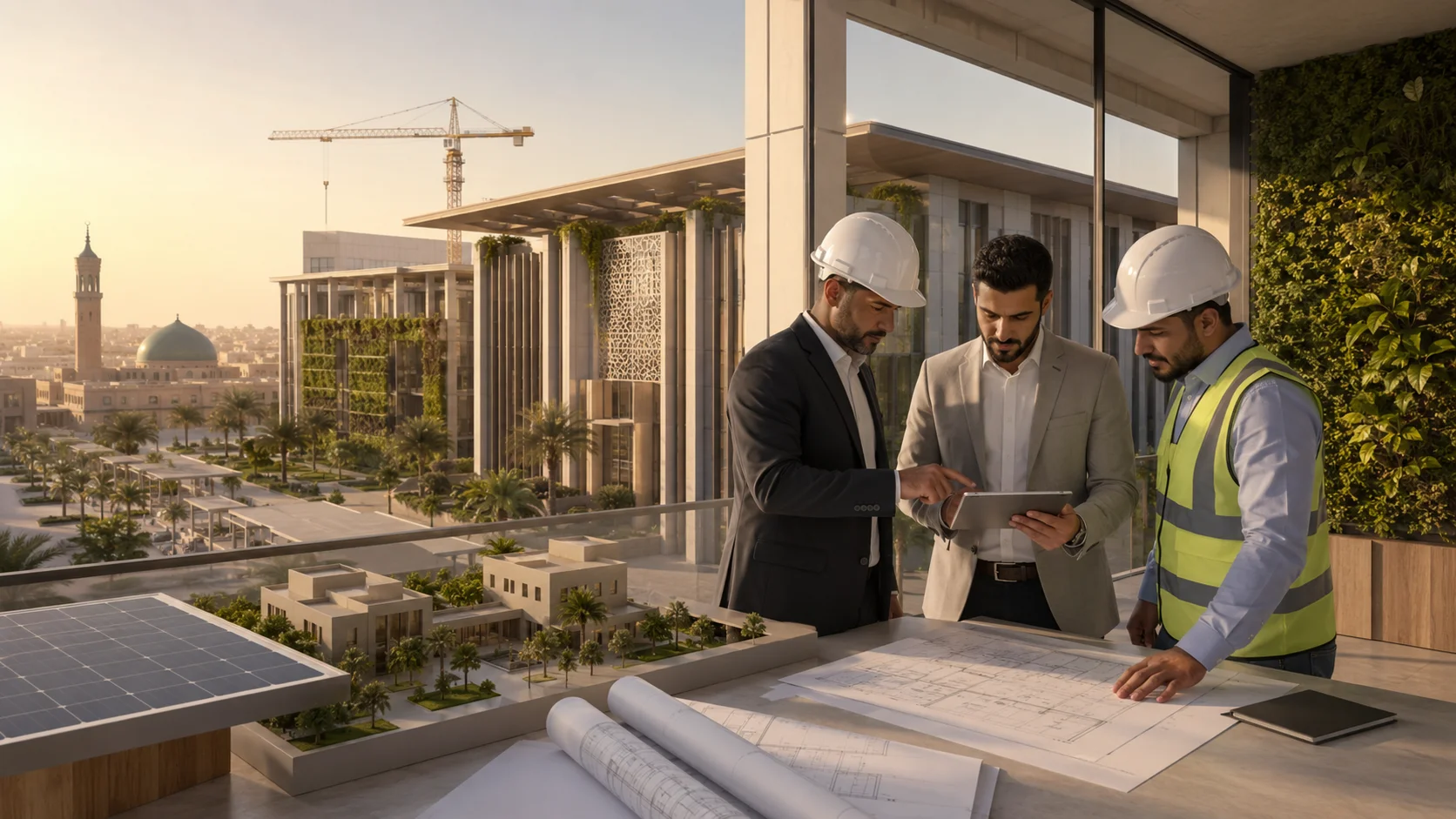
A LEED Consultant in Iraq helps project teams turn sustainability goals into a clear certification strategy. Working with a LEED Consultant in Iraq from the early design stage can also reduce coordination gaps and keep technical decisions aligned with the targeted certification level.
LEED, developed by the U.S. Green Building Council, provides a globally recognized framework for healthier, more efficient, and lower-impact buildings. For project teams in Iraq, it creates a coordinated roadmap for energy, water, materials, indoor environmental quality, and certification documentation.
What Does a LEED Consultant in Iraq Do?
A LEED consultant manages the technical and administrative path between a project’s sustainability targets and the LEED requirements that apply to it.
The consultant reviews the project type, location, design stage, and certification ambition. The team then identifies the suitable rating system, maps prerequisites and credits, assigns responsibilities, and creates a scorecard. During design and construction, the consultant follows calculations, product data, drawings, specifications, and contractor records.
A strong consultant also helps the project team make decisions before they become expensive to change. Early coordination is especially valuable for energy systems, water strategies, material selection, commissioning, and indoor environmental quality.
For more detail, see ERKE’s LEED consulting services.
Why LEED Matters for Projects in Iraq
Iraq is developing commercial, residential, hospitality, healthcare, industrial, and public assets. Many projects face demanding operating conditions around cooling energy, water use, resilience, and resource efficiency.
The World Bank’s Iraq Country Climate and Development Report highlights major energy-sector inefficiencies and water-related vulnerabilities. Those conditions make high-performance building decisions more relevant to asset owners and design teams.
LEED gives stakeholders a structured way to address these priorities. It does not replace local codes or approvals. Instead, it adds a measurable sustainability framework that can support operational performance, occupant wellbeing, and transparent project goals.
According to the U.S. Green Building Council’s LEED v5 overview, the current commercial framework places stronger emphasis on decarbonization, quality of life, and ecological conservation. Teams should still confirm the correct rating system and version before registration because transition dates and eligibility rules can change.
LEED Strategy for Iraq’s Climate and Project Conditions
A successful LEED strategy should respond to the actual building, not a generic checklist. In Iraq, climate, water availability, project scale, utility conditions, occupancy patterns, and supply-chain realities can affect the best route to certification.
How a LEED Consultant in Iraq Supports Energy Performance
Energy is usually a major technical workstream. High cooling loads can strongly influence annual consumption, peak demand, equipment sizing, and operating costs.
The consultant coordinates with architects and MEP engineers to evaluate envelope performance, glazing, solar heat gain, HVAC efficiency, controls, lighting power, renewable energy opportunities, and metering. Energy modeling can test alternatives and reveal where design changes produce the most meaningful gains.
This process works best during concept or schematic design. Late-stage energy optimization often limits the available options and can increase redesign effort.
Water Efficiency and Resilient Site Decisions
Water strategy deserves early attention in Iraq. Teams can assess efficient fixtures, irrigation demand, adaptive landscaping, leak detection, metering, alternative water sources, and cooling-system water use.
Site planning also matters. Shading, heat-island reduction, stormwater strategies, habitat considerations, and access planning can support a more resilient development approach.
A consultant should translate each target into design actions, responsible parties, and documentation requirements. That makes sustainability measurable instead of aspirational.
Materials, Indoor Quality, and Construction Controls
LEED also evaluates material impacts and indoor environmental quality. Relevant topics can include embodied carbon, environmental product information, low-emitting materials, construction waste, air quality, ventilation, thermal comfort, and commissioning.
The consultant works with procurement teams and contractors to identify compliant evidence before purchasing decisions are locked in. This avoids a common problem: selecting a product first and searching for acceptable documentation later.
Clear submittal rules are equally important. Each contractor should know which declarations, photographs, calculations, and site records must be retained.
A Practical LEED Certification Roadmap
A well-managed certification process can be organized into five stages:
- Feasibility and target setting: confirm eligibility, rating system, certification level, initial scorecard, risks, and responsibilities.
- Design integration: coordinate architects, MEP teams, landscape designers, energy modelers, commissioning specialists, and cost consultants.
- Documentation planning: define required drawings, calculations, narratives, product evidence, and approval workflows.
- Construction monitoring: track site practices, material submittals, commissioning activities, waste records, and contractor evidence.
- Certification submission: compile the package, respond to review comments, and close technical gaps.
GBCI provides independent third-party verification for LEED projects worldwide. The GBCI MENA resource is useful for regional teams seeking certification and credentialing information.
Choosing the Right LEED Rating System
The correct rating system depends on project scope and lifecycle stage. New buildings and major renovations often fall under Building Design and Construction. Interior fit-outs may use Interior Design and Construction. Existing operational buildings can use Operations and Maintenance.
Teams should not choose a rating system only because it appears familiar. Completion status, project boundaries, occupancy, and contracted work can affect eligibility.
USGBC’s current guidance confirms that LEED v5 is available for commercial BD+C, ID+C, and O+M projects. Because program deadlines evolve, registration decisions should use the latest official guidance.
Why Project Teams Choose ERKE for LEED Consulting
ERKE combines sustainability consulting with multidisciplinary engineering knowledge. LEED decisions often interact with architecture, mechanical systems, electrical systems, lighting, commissioning, materials, and operational targets.
ERKE’s company records include more than 40 million square meters of construction-project experience and 224 LEED projects. The company has also been a USGBC member since 2010. This background supports a technical, documentation-driven approach.
For Iraq-based projects, ERKE can coordinate with owners and consultants while integrating with local architects, engineers, contractors, and suppliers. The goal is to establish a practical certification path, identify risks early, and keep disciplines aligned.
Conclusion
Selecting the right LEED Consultant in Iraq can make certification more predictable and technically coherent. The consultant should connect sustainability goals with design decisions, procurement, construction controls, and final documentation.
The strongest results usually come from early involvement. When LEED becomes part of the design process from the beginning, teams have more options to improve energy performance, reduce water demand, choose better materials, and protect indoor environmental quality.
Frequently Asked Questions
Can a project in Iraq achieve LEED certification?
Yes. LEED is used internationally, and projects in Iraq can pursue certification when they meet the applicable eligibility, prerequisite, credit, and documentation requirements. The project must also comply with relevant local laws and approvals.
When should a LEED consultant join an Iraq project?
Ideally, the consultant should join during concept or schematic design. Early involvement gives the team more control over rating-system selection, energy strategy, water targets, materials, commissioning, and cost-sensitive decisions.
Which building types can pursue LEED in Iraq?
Commercial buildings, offices, hotels, healthcare facilities, industrial projects, residential developments, interiors, and existing buildings may be eligible. The correct pathway depends on project type, scope, completion status, and current rating-system rules.
What are the LEED certification levels?
LEED projects can achieve Certified, Silver, Gold, or Platinum certification. The final level depends on meeting all prerequisites and earning the required points under the selected rating system.
Does LEED replace Iraqi building codes?
No. LEED is a voluntary green building rating system. It complements local building codes, permitting requirements, safety rules, and other mandatory regulations.
Start Your LEED Project in Iraq with ERKE
Planning a new development, major renovation, fit-out, or existing-building certification? Contact ERKE to define the right LEED pathway, scorecard, documentation plan, and technical strategy for your project in Iraq.