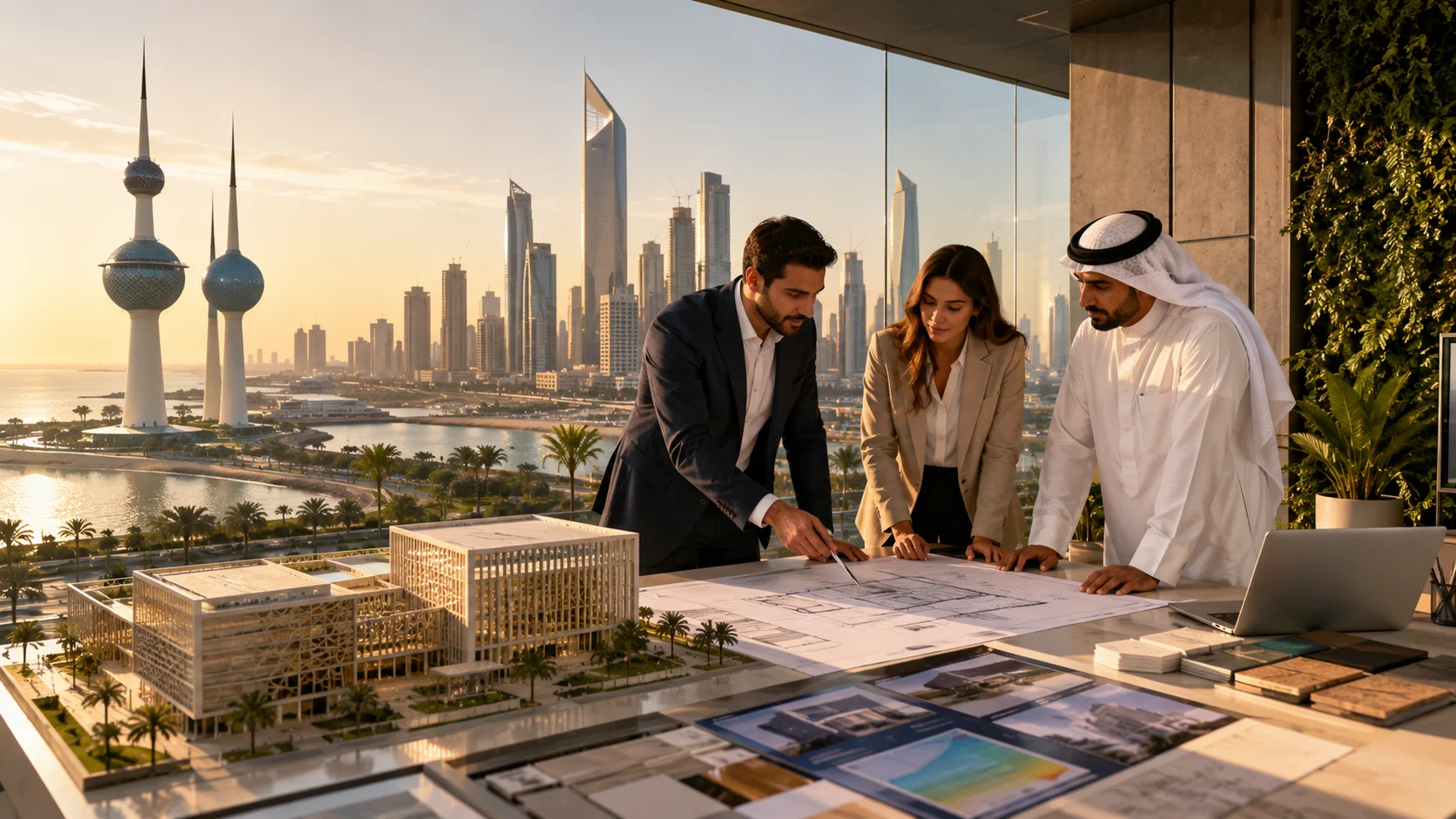
LEED Consultant in Kuwait services help owners, developers, and design teams turn sustainability goals into a clear certification path. LEED Consultant in Kuwait support also reduces rework, because the right strategy starts before drawings, specifications, and procurement decisions lock the project direction.
Kuwait’s real estate market is moving toward resilient, efficient, and future-ready buildings. Developers want assets that perform well in a hot climate, attract international tenants, and support long-term operating value. Corporate occupiers also ask stronger questions about energy use, water efficiency, indoor air quality, material transparency, and carbon performance.
A professional LEED consultant brings these needs into one coordinated roadmap. The consultant helps the project team select the right rating system, create a scorecard, manage evidence, and align design choices with certification requirements. For Kuwait projects, this role becomes more important due to cooling loads, water scarcity, solar exposure, dust conditions, and demanding construction schedules.
Why Choose a LEED Consultant in Kuwait?
A LEED project needs more than a checklist. It needs early decisions, technical coordination, and consistent documentation. USGBC describes LEED as a global green building framework for healthy, efficient, and cost-effective buildings, with rating systems for many project types. Review the LEED rating system.
In Kuwait, the consultant should understand regional design priorities. High-performance envelopes, efficient HVAC systems, commissioning, low-flow fixtures, shading, lighting control, and sustainable material selection can all influence certification outcomes. These strategies also support asset resilience and tenant comfort.
ERKE supports owners through integrated sustainability consulting, design coordination, and certification management. Our LEED Consulting service helps teams move from feasibility to final submission with a practical process.
What Does a LEED Consultant in Kuwait Do?
A LEED consultant guides the project team through rating system selection, credit strategy, documentation, and review responses. This role connects architects, MEP engineers, contractors, commissioning agents, procurement teams, and owners around one certification target.
Work often starts with a feasibility review. The consultant checks the project type, gross floor area, site context, energy goals, water strategy, and owner priorities. Next, the team builds a preliminary LEED scorecard. This scorecard shows likely credits, risk areas, responsibilities, and the target certification level.
During design, the consultant reviews drawings and specifications. This prevents late-stage changes that can increase cost. During construction, the consultant tracks material submittals, waste records, indoor air quality measures, commissioning documents, and site practices.
LEED Certification Benefits for Kuwait Projects
LEED certification can improve both market value and building performance. It gives investors, tenants, and stakeholders a recognized sustainability signal. USGBC notes that LEED projects complete prerequisites, earn points, pass review, and receive levels such as Certified, Silver, Gold, or Platinum. Read the Guide to LEED Certification.
| Project Priority | Why It Matters in Kuwait |
|---|---|
| Energy efficiency | Cooling demand affects operating costs and carbon impact. |
| Water conservation | Efficient fixtures and irrigation planning reduce resource pressure. |
| Indoor environmental quality | Better air, comfort, and daylight support occupant well-being. |
| Materials transparency | EPDs, low-emitting products, and sourcing data support better decisions. |
| Asset reputation | Certification helps buildings stand out to tenants and investors. |
These benefits align with national development goals. Kuwait Vision 2035 highlights infrastructure, private sector growth, environmentally harmonious living areas, and public well-being as key pillars. Explore Kuwait Vision 2035.
The LEED Process: From Feasibility to Certification
A well-managed LEED process follows a clear sequence. The exact workflow depends on the rating system and project scope, yet most Kuwait projects share the same core steps.
1. Project discovery and certification target
The team defines the project scope, owner goals, budget limits, schedule, and expected performance level. A consultant then confirms the most suitable LEED path. For example, a new commercial tower may follow BD+C, while a tenant fit-out may follow ID+C.
2. Preliminary scorecard and gap analysis
A scorecard shows the credits that fit the project. It also identifies gaps in energy modeling, water calculations, materials data, commissioning, and site documentation. This stage gives decision-makers a realistic view of effort, cost, and risk.
3. Design integration
Strong LEED outcomes come from early coordination. Architects can improve shading and daylight. Engineers can optimize HVAC, ventilation, controls, and metering. Contractors can plan waste diversion, low-emitting materials, and construction indoor air quality measures.
4. Documentation management and submission
Certification depends on evidence. The consultant organizes calculations, drawings, narratives, product data, commissioning reports, and declarations. After internal quality control, the team submits documentation and responds to review comments.
Kuwait-Specific Design Priorities for LEED Success
Kuwait projects face intense heat, high solar exposure, and heavy reliance on cooling. Therefore, energy modeling should not come late. Early modeling helps the team test glazing, insulation, orientation, shading, lighting power density, system efficiency, and controls.
Water efficiency also deserves early attention. Landscape design should respect climate conditions. Fixture selections should meet project goals without reducing user comfort. Cooling tower strategy, condensate recovery, and metering can add further value where relevant.
Material selection can support both certification and procurement quality. Environmental Product Declarations, recycled content, responsible sourcing, low-emitting materials, and regional availability all matter. ERKE’s wider Green Building Consultancy approach helps teams connect certification goals with practical design and procurement choices.
Choosing the Right LEED Consultant in Kuwait
The right consultant should offer technical depth, clear communication, and real certification experience. Ask direct questions before appointment.
Does the consultant understand LEED credit intent, not just forms? Can they coordinate with architects and engineers? Do they track submittals during construction? Will they manage review comments until closure? Have they worked on energy modeling, commissioning coordination, material compliance, and indoor environmental quality requirements?
ERKE brings long-term sustainability consulting experience, international project knowledge, and multidisciplinary engineering insight. Our team helps clients reduce certification risk and keep sustainability decisions connected to design, cost, and operation.
Common LEED Challenges in Kuwait
Many teams start LEED too late. Early decisions about envelope design, HVAC efficiency, commissioning, site planning, and material specifications shape the final result. Documentation can also create risk. A project may use the right strategy but lose points due to missing evidence.
Procurement needs equal care. Substitutions may affect low-emitting material credits, recycled content, EPD counts, or sourcing criteria. The consultant should review alternatives before approval.
Conclusion
LEED Consultant in Kuwait support gives project teams a structured path to better buildings. It helps owners select the right rating system, define a realistic scorecard, coordinate design choices, manage documents, and respond to review comments with confidence.
Kuwait’s climate and development priorities make sustainable building strategy highly relevant. Projects that address energy, water, indoor quality, materials, and resilience can gain a stronger market position. They can also deliver healthier spaces and more efficient operations.
Frequently Asked Questions
What is the role of a LEED consultant in Kuwait?
A LEED consultant in Kuwait manages the certification strategy, scorecard, documentation, and review process. The consultant also coordinates with architects, engineers, contractors, and owners to align design decisions with LEED requirements.
When should a Kuwait project hire a LEED consultant?
A project should hire a LEED consultant during feasibility or early design. Early appointment helps the team reduce redesign, protect achievable credits, and align budget decisions with certification goals.
Which LEED rating system fits projects in Kuwait?
The right LEED rating system depends on project scope. New buildings often use BD+C. Interior fit-outs may use ID+C. Existing buildings with operational improvement goals may use O+M.
Can LEED certification reduce operating costs?
Yes, it can support lower operating costs when the team applies strong energy, water, commissioning, and controls strategies. Actual savings depend on design quality, operation, maintenance, and occupant use.
How can ERKE help with LEED Consultant in Kuwait services?
ERKE helps Kuwait project teams plan certification, coordinate technical credits, manage documentation, and respond to review comments. Start your project with a clear roadmap by contacting ERKE through our contact page.