If you are looking for a LEED Consultant Morocco project teams can trust, focus on strategy first. Do not start with paperwork alone. A strong LEED Consultant Morocco partner helps define the right rating system. That partner also aligns design decisions with certification goals and reduces costly revisions later.
That matters in Morocco. The country is pushing decarbonization, scaling renewable energy, and addressing water scarcity and drought risk at the same time. Those conditions make green building decisions more urgent for offices, hotels, mixed-use assets, logistics facilities, campuses, and industrial projects. LEED gives teams a practical framework to turn those priorities into measurable results.
Why a LEED Consultant in Morocco matters early
A LEED consultant adds value long before the first submission. The right advisor helps the owner and design team choose the correct LEED pathway. The consultant also defines a realistic score target and builds a roadmap for credits, documentation, and review. The official LEED rating system outlines a clear sequence: select the right version, register the project, choose credits, implement strategies, and submit documentation for review. That process is easier when the project team makes key decisions early.
For Moroccan projects, early coordination is even more important. The World Bank’s Morocco Country Climate and Development Report identifies water scarcity, droughts, and decarbonization as major priorities. The IEA’s Morocco energy profile also shows strong progress in renewable energy alongside continued pressure to improve efficiency and reduce fossil fuel dependence. A LEED strategy that reflects this context is far stronger than a generic checklist.
What a LEED consultant in Morocco should deliver
A capable consultant should lead with clear answers:
- Which LEED version fits the project best?
- Which credits are practical, affordable, and high impact?
- Which design choices will affect energy, water, materials, and indoor environmental quality?
- Which documents must the team prepare at each stage?
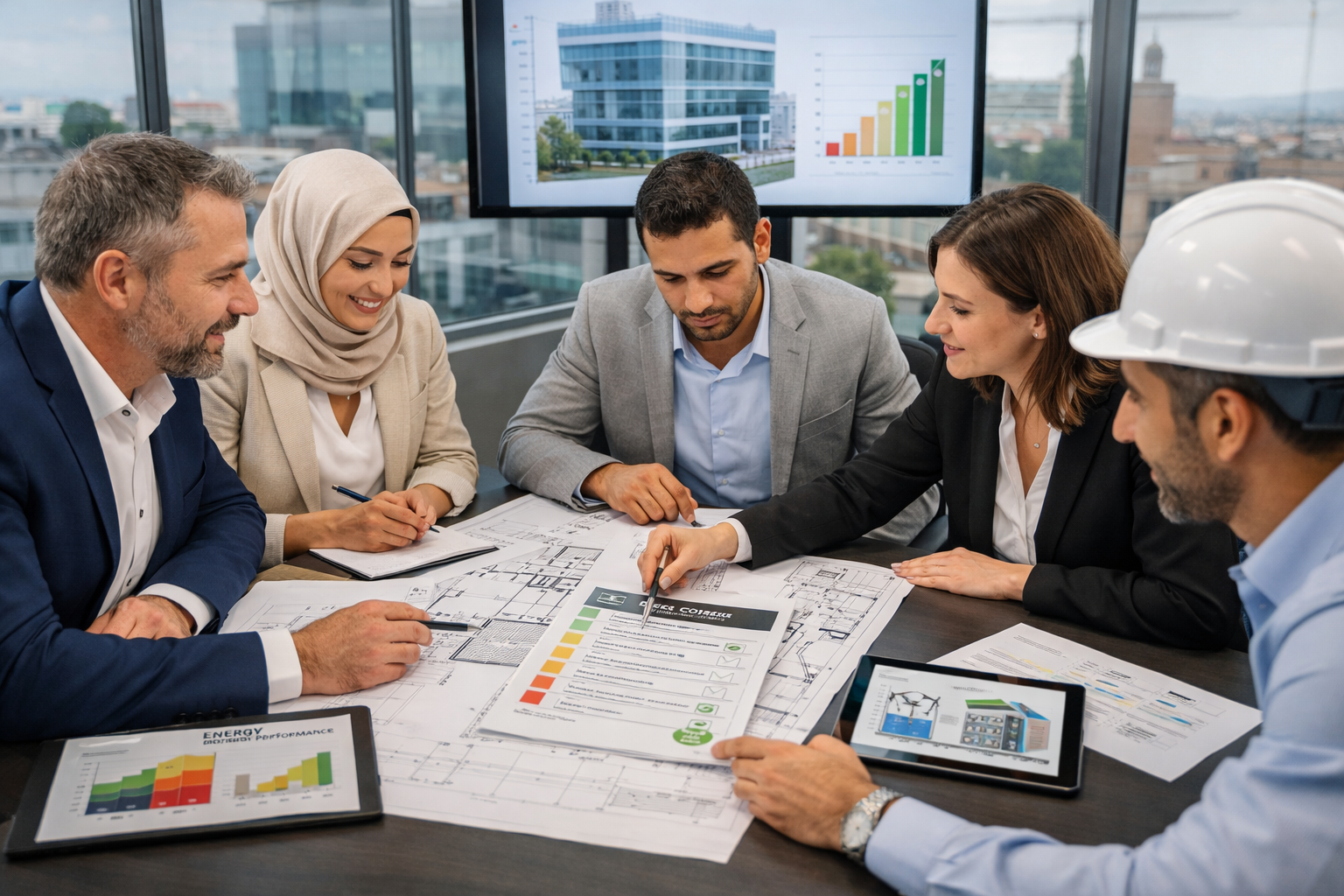
In practice, that means the consultant should run sustainability workshops and coordinate with architects and engineers. The consultant should manage the scorecard, review specifications, and track evidence from concept through submission. Good consulting also protects the schedule. It helps teams avoid late redesigns, missed prerequisites, and weak narratives during review.
Key LEED priorities for projects in Morocco
The best LEED strategies in Morocco usually start with climate response and operating performance. LEED v5 places strong emphasis on decarbonization, quality of life, and ecological conservation and restoration. Those themes fit Morocco well. Project teams often need to balance energy use, occupant well-being, and resource efficiency in a demanding climate and investment environment.
Water efficiency should be a front-end decision
Water planning should begin at concept stage. Morocco faces serious pressure from water scarcity and drought. Because of that, credits related to efficient fixtures, irrigation reduction, metering, and leak detection can deliver both environmental and financial value. In hospitality, education, healthcare, and large commercial projects, the gains can be substantial when water strategy starts before detailed design.
Energy performance needs design coordination
Energy credits do not come from one product. They come from coordinated decisions about orientation, envelope quality, glazing, shading, HVAC systems, lighting, controls, commissioning, and operations planning. Morocco’s energy transition adds another layer of relevance. The IEA says Morocco aims for 52% renewable electricity capacity by 2030. It also highlights the need for stronger energy efficiency across the economy. A skilled LEED consultant helps convert that national direction into project-level action.
Materials, health, and documentation also matter
Strong LEED outcomes do not stop at energy and water. Material transparency, embodied carbon thinking, waste management, low-emitting materials, daylight, air quality, and thermal comfort all shape the final result. These areas often decide whether a project only participates in sustainability or actually performs. They also improve the clarity of the project story for investors, tenants, hotel operators, and procurement teams.
Where LEED creates value in Morocco
Developers often ask a simple question: is LEED worth it in Morocco? In many cases, yes. The strongest value usually appears in five areas.
First, LEED creates a structured process. Teams stop guessing and start measuring.
Second, it supports better operating performance. Lower energy and water use can improve lifecycle value.
Third, it strengthens market positioning. International occupiers, brands, and institutional investors often understand LEED immediately.
Fourth, it improves risk management. A documented sustainability framework reduces gaps between design intent and delivery.
Finally, it supports a broader green building movement. The Morocco Green Building Council was established to advance sustainable building practices in Morocco. It also promotes lower environmental impact, better quality of life, and efficient use of energy, water, and materials. A project that follows LEED can align with that wider market direction.
How ERKE can support LEED projects in Morocco
ERKE supports international clients with practical sustainability consulting, engineering depth, and certification experience. Our team can help define the right strategy, coordinate documentation, and keep the project aligned from concept to certification review. You can explore our Green Building Consultancy and LEED Consulting services to see how we approach project planning and delivery.
ERKE has been a USGBC member since 2010. The company also reports experience across more than 40 million square meters of construction projects, along with extensive green building and product certification work. That background helps us translate technical requirements into clear actions for owners, developers, architects, and contractors.
Conclusion
A LEED consultant in Morocco should do more than prepare forms. The role is to guide decisions, reduce friction, and improve performance from the first workshop to the final review. When the strategy is right, LEED becomes a business tool as well as a sustainability framework.
For projects in Morocco, that means linking certification goals with local realities such as water stress, energy performance, resilience, and long-term asset value. The earlier that work begins, the better the outcome tends to be.
Frequently Asked Questions
What does a LEED consultant in Morocco do?
A LEED consultant in Morocco helps project teams choose the right rating system and define the certification target. The consultant also identifies suitable credits, coordinates technical decisions, manages documentation, and supports the review process. This support reduces delays by aligning sustainability strategy with design and construction from the start.
When should a project hire a LEED consultant in Morocco?
The best time is at concept or pre-design stage. Early involvement helps the team shape the scorecard, set realistic targets, and avoid expensive design changes later. It also improves coordination between architecture, MEP design, commissioning, and contractor documentation.
Can LEED work for hotels, offices, and industrial buildings in Morocco?
Yes. LEED can support a wide range of asset types. These include offices, hotels, mixed-use developments, campuses, logistics facilities, and some industrial projects. The right pathway depends on the project scope, occupancy pattern, and certification objectives.
Is LEED only about energy savings?
No. Energy is central, but LEED also covers water efficiency, materials, waste, indoor environmental quality, resilience, and site-related decisions. Under the latest LEED v5 framework, decarbonization, quality of life, and ecological conservation and restoration are core impact areas.
Ready to discuss your project? Visit our contact page to speak with ERKE about LEED Consultant in Morocco services and build a clear certification roadmap.