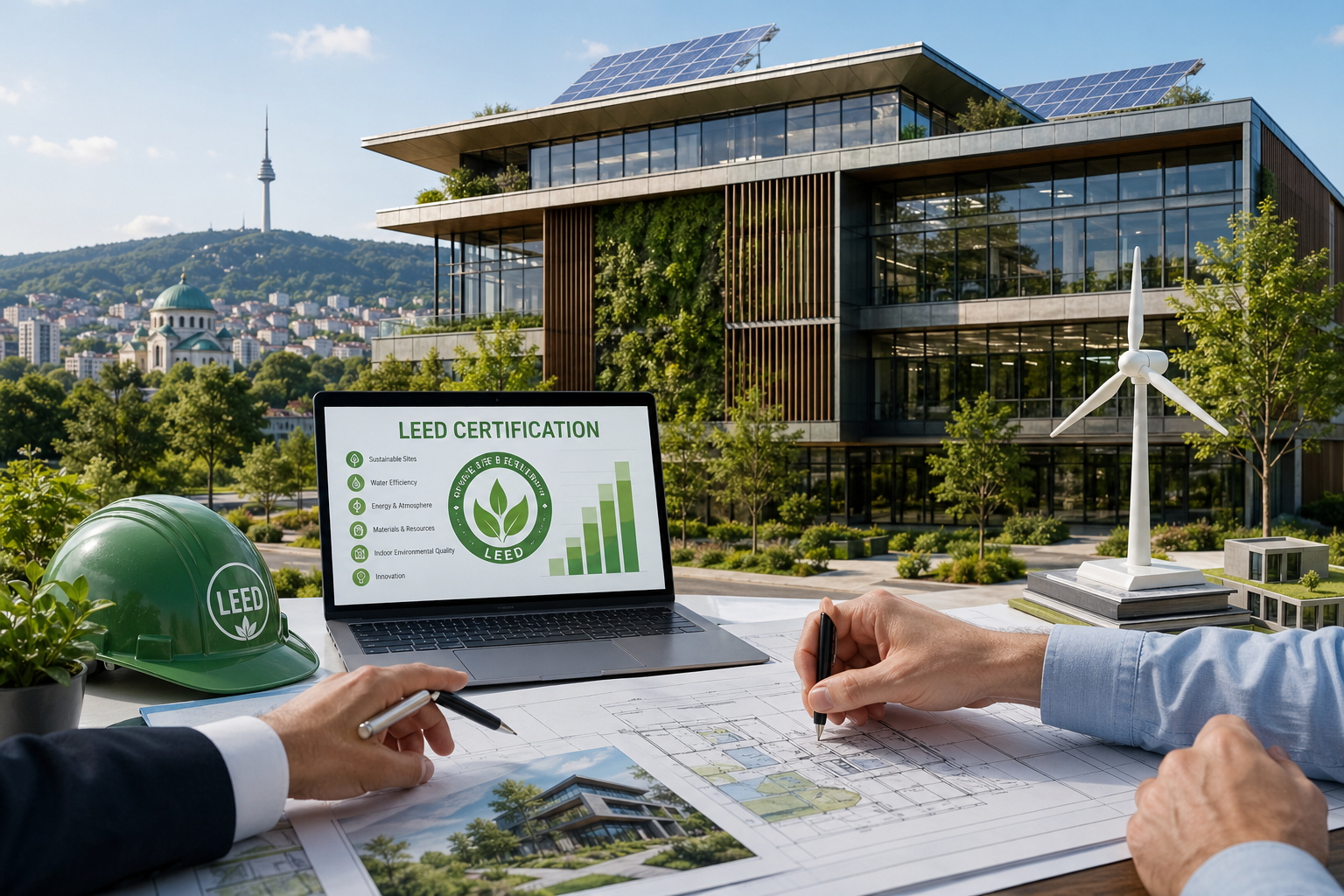
With LEED Consultant in Serbia support, owners, developers, and design teams turn sustainability goals into measurable building performance. LEED Consultant in Serbia guidance also reduces confusion during rating system selection, credit planning, documentation, and final review.
Serbia’s real estate market is moving toward greener, healthier, and more efficient buildings. Investors now ask sharper questions about energy performance, water efficiency, indoor air quality, embodied carbon, and long-term asset value. A LEED strategy gives these goals a clear structure.
For a hotel in Belgrade, an office campus in Novi Sad, a logistics facility near Niš, or a mixed-use project in Kragujevac, early planning matters. The right consultant aligns architects, engineers, contractors, and owners before design decisions become costly.
Why Choose a LEED Consultant in Serbia?
A LEED Consultant in Serbia helps your project select the correct rating system, define the certification boundary, build a practical scorecard, and manage evidence from design to construction. This role matters because LEED certification depends on both smart strategy and precise documentation.
LEED, developed by the U.S. Green Building Council, offers a recognized framework for green building design, construction, operations, and performance. You can review the official USGBC LEED framework for the rating system background. A consultant translates that framework into project-specific actions.
In Serbia, many projects face local design codes, investor requirements, EU-aligned sustainability expectations, and supplier limitations. An experienced team can compare local practices with LEED requirements. Then it can identify realistic pathways for energy modeling, commissioning, materials, construction waste, and indoor environmental quality.
ERKE supports project teams through strategy, technical coordination, and certification management. Our LEED consulting services help teams plan credits, control risks, and prepare a stronger submission.
What Does a LEED Consultant in Serbia Do First?
The first step is not paperwork. It is discovery.
A strong consultant reviews the project type, location, gross floor area, ownership model, tenant scope, design stage, and target certification level. Then the team checks whether LEED BD+C, ID+C, or O+M fits best. This choice affects every later decision.
Next, the consultant builds a preliminary LEED scorecard. It should include likely credits, risky credits, responsible parties, required calculations, and deadlines. This scorecard becomes the project’s certification map.
Finally, the team holds an early coordination workshop. Architects, MEP engineers, civil engineers, façade consultants, contractors, and owners should join. During this session, the team connects energy, water, materials, site, and occupant comfort decisions.
LEED Strategy for Serbian Building Projects
A practical LEED strategy starts with the project’s business goal. Some owners want lower operating costs. Others need international tenant appeal, ESG alignment, or a stronger investment narrative. The certification plan should support that goal.
For commercial offices, the strategy often focuses on energy performance, daylight, ventilation, low-emitting materials, and public transport access. Hotel projects can prioritize water efficiency, guest comfort, operational policies, and material quality. Industrial buildings often gain strong opportunities through energy systems, metering, commissioning, and construction waste.
Serbian projects can also benefit from early supplier research. LEED credits may require product declarations, recycled content data, low-emitting material evidence, or sourcing information. Teams should not wait until procurement starts. Early checks reduce substitutions and protect the schedule.
Key LEED Consultant Serbia Checklist
Use this checklist before design moves too far:
- Define the owner’s certification target: Certified, Silver, Gold, or Platinum.
- Select the correct LEED rating system.
- Confirm the LEED project boundary.
- Create a scorecard with a buffer of achievable points.
- Run early energy and water analyses.
- Plan commissioning responsibilities.
- Check materials documentation before procurement.
- Track construction waste and site management evidence.
- Prepare review comments and responses with discipline leads.
This checklist keeps the project team aligned. It also helps each consultant understand which evidence they must produce.
Certification Process: From Design to Review
LEED certification follows a structured path. Project teams register, design, document, submit, respond to review comments, and receive the final decision. The official Green Business Certification Inc. platform supports third-party certification and review activities for LEED.
Documentation quality often decides the project’s speed. Drawings, narratives, calculations, product data, commissioning reports, photographs, and waste records must match the selected credits. Small inconsistencies can trigger review questions.
A consultant should also protect the timeline. Design teams may change systems, suppliers, spaces, or boundaries during the project. Each change can affect credits. Regular scorecard updates keep the target visible.
What Makes LEED Valuable in Serbia?
LEED gives Serbian projects a global language for sustainability. It helps international investors, tenants, and lenders compare building performance across markets. That clarity can strengthen leasing discussions and asset positioning.
The system also encourages better design decisions. Energy modeling can reveal smarter HVAC choices. Water analysis can reduce consumption. Material planning can improve transparency. Indoor environmental quality credits can support health and comfort.
Beyond certification, LEED creates a disciplined project culture. Teams define goals early. They test options. Teams document outcomes. This process improves decision-making and reduces last-minute stress.
Common Challenges for LEED Projects in Serbia
The most common challenge is late engagement. If the consultant joins after concept design, some easy credits may already be lost. Early involvement gives the team more options and lower-cost solutions.
A second challenge is documentation gaps. Many suppliers can provide technical sheets. Fewer can provide complete sustainability data. The consultant should guide procurement teams with clear templates and approved language.
Another challenge is coordination. LEED touches architecture, MEP, landscape, civil design, cost control, procurement, construction, and facility operations. Without a central coordinator, teams may miss credit synergies.
How ERKE Supports Your Certification Goal
ERKE helps project owners and design teams create a clear route from concept to certification. We focus on practical decisions, transparent scorecards, and coordinated evidence.
Our team can support rating system selection, credit strategy, design reviews, energy and water coordination, materials guidance, construction documentation, and review response management. This approach helps Serbian projects meet international expectations while respecting local project realities.
Conclusion
A LEED Consultant in Serbia can turn a green building ambition into a structured, measurable, and credible certification process. The best results come from early planning, strong coordination, and disciplined documentation.
LEED also helps Serbian projects speak the language of international sustainability. It supports better energy use, healthier interiors, smarter material choices, and stronger long-term value.
Frequently Asked Questions
What is a LEED Consultant in Serbia?
A LEED Consultant in Serbia guides a local building project through LEED strategy, credit planning, documentation, submission, and review coordination.
When should we hire a LEED consultant?
Hire a consultant before or during concept design. Early support helps the team protect easy credits, avoid redesign, and set a realistic certification target.
Which Serbian projects can pursue LEED certification?
Offices, hotels, retail spaces, logistics centers, industrial facilities, schools, hospitals, and mixed-use developments can pursue LEED when they meet program requirements.
How long does LEED certification take?
The timeline depends on project size, rating system, design maturity, documentation quality, and review comments. A clear scorecard can reduce delays.
Ready to plan your LEED Consultant in Serbia strategy? Contact ERKE to discuss your project, certification target, and next steps.