LEED Consultant Saudi Arabia is now a strategic search for developers, architects, and investors who want efficient, credible, and future-ready buildings. LEED Consultant Saudi Arabia support helps project teams manage energy, water, materials, documentation, and certification decisions with less risk.
Saudi Arabia’s construction market is moving fast. Saudi projects need buildings that perform in hot climates and meet investor expectations. LEED gives project owners a recognized framework for that goal. It supports lower operating costs, healthier interiors, efficient resource use, and clear sustainability communication.
Direct answer: A LEED consultant in Saudi Arabia guides a building from early design to certification review. The consultant selects the rating system, builds the scorecard, coordinates credits, checks documentation, and guides practical design decisions.
Why Saudi Projects Need LEED Consultant Saudi Arabia Expertise
Saudi Arabia has a demanding climate. Heat, cooling loads, water scarcity, dust, and high occupancy patterns shape design choices. Generic checklists rarely work well in this context. Project teams need a clear technical path.
A skilled consultant connects LEED requirements with local project realities. For example, a hotel in Riyadh may focus on energy modeling, water-efficient fixtures, commissioning, and indoor air quality. A mixed-use project may need heat island reduction, stormwater planning, and low-emitting materials. A headquarters may target comfort, daylight, metering, and operational performance.
This expertise matters early. Teams save time when they set LEED goals before schematic design. They also avoid expensive redesign work later. Early planning lets architects, MEP engineers, contractors, suppliers, and owners work toward one shared scorecard.
What Does a LEED Consultant Do?
A LEED consultant turns certification goals into an actionable roadmap. The work usually starts with a feasibility review. During this stage, the consultant studies project type, area, location, scope, schedule, and owner objectives.
Next, the consultant selects the correct rating system. LEED offers systems for new construction, core and shell, commercial interiors, operations, neighborhoods, and cities. The USGBC LEED rating system explains that LEED applies across building types and phases, including new construction, interiors, existing buildings, neighborhoods, and cities.
After rating system selection, the consultant prepares a preliminary scorecard. This document shows likely credits, difficult credits, required prerequisites, responsible parties, and evidence needs. It gives the owner a realistic path to Certified, Silver, Gold, or Platinum.
How a LEED Consultant Saudi Arabia Supports Credits
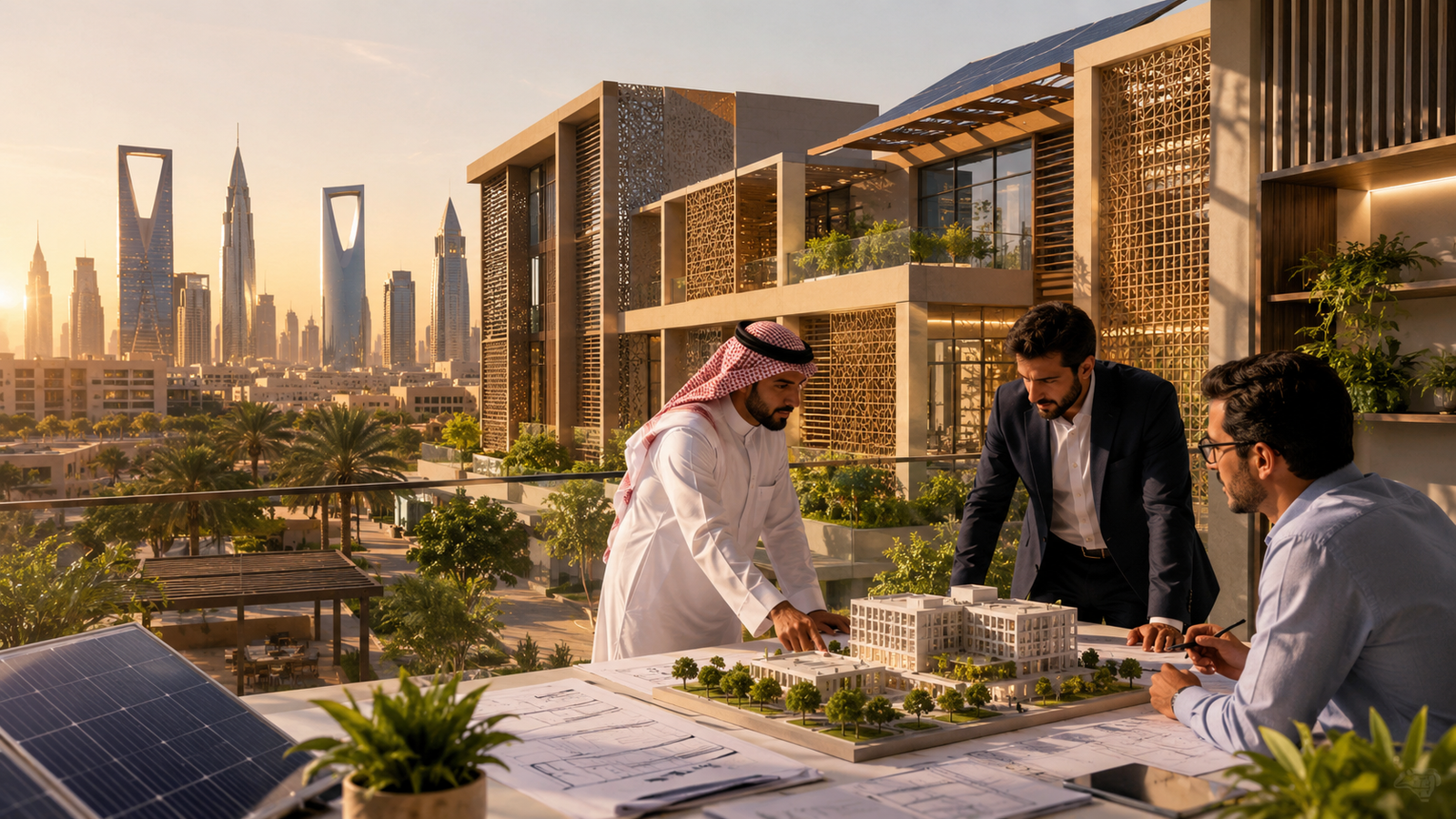
A LEED Consultant Saudi Arabia team should help each discipline understand its role. Architects may lead site and envelope strategies. MEP engineers may manage energy, water, ventilation, and metering. Contractors may track waste, materials, product data, and construction indoor air quality. Owners may decide budgets, procurement policies, and operational targets.
The consultant keeps these tasks aligned. They review drawings, specifications, calculations, narratives, invoices, product declarations, test reports, and commissioning records. They also track gaps before submission. This reduces review comments and protects the project timeline.
The Guide to LEED Certification highlights the value of understanding LEED steps, policies, procedures, and pricing before submission. A consultant helps the team navigate that process with fewer surprises.
Key LEED Priorities for Saudi Arabia Projects
1. Energy performance and cooling demand
Cooling can dominate energy use in Saudi buildings. Therefore, design teams should optimize orientation, glazing, shading, insulation, HVAC efficiency, controls, and commissioning. Energy modeling helps owners compare strategies before construction.
A consultant can test different design options and show which ones improve performance. This helps the owner spend money where it creates the strongest impact.
2. Water efficiency and smart metering
Water efficiency matters across the Kingdom. LEED strategies often include efficient fixtures, condensate reuse, native or adaptive landscaping, irrigation controls, leak detection, and submeters. These decisions support both certification and long-term cost control.
Clear metering also helps facility teams find problems after occupancy. As a result, the building can keep improving instead of losing performance over time.
3. Materials, carbon, and documentation
Material choices affect embodied carbon, indoor air quality, durability, and supply chain transparency. LEED rewards teams that use strong documentation and responsible procurement practices. Useful documents include EPDs, HPDs, recycled content data, sourcing records, and low-emission certificates.
Saudi projects often use global supply chains. That makes early supplier coordination critical. A consultant can prepare data requests and help contractors avoid missing evidence.
4. Indoor environmental quality
Healthy interiors matter in offices, hotels, schools, hospitals, malls, and residential towers. LEED can support better ventilation, low-emitting materials, daylight, views, thermal comfort, acoustic quality, and air quality testing.
These features improve user experience. They also give developers a clear story for tenants and investors.
ERKE’s Approach to LEED Consulting in Saudi Arabia
ERKE combines sustainability consultancy, engineering awareness, and certification management. Our team focuses on practical decisions, not paperwork alone. We help clients define targets, build the scorecard, coordinate disciplines, and prepare evidence.
Our experience covers green building consultancy, sustainable material analysis, energy-related strategy, and international certification processes. This integrated perspective helps Saudi project teams connect design quality with measurable performance.
You can explore our detailed LEED consulting services to see how ERKE supports project owners, architects, engineers, and contractors.
How to Start a LEED Project in Saudi Arabia
Start with a short feasibility study. This first step should answer five questions:
- Which LEED rating system fits the project?
- Which certification level is realistic?
- Which prerequisites need urgent attention?
- Which credits offer the best value?
- Which documents must the team collect from day one?
After that, hold a LEED kickoff meeting with the owner, architect, MEP consultant, contractor, cost consultant, and facility team. The meeting should confirm roles, deadlines, credit owners, and reporting methods.
Then, update the scorecard at every major design stage. This keeps decisions visible. It prevents late changes from damaging certification.
Conclusion
A LEED consultant in Saudi Arabia helps project teams turn sustainability goals into clear design, construction, and documentation actions. The right support can reduce risk, improve building performance, and strengthen market credibility.
Saudi Arabia’s built environment has a major opportunity. Projects that plan early can create efficient, comfortable, and resource-smart buildings that serve owners and occupants for years.
Frequently Asked Questions
What is the role of a LEED consultant in Saudi Arabia?
A LEED consultant guides the project team through certification. They select the rating system, prepare the scorecard, coordinate credit tasks, review documentation, and support submission.
When should a Saudi project hire a LEED consultant?
A project should hire a LEED consultant before schematic design. Early support helps the team set realistic goals and avoid costly design changes later.
Which LEED level should my project target?
The right level depends on budget, scope, design ambition, and operational goals. Many projects start with Gold as a strategic target, then confirm feasibility through a scorecard review.
Can LEED reduce operating costs in Saudi Arabia?
Yes, LEED strategies can reduce energy and water use when teams apply them correctly. The strongest savings often come from efficient cooling systems, envelope design, controls, commissioning, and metering.
Need a LEED Consultant in Saudi Arabia?
Plan your certification path with ERKE. For expert support on LEED Consultant Saudi Arabia services, visit our contact page and request a project consultation.