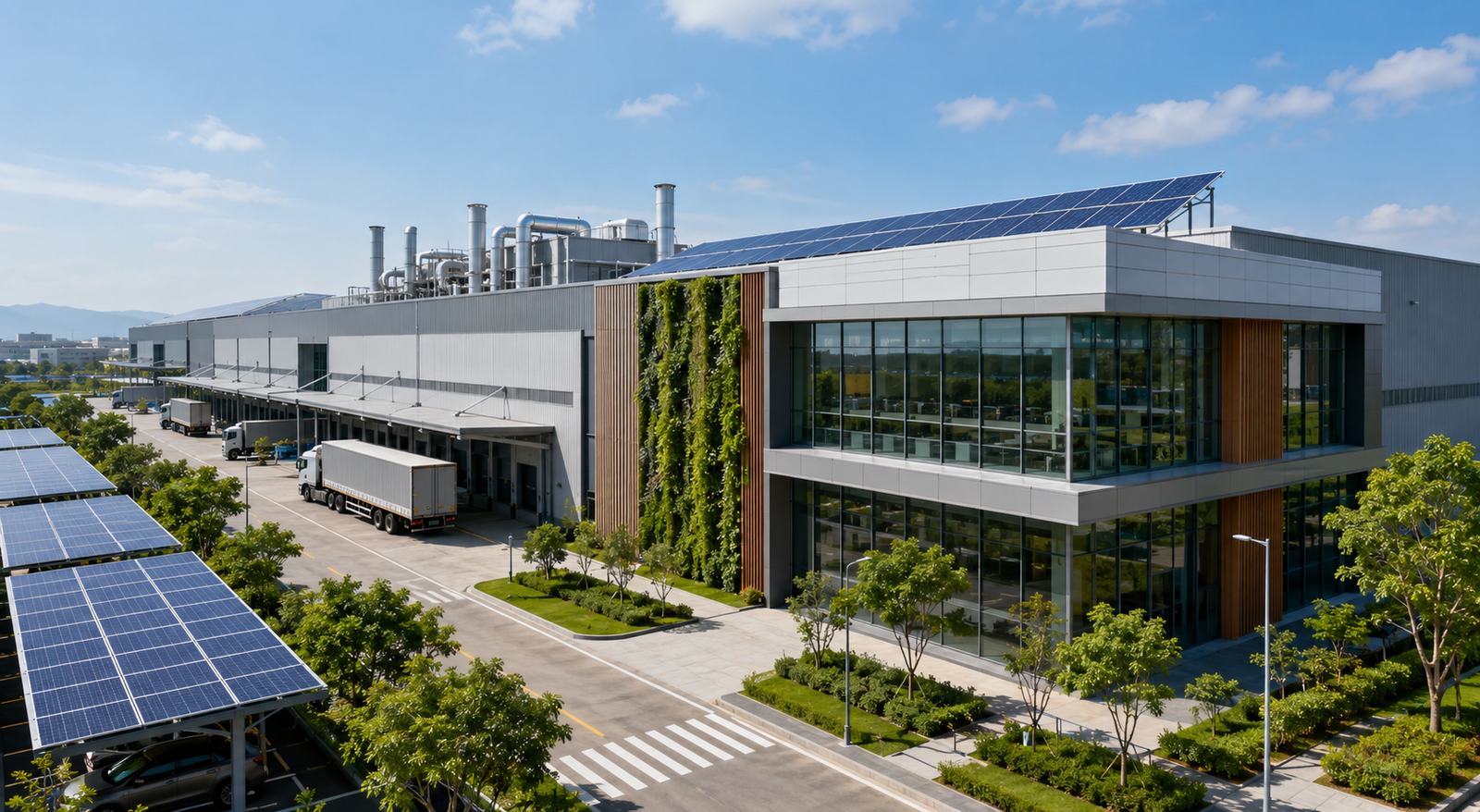
LEED Factory Consultant support helps industrial owners turn complex production buildings into efficient, certifiable assets. A LEED Factory Consultant also aligns design, construction, documentation, and operations before costly decisions become fixed.
Factory buildings operate differently from offices or retail spaces. They may include process loads, high ventilation demand, specialized equipment, shift-based occupancy, clean rooms, cold storage, or large logistics zones. These conditions affect energy modeling, water use, material selection, indoor air quality, and the final LEED scorecard. With the right strategy, a factory can pursue sustainability goals without slowing production planning.
What Does a LEED Factory Consultant Do?
A LEED consultant for factory buildings guides the team from early feasibility to certification review. The role covers rating system selection, scorecard planning, design coordination, technical calculations, contractor guidance, and documentation control.
For new industrial projects, the consultant helps owners choose the right LEED path. Some factories fit LEED BD+C: New Construction. Others may need a warehouse and distribution center approach, Core and Shell scope, or a strategy for mixed-use industrial campuses. Existing factories may need a performance-based route focused on operations, energy use, and ongoing improvement.
ERKE’s LEED Consulting team supports this process with sustainability strategy, technical coordination, and certification management for international project teams.
Why a LEED Factory Consultant Matters for Factory Buildings
A factory project can lose easy LEED points during early design. Site selection, envelope performance, HVAC strategy, metering, renewable energy readiness, and material specifications shape the outcome long before construction starts.
A skilled consultant protects the project from three common risks. First, the team may select the wrong rating system. Second, design teams may miss credit synergies across energy, water, materials, and indoor environmental quality. Third, contractors may collect incomplete submittals, which can delay review.
LEED also asks teams to define boundaries, document assumptions, and maintain consistent data. That matters in industrial buildings because production areas, offices, warehouses, outdoor yards, and future fit-out zones often overlap.
When Should You Hire a LEED Factory Consultant?
Hire a LEED Factory Consultant before concept design ends. Early involvement gives the team time to set targets, test energy options, and align capital decisions with certification goals.
The best time is before the owner freezes the site plan, MEP concept, and major equipment strategy. At that stage, the consultant can guide feasibility, estimate point potential, and flag high-impact actions. Late involvement can still help, but it usually costs more and limits available credits.
Core LEED Priorities for Manufacturing Facilities
Industrial projects need a practical credit strategy. The strongest plans connect sustainability with production continuity, safety, maintenance, and long-term operating cost.
Energy performance and process loads
Energy often drives the biggest opportunity. Factory buildings can include compressed air, furnaces, chillers, pumps, process cooling, robotics, clean rooms, or refrigeration. These systems can dominate energy use.
A LEED strategy should separate regulated building loads from process loads. It should also test envelope options, HVAC efficiency, heat recovery, controls, submetering, and renewable energy. For energy baseline work, many teams rely on ASHRAE Standard 90.1.
Water efficiency and reuse
Manufacturing facilities may use water for cooling towers, washing, process systems, landscaping, kitchens, and restrooms. A consultant can identify where water-saving fixtures, leak detection, reuse systems, and process optimization create value.
Clear metering helps teams track performance after opening. In many factories, water savings also reduce wastewater loads and utility risk.
Materials, procurement, and embodied carbon
Materials matter because large structures use significant steel, concrete, insulation, façade systems, flooring, and MEP components. A consultant can help the team request Environmental Product Declarations, low-emitting products, recycled content, and responsible sourcing documents.
This step works best when procurement teams add sustainability requirements to specifications early. Otherwise, contractors may select compliant products too late or miss documentation.
Indoor environmental quality and worker comfort
Factories must protect productivity, safety, and employee well-being. LEED-related strategies can support better ventilation, low-emitting materials, thermal comfort, acoustic control, daylight, views, and air quality testing.
These measures should match real operating conditions. Shift patterns, process emissions, forklift routes, chemical storage, and maintenance areas can all affect indoor environmental quality.
Site, logistics, and resilience
Industrial sites need careful planning for truck circulation, employee transport, heat island reduction, stormwater control, outdoor lighting, biodiversity, and climate resilience. A LEED consultant can coordinate the site team, civil engineer, landscape architect, and logistics planner.
This coordination helps the owner avoid conflicts between sustainability targets and daily operations. It also supports a stronger story for investors, tenants, buyers, and global customers.
A Practical LEED Roadmap for Factory Projects
Use this roadmap to keep the process clear:
| Phase | Key Action | Main Output |
|---|---|---|
| Feasibility | Select rating system and review site risks | LEED strategy memo |
| Concept design | Build the first scorecard and set targets | Point roadmap |
| Design development | Test energy, water, materials, and IAQ options | Credit action plan |
| Tender stage | Add LEED requirements to specifications | Contractor guidance |
| Construction | Track submittals, waste, materials, and commissioning | Evidence file |
| Review | Submit documentation and answer comments | Certification result |
The official USGBC LEED rating system provides the global framework. A consultant translates that framework into practical tasks for architects, engineers, contractors, suppliers, and facility managers.
How ERKE Supports Industrial LEED Certification
ERKE combines green building consultancy with engineering insight. That combination helps factory owners connect LEED goals with energy performance, commissioning, product sustainability, carbon strategy, and operational needs.
For global industrial clients, ERKE can support rating system selection, LEED charrettes, scorecard management, energy and water coordination, material documentation, contractor training, and review responses. The team also helps owners align LEED with ESG reporting, tenant expectations, procurement policies, and corporate sustainability targets.
A strong LEED Factory Consultant does more than chase points. The consultant creates a structured decision process. As a result, owners can reduce risk, clarify responsibilities, and build a facility that performs well after certification.
Conclusion
A LEED-certified factory can signal sustainability leadership, operational discipline, and long-term asset quality. Success depends on early decisions, clear documentation, and close coordination between design and construction teams.
The right consultant helps the owner turn technical requirements into measurable actions. For factories, that means smarter energy systems, lower water demand, better material choices, healthier indoor spaces, and stronger resilience.
Frequently Asked Questions
What is a LEED Factory Consultant?
A LEED Factory Consultant is a specialist who guides factory projects through LEED strategy, design coordination, documentation, and certification review.
Can factory buildings achieve LEED certification?
Yes. Factory buildings, warehouses, production plants, and industrial campuses can pursue LEED when the project selects the right rating system and meets program requirements.
Which LEED credits matter most for factories?
Energy performance, process loads, water efficiency, material documentation, commissioning, indoor air quality, site logistics, and resilience usually matter most.
How early should ERKE join a factory project?
ERKE should join before concept design ends. Early input helps the owner protect high-value credits and avoid expensive redesign.
Ready to plan your LEED strategy for an industrial facility? Contact ERKE through the contact page and speak with our team about LEED Consultant for Factory Buildings services.